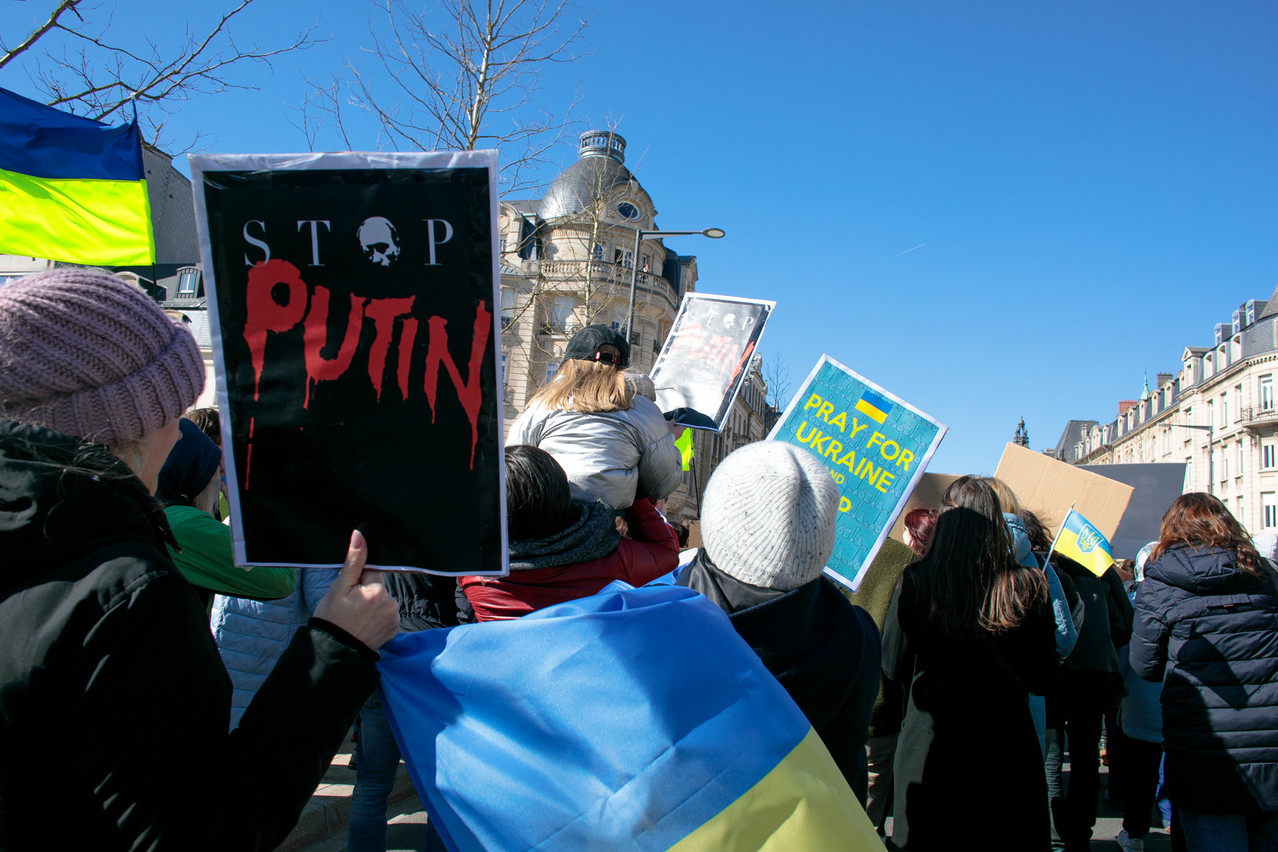
The 1,000th day of Vladimir Putin’s full-scale invasion of Ukraine will fall on 19 November 2024. This Sunday, members of the Russian opposition around the world are organising antiwar demonstrations to protest against authoritarianism, Russia’s military aggression against Ukraine and human rights violations in the Russian Federation. In Luxembourg, the rally--organised by activists and volunteers--will take place on 17 November from 12:00 to 15:00 at 10 Ave Monterey.
Paperjam heard from Evgenii Pereverzev, one of the organisers and founder of the Russia of the Future (Россия будущего) association, about the goals of the upcoming rally in Luxembourg City.
Who is organising the rallies in Berlin and Luxembourg? Are you coordinating with Ukrainian associations in Luxembourg? Which organisations/groups do we expect to participate in the rallies in Berlin and Luxembourg?
The rally in Berlin is the first demonstration organised by three prominent opposition figures: Yulia Navalnaya, Ilya Yashin and Vladimir Kara-Murza [editor’s note: Yashin and Kara-Murza were political prisoners held in Russia and freed as part of a prisoner swap in August 2024]. They aim to inspire fragmented opposition forces with this event in Germany’s capital.
Around the world, including in Luxembourg, marches and rallies will be organised by NKO and groups of active individuals.
We are not directly coordinating with Ukrainian associations in Luxembourg, but they are aware of the planned event. We would be delighted if Ukrainian citizens join the demonstration, as we share a common goal: the removal of Putin and his regime, and the transformation of Russia into a democratic state that refrains from waging aggressive wars.
We often see the white-blue-white flag in held by Russians protesting against the war in Ukraine. Could you briefly explain the symbolic significance of the new flag?
The white-blue-white flag is a symbol adopted by Russian opposition movements and antiwar activists. It consists of three horizontal stripes: white, blue and white.
This flag was created as an alternative to the official Russian tricolour. The blue stripe represents freedom, hope and a peaceful future, while the white stripes symbolise purity, truth and non-violence. The flag is a clear rejection of war and imperial ambitions. Since the onset of the full-scale invasion of Ukraine, it has become a powerful emblem of a democratic Russia, free from authoritarianism and militarism.
In your opinion, have Navalnaya, Yashin and Kara-Murza assumed the leadership role in the opposition after the death of Alexei Navalny in prison in February 2024? What role has their initiative, calling for an anti-war rally in Berlin, played?
Not yet. However, Yashin, Kara-Murza, and now Yulia Navalnaya have demonstrated political maturity, earning significant trust within opposition circles. We believe their consistent efforts will strengthen their political capital.
Their initiative to organise an antiwar rally is of critical importance. It marks a significant moment of political mobilisation and sends a strong signal to opposition forces, calling for the unification of Russian opposition politicians and activists.
Could such actions influence political thinking in Russia and lead to Putin withdrawing troops from Ukraine?
These demonstrations showcase the concern of Russians abroad and their potential for unification. However, at present, there is no unified programme from the Russian opposition that resonates clearly with Russians within the country. Nevertheless, we are moving in that direction, and when such a programme emerges, politically active citizens in Russia will come together to demand an end to the war in Ukraine and the withdrawal of troops.
We are also firmly convinced that European leaders are mistaken in believing that negotiations with Putin are feasible. He leverages such meetings to reinforce his narrative domestically. For instance, UN secretary general Antonio Guterres’ participation in the Brics summit in Kazan provides Putin with propaganda material aimed at Russian audiences.
What do you hope to achieve with the rally in Luxembourg?
Our primary goal is to remind everyone that Ukraine still needs support. After 1,000 days of war, the conflict risks fading from public consciousness, and discussions about negotiating with Putin and reducing aid to Ukraine are increasing. This must not happen.
Additionally, we aim to express our civic stance, show solidarity with the Berlin march and global demonstrations, and unify opposition forces to continue working toward a free Russia.


