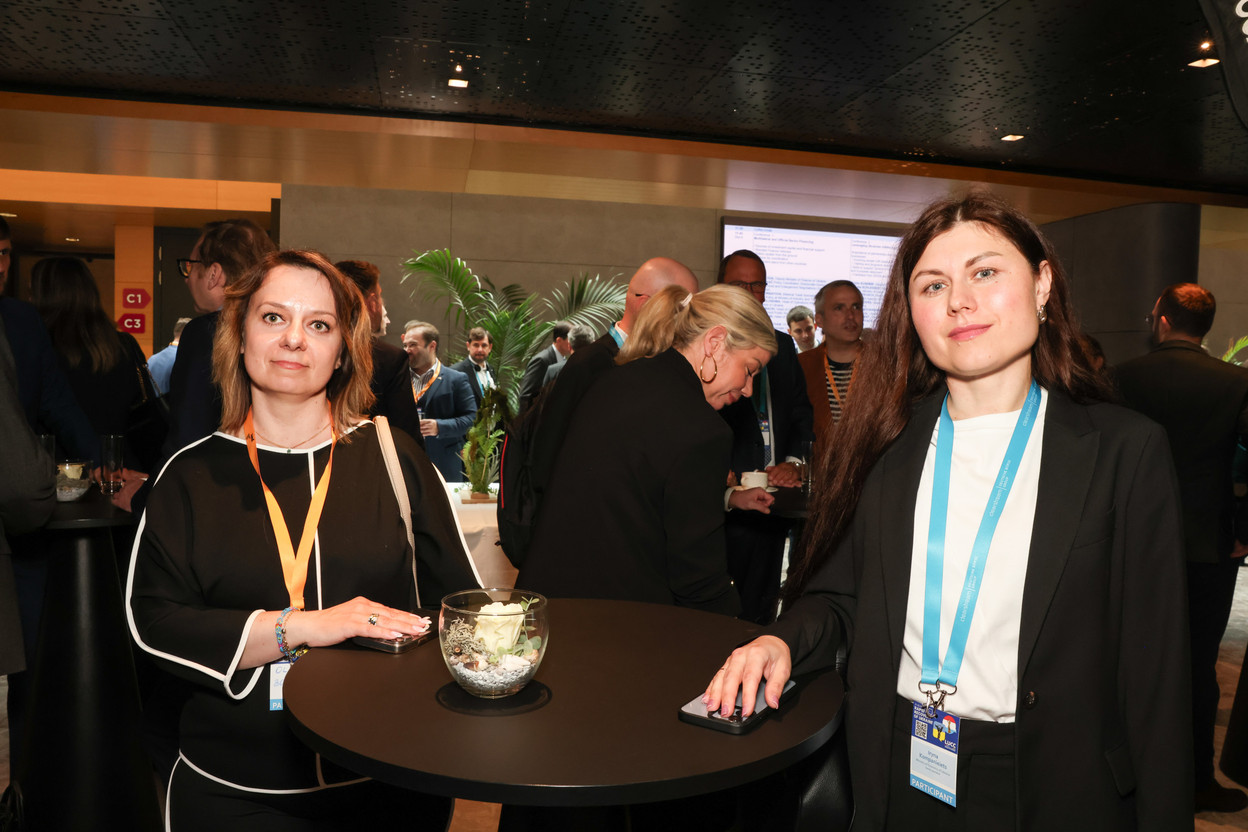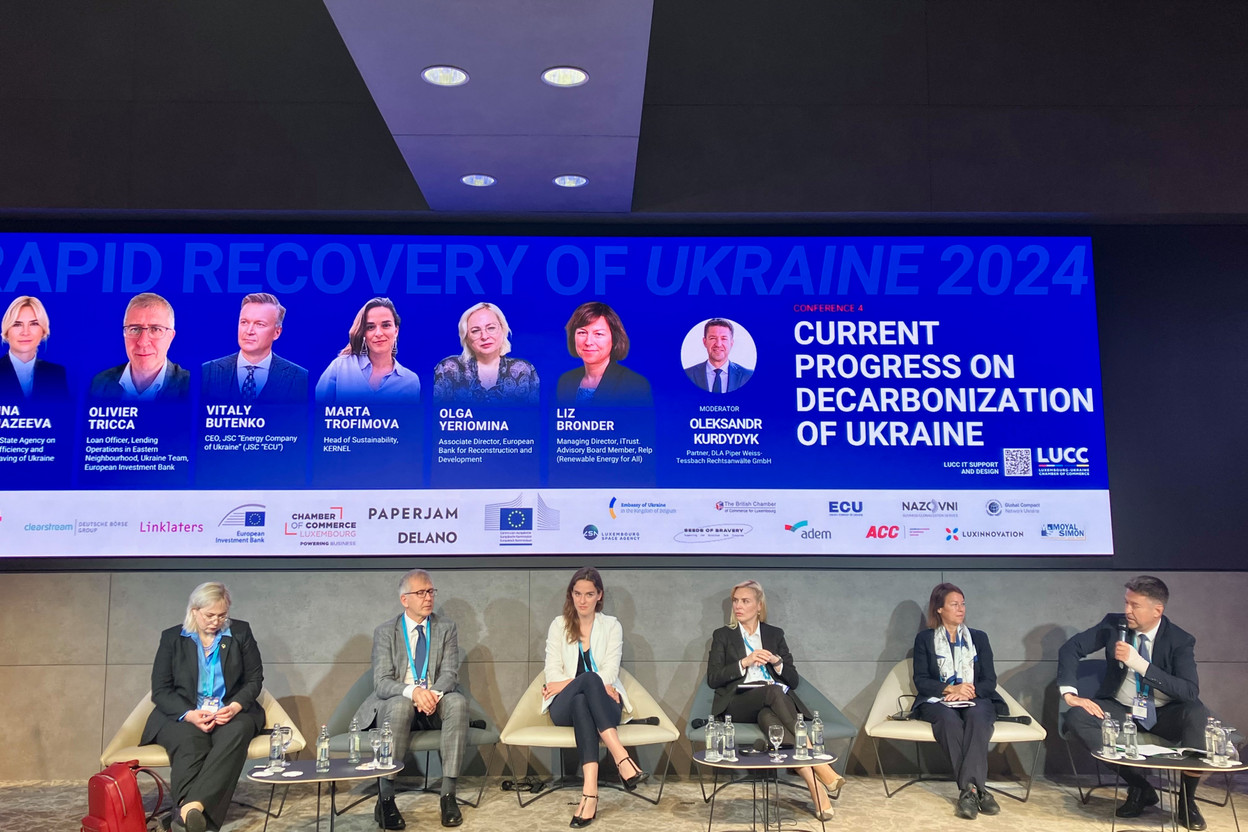
Organised by the Luxembourg-Ukraine Chamber of Commerce on 21 May 2024, the second edition of the Rapid Recovery of Ukraine business forum brought Ukrainian government officials, representatives of EU institutions and others to discuss Ukraine’s progress on EU accession, energy efficiency, defence, cybersecurity and more.
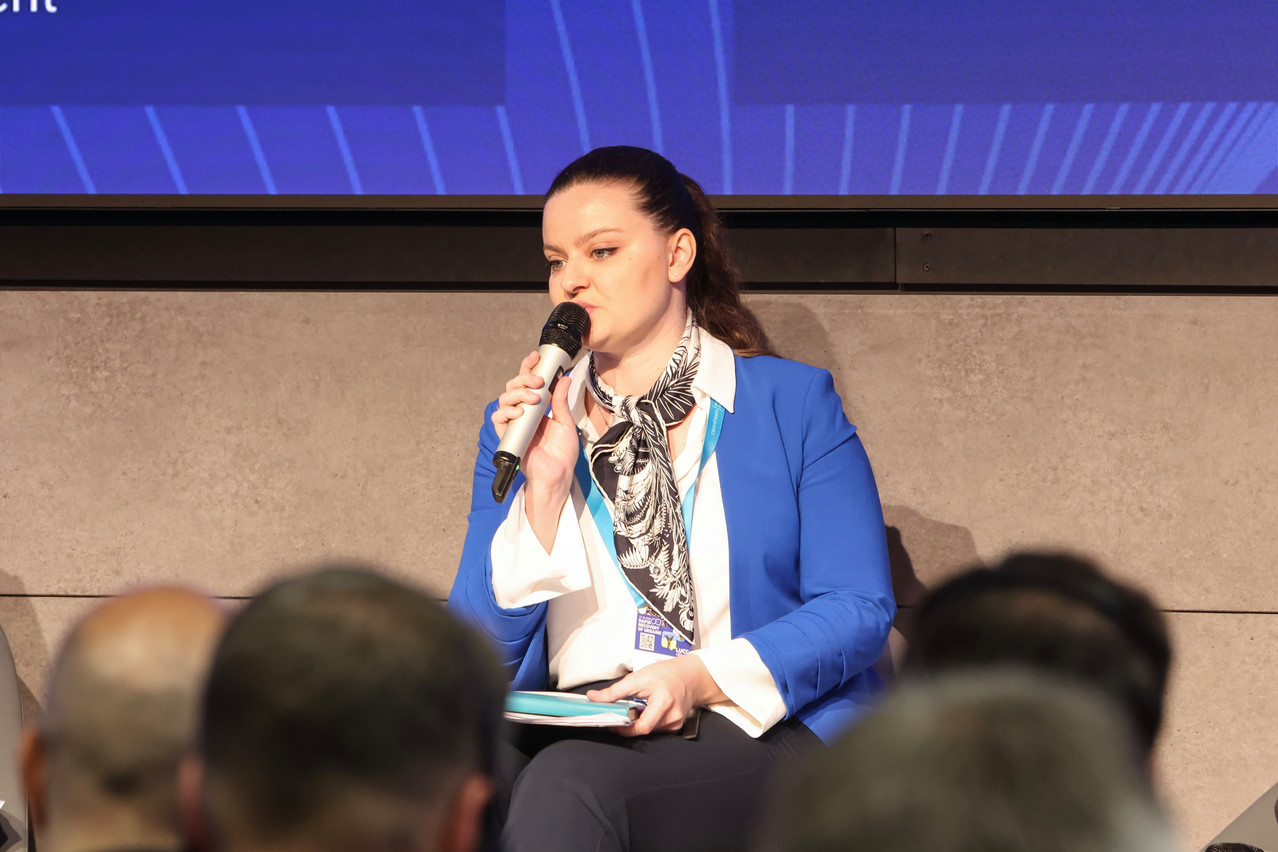
Ukraine’s deputy minster of finance Olga Zykova was a panellist at the conference, where she highlighted the kind of support Ukraine needs from financial institutions and EU member states as Russia continues to wage its full-scale war against Ukraine. The EU’s €50bn Ukraine Facility, for instance, on which a political agreement was reached in February 2024, aims to help Ukraine in its recovery, reconstruction and modernisation efforts, mobilise investments in the private sector and support Ukraine to make the reforms needed on its “path to EU accession.” To obtain the support, Ukraine must implement its recovery and reform plan, as well as uphold democratic mechanisms (including a multi-party parliamentary system), the rule of law and human rights (including the rights of persons belonging to minorities), explains the European Commission’s website. The first €4.5bn of support was disbursed in March.
“We had hard-won wins and gains in 2023,” said Zykova. “And to keep the momentum, the quarter one of this year was the most critical one in terms of having the perspective of receiving the respective external funding, to cover the social expenditures in the budget needs, but also to accumulate enough internal resources towards the military campaign, especially due to the fact that we had a huge decrease in supply of ammunition and equipment for military campaigns.”
The European Union, which had set itself a goal of supplying Ukraine with 1m shells by March 2024, did not meet its target (the EU’s high representative for foreign affairs Josep Borrell said in January that that the EU would only be able to deliver half by that deadline). A separate Czech-led initiative, launched this spring, has raised more funds and expects to deliver thousands of ammunition rounds in June, a press release from the Czech government issued on 30 May noted. And a $61bn aid package for Ukraine, which was stalled for months in the US congress, was finally passed by the US House of Representatives in April 2024.
The war, now in its third year, is evolving, said Zykova. “The nature of the warfare is changing drastically every half a year.”
Fiscal gap widens
Ukraine’s deputy finance minister provided more details during the conference to allow attendees to “understand the whole picture.”
“With the lack of the supply, we’ve had to front load quite an amount of funding--approximately $5bn--purely toward the military campaign,” explained Zykova. This was done purely to help the military and the army. “With this, we’ve had the fiscal gap widened, which is the obvious result. And with this, we’ve had to introduce quite a sophisticated list of internal measures fiscal-wise, so as not to lose the momentum of the gains we had in 2023. This included various aspects, including windfall tax on banks’ profits, including the dividends from the SOEs [state-owned enterprises], which were front-loaded for quarter one.”
This allowed Ukraine to “keep the momentum” until external funding arrived in March. “But prior to that moment, it was quite critical, because we realised that we can lose actually the momentum,… We at the ministry of finance were dependent on the actual equipment that wasn’t coming,” she said. “How the war evolves and how we receive the military assistance actually has the impact towards the fiscal space, and eventually has an impact towards our ability to focus on the reform agenda, the implementation of the structural reforms and implementation of the benchmarks under the IMF [International Monetary Fund] programme, under the Ukraine Facility.”
Negative economic impact of Russia’s “energy terror”
As part of its full-scale invasion, Russia has attacked and destroyed energy facilities in Ukraine. This “energy terror” has “had a very direct impact on the work of the government itself, because we had to revised the GDP growth for this year,” noted Zykova. “This is important for investors, for the audience to understand. The previously projected 4.6% of GDP growth was revised to 3.5% purely because of the energy terror by Russia.”
With the evolution taking place in the war, Leopard tanks aren’t needed now--but drones are, she argued. Flexibility and quick reflection are key for all battlefields, both the military and fiscal battlefields. But “partners also became flexible and creative enough to think out of the box, how to respectively react to the changes that are taking place, sometimes drastically quicker,” she said.
A “mid-term planning for Ukraine” started to be developed as well, said Zykova. “It’s not only about providing the assistance for a year.” It’s about “having a helping hand in place for Ukraine to implement the structural reforms, which will eventually help with the European integration process.”
But war has fostered changes
The war, to some extent, has helped foster changes within Ukraine, the deputy finance minister said. In the last two years, Zykova argued, more has been done in terms of the reform agenda--such as with anti-corruption and justice reforms--than in the previous 10 years. These are “critically difficult. Historically wise, it is deeply rooted in Ukrainian perspective that these reforms cannot be performed from scratch. Now they can.”
“It is a proof now that we will not turn the path towards some other things,” she said. “As the Ukrainian people, we see the future within the European Union. And this is the way to foster things, especially during the war.”
“The war itself made us stronger and more dedicated towards the things that were not even possible even 10 years ago in Ukraine.”