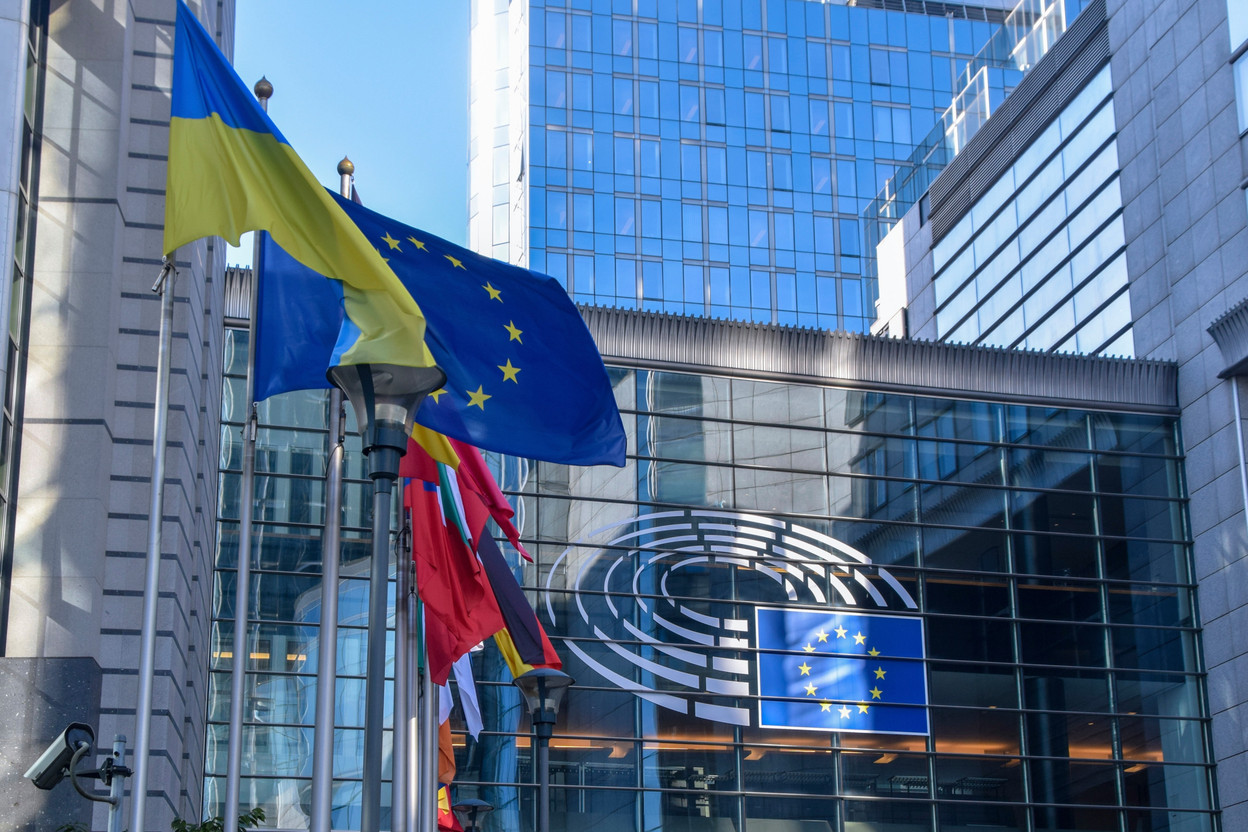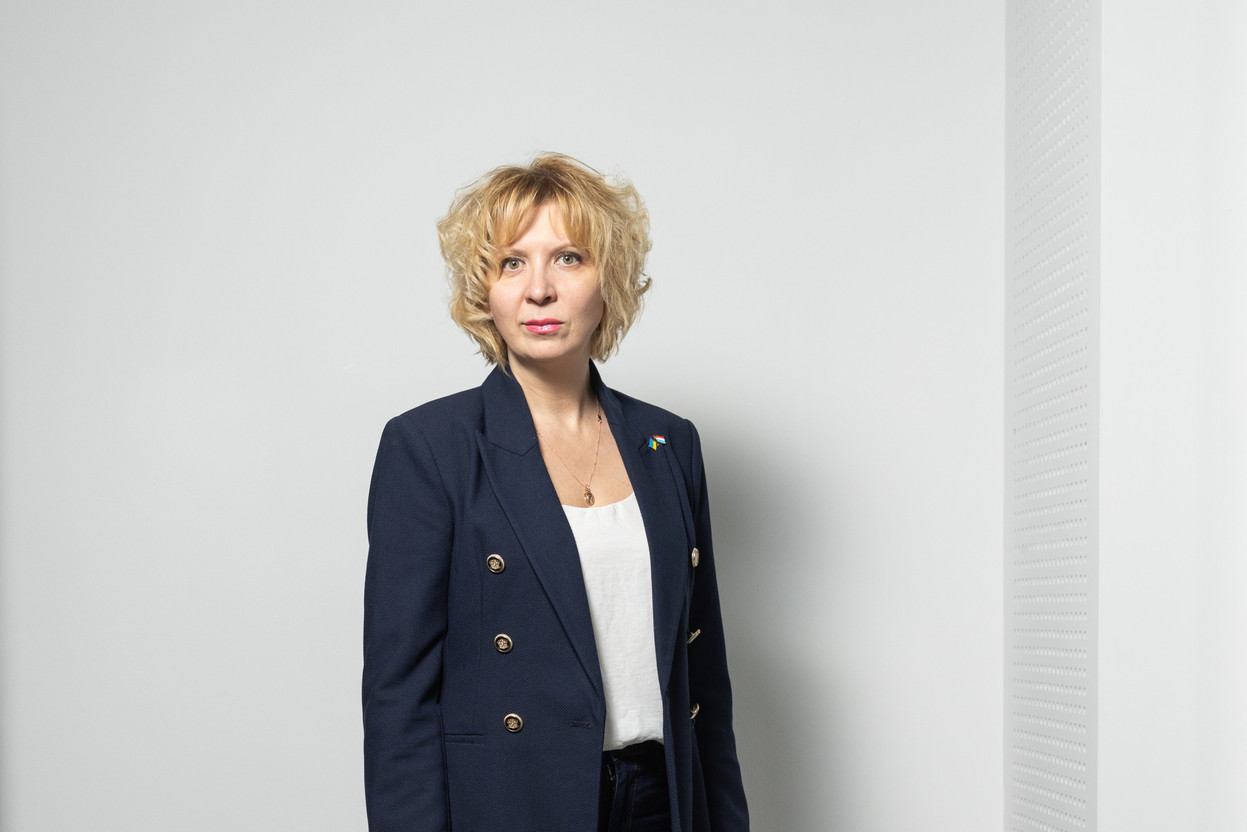

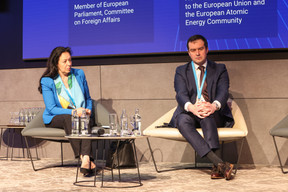

It’s been two years since Ukrainians woke up “to the sound of Russian bombs and boots, attacking their homes and their country,” said European Parliament vice-president 
This is a “brutal war” that has been “unleashed upon them by an autocrat” who disdains the freedom and openness that Ukrainians seek, he added, uprooting their everyday lives, their economy and causing “unimaginable horrors.” With “Russia’s unprovoked war and cruel aggression in Ukraine, trying to subjugate a sovereign country and its people, we instinctively knew that our world not be the same, that old certainties have given way to new unknowns.”
Destinies “inextricably linked”
“What is clear, however, in spite these unknowns is that the European Union--including the European Parliament--will continue to stand with the Ukrainian people in these very difficult times. And we will support them militarily, politically, financially and with humanitarian aid,” said Angel. “The fate of Ukrainians and our European destiny are inextricably linked, through the values we share, and the common future is bright.”
Ukraine faces “enormous challenges,” he said, “and it is clear that we need to support Ukraine financially in their reconstruction efforts and in their recovery. Indeed, the needs are staggering. At the end of 2023, the cost of Ukraine’s reconstruction and recovery was estimated at €452.8bn over 10 years.” This business forum has brought together stakeholders from the Luxembourg investment sector and fund industry, Ukrainian business and government, and the European public sector, and can complement other international conferences, he argued, such as the Ukraine Recovery Conference to be held in June in Berlin.
The EU has already undertaken “substantial efforts” to boost Ukraine’s resilience, but more support will be needed in the medium to long-term to restore the country and ensure it’s ready to integrate the European Union.
We cannot relent in our support for Ukraine

“The European Parliament has supported the sanctions to cripple Russia’s economy and war machine,” Angel argued. “It has adopted resolutions on the impact of the war on women and children” and has “pushed for the creation of a special international tribunal to prosecute Russia’s political and military leadership and its allies. It has voted the resolution on the sustainable reconstruction of the country, linking this process to Ukraine’s accession preparations. We’ve been very strong in the parliament in advocating to use frozen Russian assets to finance reconstruction activities.”
Indeed, the European Council on 21 May approved the use of net windfall profits stemming from the revenues generated by immobilised Russian assets to support Ukraine’s self-defence and reconstruction. “The Parliament also strongly supported the establishment of the Ukraine Facility, which will make available up to €50bn in grants and loans until 2027, thus providing regular and predictable support.”
But even though a lot has been done, efforts must be continued, said Angel. And it’s important that the business and financial sector work together with civil society, including them in political processes. “We cannot wait. We cannot relent in our support for Ukraine. Their fight for their future is also the fight for the future of Europe.”
Pennies to prevent destruction vs millions for reconstruction
Yurii Zarko, mayor of Bilopillya City Council in northeastern Ukraine, also delivered opening remarks ahead of the event. Zarko had spoken at the first edition of the forum in 2023, “but given what has happened during the last year, my vision has fundamentally changed.” Only one of nine schools survives. Hospitals, residential buildings and kindergartens have been damaged by Russian attacks. Residents cannot go to the store, or to the pharmacy, or even to sleep in safety, as the risk of being hit by Russian bombs or Shahed drones is constant.
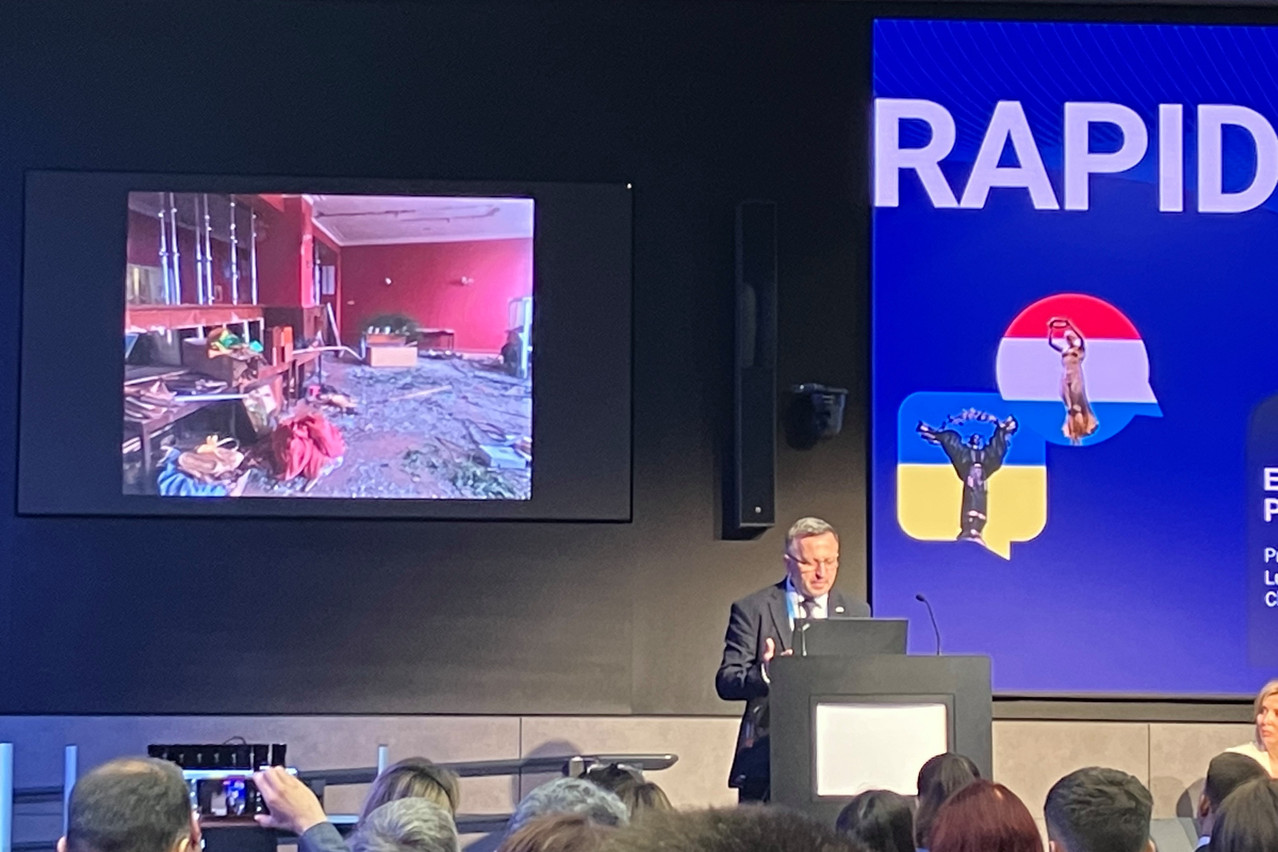
Yurii Zarko, mayor of Bilopillya City Council in northeastern Ukraine, also delivered opening remarks at the Rapid Recovery of Ukraine conference, 21 May 2024. “Currently spending pennies to prevent this destruction is far better investment than spending millions of dollars towards reconstruction,” he said. Photo: Lydia Linna/Maison Moderne
On behalf of the city’s residents and Ukrainian communities, Zarko appealed to the conference attendees for support, air defence and military systems to protect the population. “I would argue that currently spending pennies to prevent this destruction is far better investment than spending millions of dollars towards reconstruction. And thank God many countries in Europe understand.”
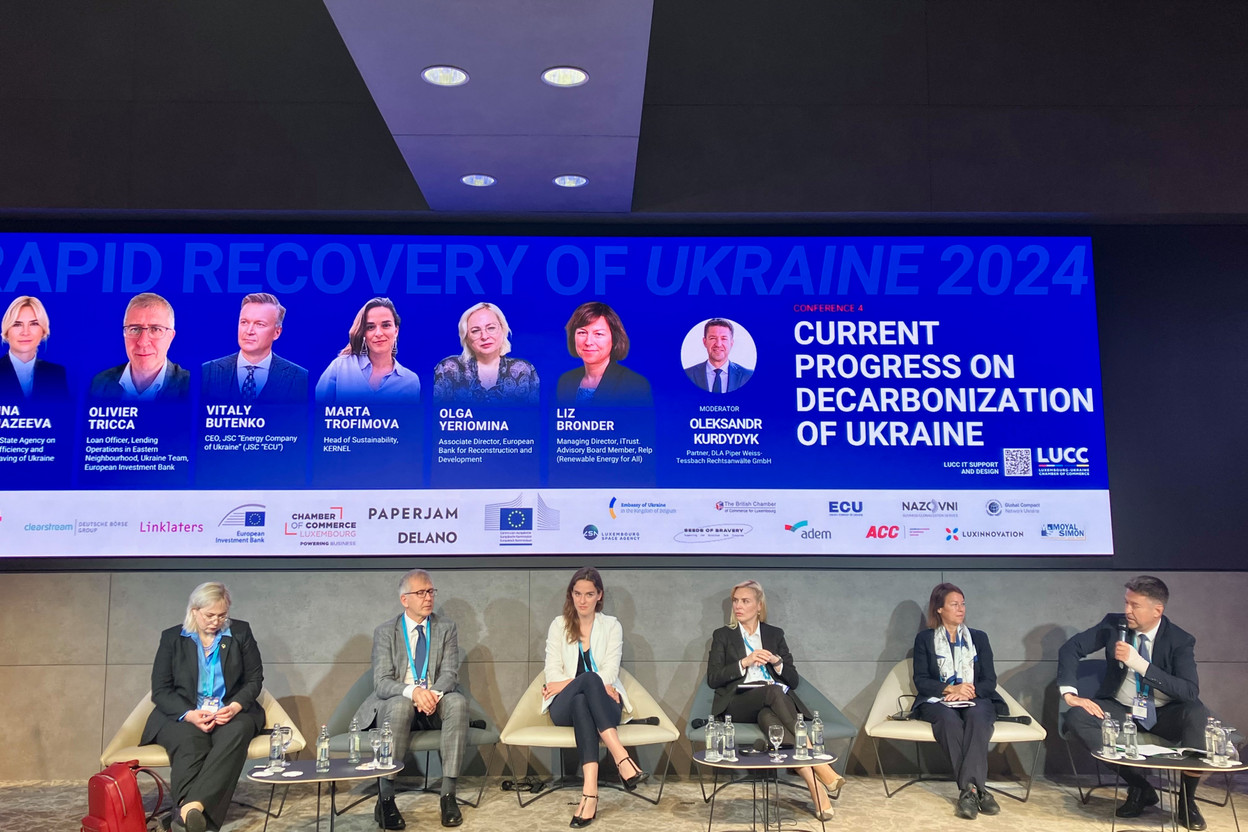
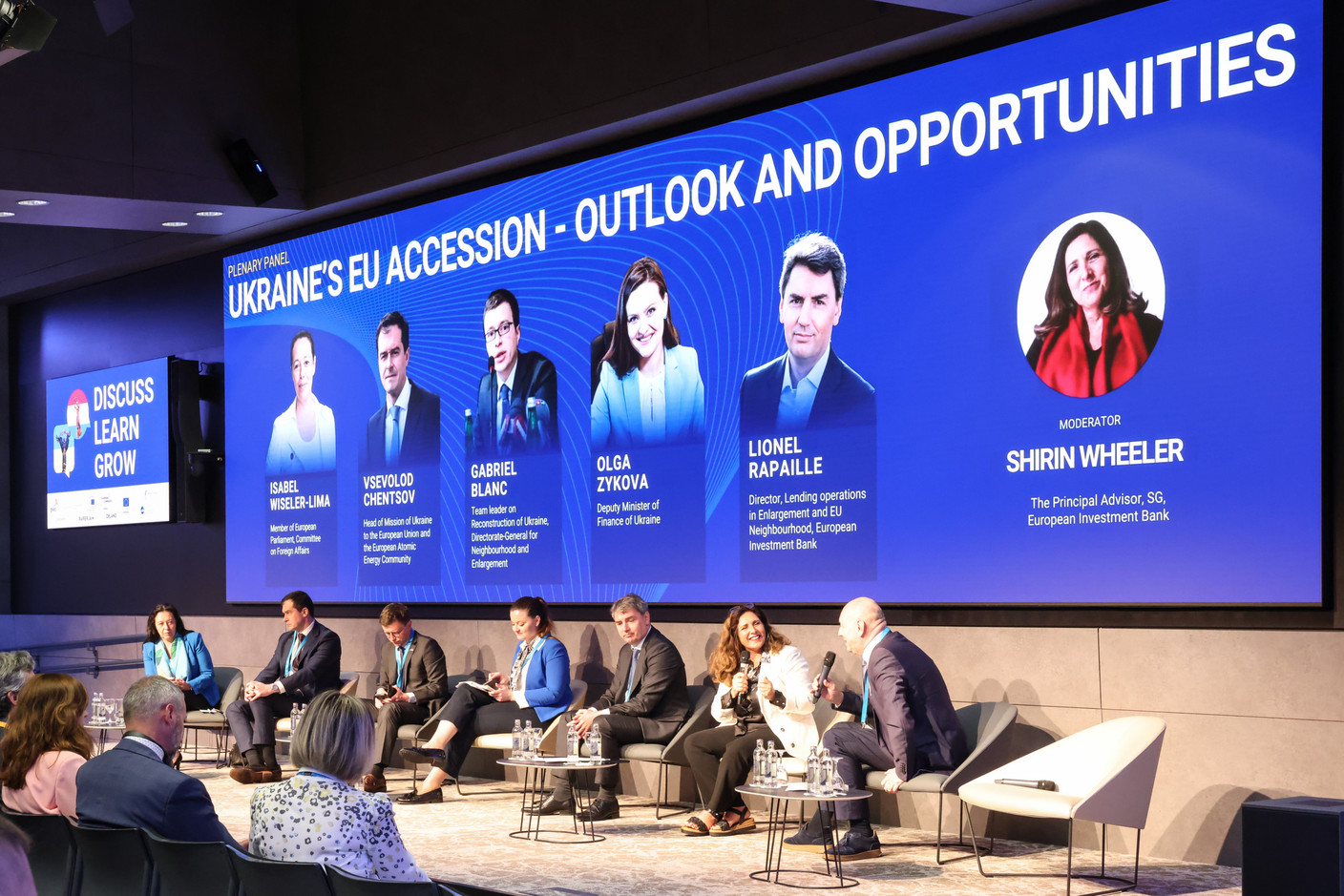
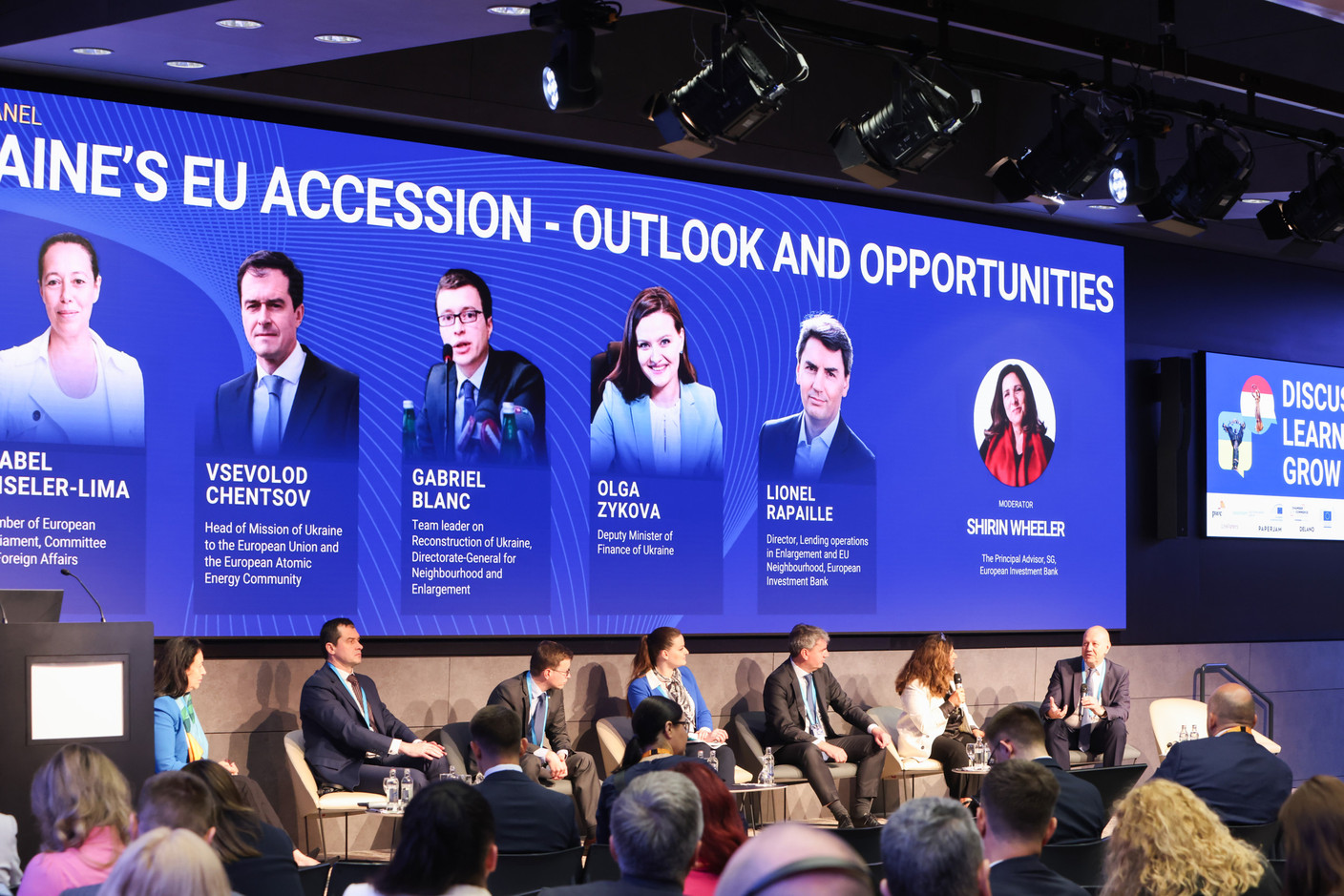
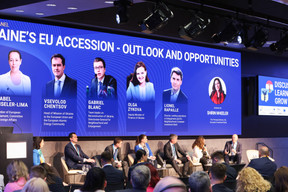
The business forum featured discussions on Ukraine’s progress on EU accession, sources of investment capital and financial support, leveraging Ukrainian intellectual capital, defence tech, cybersecurity and space innovation, decarbonisation and energy efficiency in Ukraine, investment opportunities in Ukraine’s cities and regions, how foreign investment can support development and the reality of running a business in Ukraine.