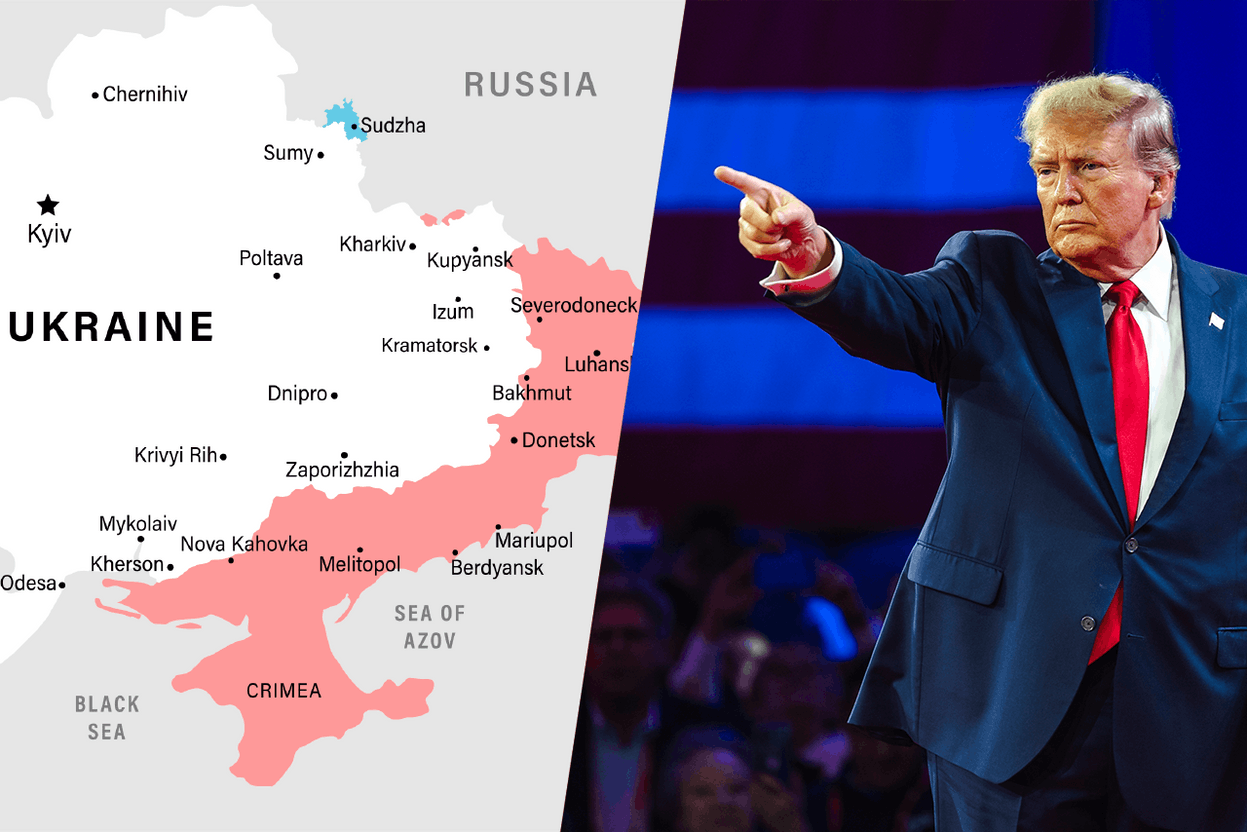
Jean-Marie Dumas at Amundi thinks that US president-elect Trump’s motivation is to move the cost of the war in Ukraine to the budgets of European nations given the outstanding non-compliance--by many of them--to spend, minimally, 2% of their GDP on defence. This happens at a time when many of these countries are experienced a stretched budgetary position coupled with tepid economic growth that would require a significant economic stimulus, such as in Germany.
“There are little chances that Trump’s statements on tariffs will be confined to words,” Dumas, head of euro credit & invest solutions at at the asset manager, affirmed during an interview on 21 November 2024. He thinks that Trump strongly believes on their appropriateness to protect the US economy and to hurt “specific foreign sectors.” Paperjam noted that Scott Bessent, the newly nominated US treasury secretary, was reported on the campaign trail as describing tariffs as a negotiating tactic rather than a real policy.
the US is ensuring that China cannot catch up with it

Despite a slight majority by the Republicans in the House of Representatives, Dumas does not think that Trump will face significant opposition in the implementation of tax cuts on companies. Budgetary rigour, a historic trademark of the US conservatives may be put on the back burner. He thinks that any individuals looking for influence in the Trump’s sphere must be aligned with Trumponomics. “No powerful voices should be expected to oppose Trump’s plans.”
Tech should continue to elevate economy through deregulation
Paperjam questioned Dumas on the absence of recession after the inversion of the US Treasury 2Y-10Y yield curve that started in April 2022 and stayed inverted for two years, from summer 2022 to summer 2024. Such a phenomenon was historically followed by a recession, on average, 18 months after the start of the inversion. Indeed, Dumas explained that without a premium on long-term interest rates, investors tend to invest in short-term instruments, an unfavourable development for the economy.
Yet Dumas noted that investment remained elevated, which supported competitive gains, in the tech and AI sectors, in particular. Moreover, “the US is ensuring that China cannot catch up with it.” In addition, he thinks that the anti-trust rules on Gafa (Google, Apple, Facebook and Amazon) lost their bite as these tech firms contributed so much to growth and wealth in the US thanks to their “powerful concentrated action.” By the same token, he expects Trump to deregulate--or not regulate--AI to ensure growth, at least in the next two or three years.
The yield curve finally normalised in August 2024, a “positive development,” but admittedly the term premium remains small at around 4 bps.
Consequence of a further budget stimuli
In presentation material, Amundi still sees inflations, in its core scenario, declining to 2.2% and 2.1%, in 2025 and 2026, respectively. Dumas commented that the problem with Trump’s programmes is that “everything is somehow inflationary,” a development that may result into interest rates moving higher across the yield curve.
Indeed, the Fed fund rate currently seen as going as low as 3.5% at the end of 2025 may have to be revised to 4.25%, according to Amundi, once we will have more clarity on the implementation of its programmes. The same is true for the 2-year and 10-year treasuries which may have to be amended to 4.5% (up from 3.7%) and 5.1% (up from 4.3%), respectively.
Europe: also dependent on Trump’s policies
Amundi expects growth to slightly accelerate in the eurozone to 1.0% and 1.3% in 2025 and 2026, up from an expected rate of 0.8% this year. Despite the improving growth prospect, inflation should continue its march downward, reaching 2.0% in 2025. Dumas takes comfort from contained labour pressures from Germany, in particular.
On the other hand, imported inflation from raw material prices and a stronger dollar is the greatest risk to their core scenario.
In its core scenario, Amundi still expects the German bunds to continue their march lower in 2025 to 1.9% (from 2.10%) and 2.3% (from 2.3%) in the 2-year and 10-year, respectively. The trend could accelerate 1.3% and 1.9% for the same terms upon a lack of cooperation from Trump on European exports.
Markets learned to get used to Trump’s circus
Interestingly, Amundi observed that despite the elevated policy risk--looking at words such as ‘uncertainty’ or ‘uncertain’ in national newspapers--during Trump 1.0, as measured by the economic policy uncertainty index, the volatility of interest rates and of equity actually went down during the first years of his terms until covid hit. “We all got used to Trump’s tweets sent at night.”