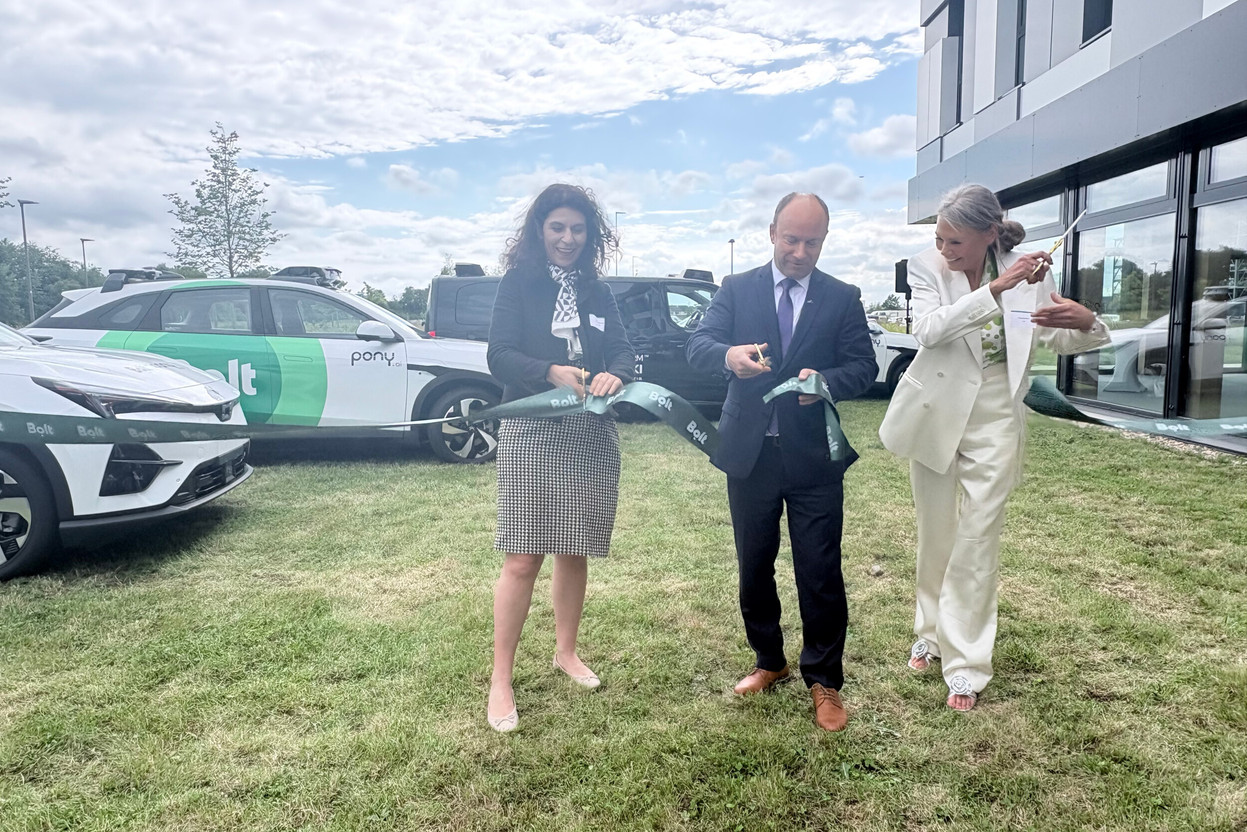
The autonomous car will not simply be a driverless car. It could become a regulated activity, monitored remotely, subject to licensing, registration, safety requirements, insurance and, in the event of an accident, a chain of criminal liability. This is the whole point of the bill presented on 25 June by 
In the ministry’s press release, Yuriko Backes refers to “a major step forward for Luxembourg”, aimed at integrating automated driving technologies “in a modern, safe and responsible way, for the benefit of people”. This is political rhetoric. The draft bill, however, is more revealing: it does not leave the technology to drive on its own.
“Conditionally” – the word that changes everything
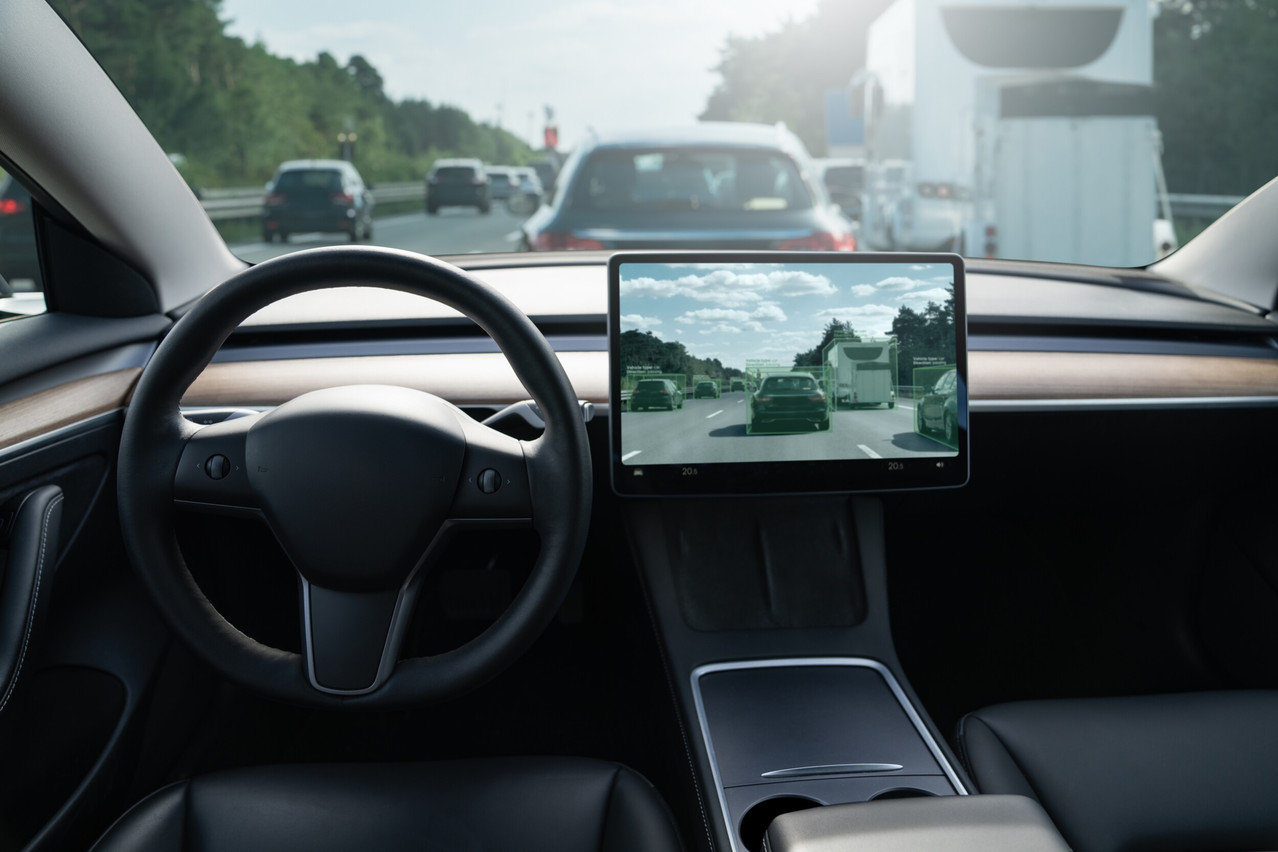
The text first distinguishes between conditionally automated vehicles and highly automated vehicles. In the first case, the system can drive under certain conditions, but a human driver must be able to take control. In the second, the vehicle can independently maintain dynamic control within its operating range, without a driver on board. This is where the system becomes most interesting.
For these highly automated vehicles, the bill requires continuous remote management. In other words, even when there is no longer a driver in the vehicle, there must be a human and technical organisation overseeing it. The autonomous vehicle does not operate on its own: it is supervised.
This supervision is not open to just anyone. The bill introduces the role of the “remote manager”, a legal entity authorised by the minister. This authorisation, valid for five years and renewable, specifies what the manager is authorised to do: monitor vehicles, provide them with remote assistance or, in the most sensitive cases, take dynamic control of the vehicle. This is a far cry from the image of a simple app controlling shuttles from a screen. Rather, the bill brings this activity closer to an operational control function.
The remote manager must have an appropriate organisational structure, sufficient technical resources, infrastructure and communication systems. They must also implement measures relating to cybersecurity, data protection and system security. They must document their security management system, keep it up to date and take out insurance covering any damage that may result from their activities.
This is the crux of the matter: autonomous driving is becoming a matter of trust. It requires an organised, verifiable and reliable chain of command. The remote operator must designate a permanent operational point of contact, available around the clock, whilst the vehicles are in operation. They must also ensure that a competent operator is identified at all times for each vehicle. In the event of a technical fault, loss of connectivity or a critical situation, a manoeuvre involving minimal risk must be initiated to bring the vehicle to a safe state.
Evidence and traceability
The bill does not merely state that systems must be secure. It sets out the requirements for demonstrating and tracing this security. The operator will be required to keep a log detailing remote management operations: the identity of the operators, the vehicles concerned, the allocation of vehicles to operators, periods of operation, actions carried out, manual takeovers, manoeuvres involving minimal risk, incidents, anomalies and events affecting safety. In the event of a problem, it must be possible to reconstruct what happened, who was in charge of the vehicle, at what time, and under what technical conditions the operation took place.
The remote operator, for their part, is emerging as a new professional role. They are not a conventional driver, but neither are they merely a passive supervisor. The legislation stipulates that they must have held a valid driving licence for the relevant category of vehicle for at least three years and demonstrate the necessary physical and mental aptitudes. They must undertake initial training covering the capabilities and limitations of the systems, operating conditions, procedures for remote assistance, takeover and emergency management, as well as the monitoring interfaces.
This training must include a practical exercise and an assessment. Ongoing training must then be provided to maintain operators’ skills, in line with developments in the systems, operating conditions and feedback from experience. Technology is advancing, but the text is based on the premise that the people responsible for supervising it must keep pace with these developments.
The status of this operator varies depending on what they are doing. When they are limited to providing remote assistance, they are not regarded as a driver. However, when they take dynamic control of the vehicle, they are treated as a driver and must comply with the rules of the road. This distinction is crucial: liability follows actual control of the vehicle. If the system is driving, liability may lie with the manufacturer. If an operator takes over, liability may shift to them. If a transport service operates the vehicles commercially, it too falls within the scope of these obligations.
An activity subject to authorisation
The bill effectively sets out a regulatory framework for automated transport services. Any company wishing to operate shuttles, robotaxis or logistics services using highly automated, driverless vehicles will need to obtain authorisation from the minister. It must hold a valid operating licence for the transport of passengers or goods, use authorised vehicles, appoint one or more approved remote operators, and put in place an organisational structure to ensure service continuity, incident management and, where applicable, passenger safety. It must also have the necessary insurance and financial guarantees in place.
The authorisation will not be general in nature. It will specify the nature of the service, its geographical scope, the authorised zones, routes or timetables, the maximum number of vehicles operated simultaneously, the obligations regarding passenger information, and the reports to be submitted to the minister. The service may be suspended or withdrawn if the conditions are no longer met, in the event of serious or repeated breaches, or if the operation poses a risk to road safety or passenger safety.
The text also stipulates that autonomous vehicles must record the data necessary to assess the system’s performance and to determine the circumstances of an incident or accident. This data may be requested by the relevant authorities. Here again, the idea is simple: in a conventional car, the investigation focuses on what the driver did. In an automated vehicle, it will also be necessary to know what the system decided, what the remote operator observed, whether they intervened, and whether the manufacturer had maintained the system correctly.
A new approach to criminal liability
The bill does not create an entirely new civil law regime. Civil liability will continue to be governed by ordinary law and by the existing rules on defective products. However, it adapts criminal liability to an unprecedented situation: one in which dynamic control of the vehicle is no longer necessarily exercised by a person sitting behind the wheel.
This is the real game-changer. Until now, the car industry has been based on a simple premise: one vehicle, one driver, one party responsible. Automated driving forces us to challenge this assumption. In future, a vehicle may be driven by a system, monitored by a remote operator, operated by a transport company, and designed and updated by a manufacturer. The draft bill therefore seeks to assign liability to whoever actually exercises control, or who should have ensured that safety conditions were met.
The government is incorporating this reform into the national “Automatiséiert Fueren 2028” strategy, which aims to gradually roll out new applications: autonomous driving on motorways, robotaxis, automated shuttles, automated parking and logistics applications. The rationale is clear: to turn Luxembourg into a regulated testing ground, without waiting for all these applications to reach maturity.