Luxembourg is attempting to position itself at the forefront of Europe’s autonomous-mobility sector, using regulatory agility, pilot projects and international partnerships to attract companies developing self-driving transport technologies.
That ambition was on display this week at ‘The Future of Transport’, an event organised by Luxembourg Confederation at EY Luxembourg, where ministers, automotive-sector representatives and mobility specialists discussed how transport systems are evolving under pressure from electrification, automation and changing ownership models.
The conference brought together speakers from organisations including Mercedes-Benz Benelux, Ayvens, FEBIAC and EUCAR alongside public-sector representatives and mobility specialists.
For Dario Deserranno, senior mobility expert at Brussels-based consultancy Espaces mobilités, one of the more striking aspects of the event was the extent to which traditional automotive players are now repositioning themselves around mobility services rather than simple vehicle ownership.
Selling movement
Deserranno said even strongly car-oriented companies are increasingly discussing sharing models, rental systems, circularity and broader mobility services as they attempt to adapt to changing consumer behaviour and new transport patterns.
“That was interesting to see,” he said. “These purely metal sellers are starting to switch and evolve towards a new way of consuming mobility.”
The discussion comes as Luxembourg accelerates its own autonomous-driving strategy.
Last year, the government unveiled its ‘Automatiséiert Fueren 2028’ strategy, which aims to establish a legal and operational framework for autonomous-driving technologies while attracting companies working in the sector.
Ministers have presented the initiative as part of Luxembourg’s wider economic-diversification strategy, drawing comparisons with earlier efforts to position the country in emerging sectors such as fintech and space resources.
Building a testbed
The strategy centres on a series of targeted use cases, including robotaxis, autonomous logistics, last-mile public-transport shuttles and motorway automation.
Luxembourg has already begun attracting international operators.
Pony.ai, the Nasdaq-listed autonomous-driving company headquartered in China, announced in April that it had received a permit from Luxembourg’s Ministry of Mobility and Public Works to begin Level 4 robotaxi testing in the country.
The company has also established its European division and research hub in Luxembourg following agreements signed with the government in 2024.
The tests are being conducted in partnership with Luxembourg mobility operator Emile Weber.
Europe falls behind
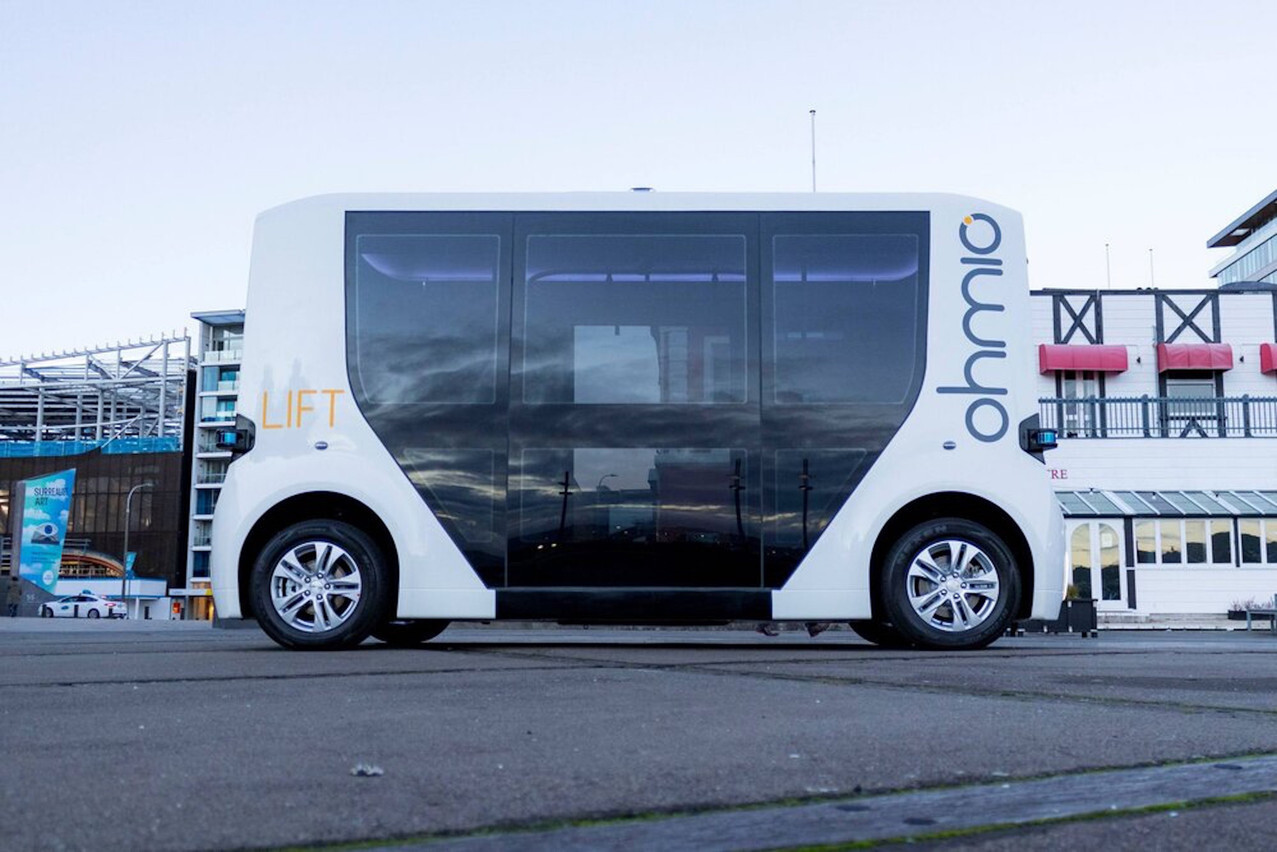
Other autonomous-mobility initiatives are also emerging locally, including projects involving autonomous shuttle specialist Ohmio, which has established operations in Luxembourg linked to research and testing activities around shared and public transport.
Deserranno argued that Luxembourg has moved unusually quickly compared with many larger European countries.
“Luxembourg is having quite a pragmatic way of attracting worldwide leaders and making them come to Luxembourg and use Luxembourg as their first base towards the European market,” he said.
Europe, however, still trails the United States and China in large-scale autonomous-vehicle deployment.
Deserranno said cities in the US and China are already operating large fleets of autonomous vehicles and entering what he described as a “scaling” and “commercialisation” phase.
More cars, not fewer
He said Europe is only beginning to enter that stage, but expects commercially accessible autonomous robotaxi services to appear in several European cities before 2030.
The bigger challenge, he argued, is ensuring the technology does not simply increase traffic congestion.
“We don’t want all cars starting to be autonomous because then we’ll have more empty kilometres,” he said, warning that autonomous vehicles could ultimately increase traffic volumes if deployment is left entirely to private operators.
That tension increasingly sits at the centre of European mobility policy.
While many US and Chinese autonomous-driving projects are being led by large technology companies and commercial platforms, a number of European pilot projects are being developed through public-transport authorities and shared-mobility systems.
Public versus private
Deserranno said cities such as Hamburg and Oslo are exploring autonomous transport primarily as a way to strengthen collective mobility systems rather than expand private car use.
“At least Europe has this view of: we have a strong public-transport system, let’s make it even stronger with autonomous mobility,” he said.
The debate reflects a broader question now facing Luxembourg’s transport strategy.
The country is attempting to encourage technological innovation while simultaneously reducing congestion, strengthening public transport and reshaping mobility habits.
For Luxembourg Confederation, the conference formed part of that wider ecosystem-building effort, bringing together policymakers, mobility operators, automotive groups and technology specialists around the future structure of transport in Luxembourg and Europe.