Despite the extension of energy support schemes adopted on 29 October, the next index-linked increase is due to take effect in the second quarter of 2027. However, extending these support measures would prevent a second indexation in 2027, according to forecasts published on 4 November by Statec. The next increase would, therefore, be expected in the second quarter of 2028.
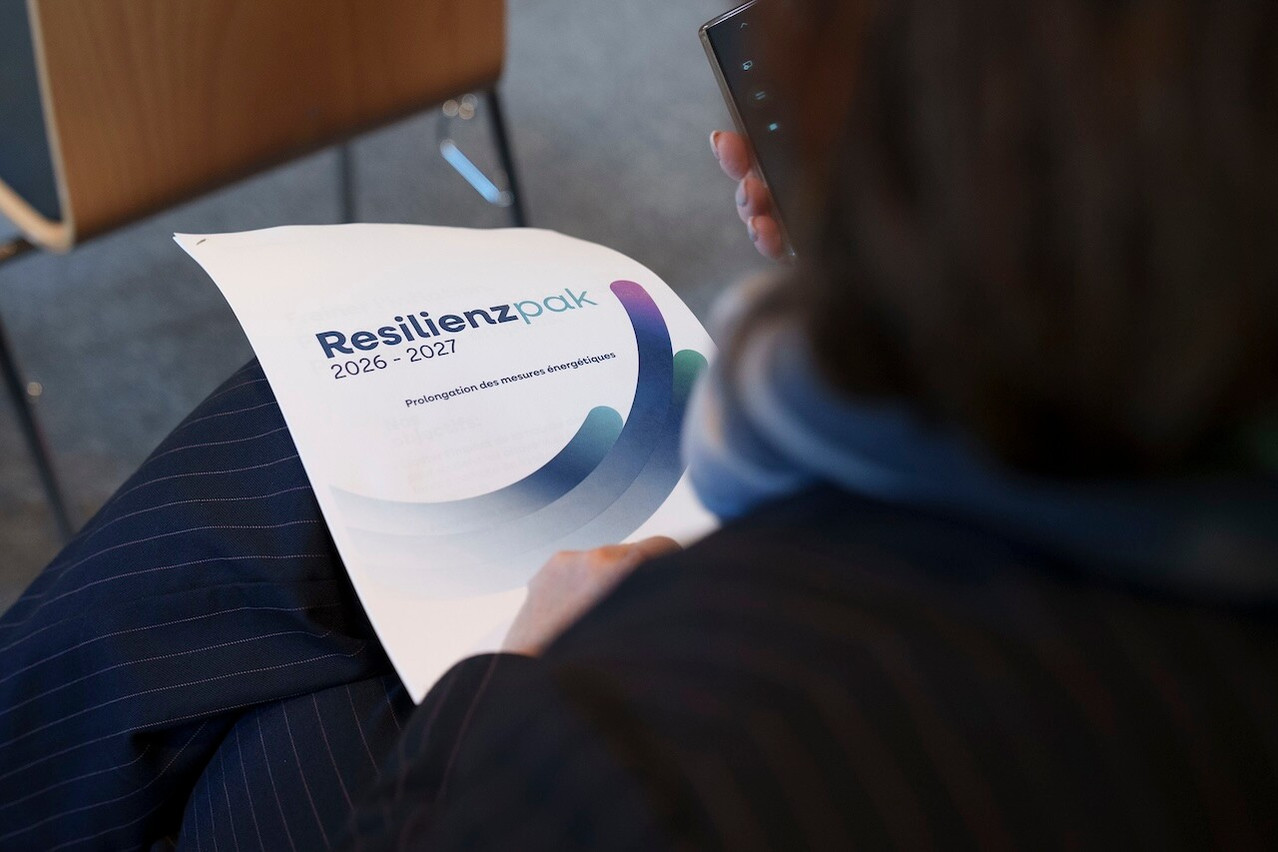
By maintaining the energy support measures provided for in the Resilienzpak, the agreement of 29 October therefore limits price rises in 2027 and consequently slows the build-up of inflation that triggers index-linked adjustments. The Statec’s central scenario thus forecasts a single adjustment in 2027 and a single one in 2028, in line with the government’s objective.
Inflation 0.7 percentage points lower in 2027
Originally, the subsidies were due to end on 31 December 2026. Their withdrawal would have automatically led to a rise in prices from January onwards. The agreement of 29 October extends this deadline by one year for electricity, gas and heating oil. The discount on petrol and diesel, however, is extended until the end of February 2027. The subsidies remain at 4 centimes per kilowatt-hour of electricity, 15 centimes per cubic metre of gas and 15 centimes per litre of heating oil. At the pump, the 5-centime-per-litre discount will end in March.
According to Statec, this extension reduces inflation in 2027 by nearly 0.7 percentage points. The average rise in prices would thus reach 2.5%, compared with around 3.1% without the extension. In 2026, inflation is projected to stand at 2.3%. However, the impact on bills varies depending on the energy source. The average price of electricity for households is expected to fall by around 9% in 2027, partly because the support scheme will apply for 12 months, compared with five in 2026. The price of gas, however, is expected to rise by around 10%, under pressure from the markets.
The expected fallout in 2028
Support does not prevent price rises: it merely spreads out their effects. The end of the fuel discount will lead to a rise in fuel prices in March 2027. The end of other forms of support will have the same effect in January 2028.
This latest extension would add around 0.7 percentage points to inflation in 2028. Inflation would then reach 2.5%, compared with around 1.9% without the extension decided at the end of October. Over the whole of the 2026–2028 period, cumulative inflation remains virtually unchanged, according to Statec.
For households, the scheme therefore eases the burden of immediate bills. For businesses, it eases the pressure on the indexation schedule for 2027. However, some of the impact is carried over to the following year, whilst cost increases are also set to spread more widely across food and services.
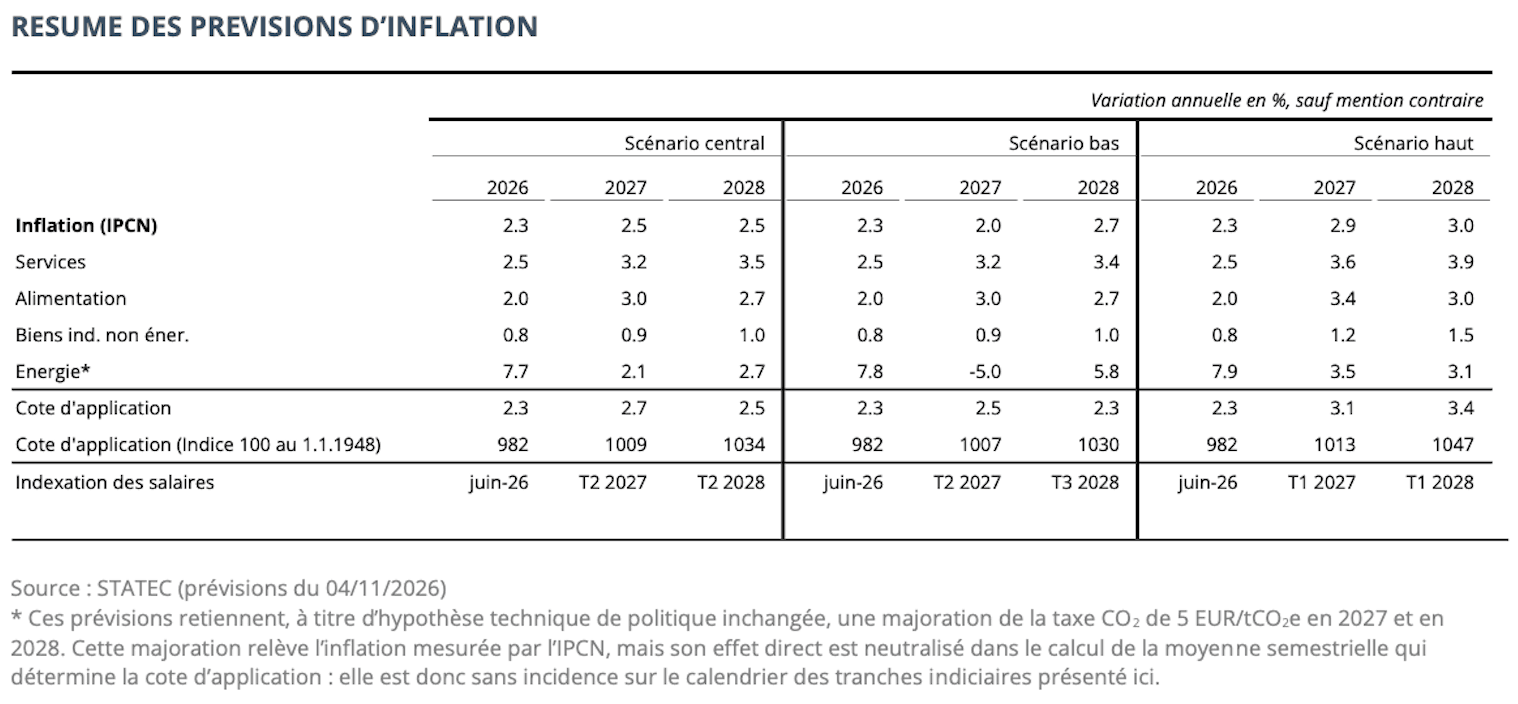
A detailed look at the various Statec scenarios. (Source: Statec)
A tranche in the first half of the year in all scenarios
This respite remains vulnerable to a looming energy crisis. Statec now forecasts an average price of $96 per barrel of Brent in 2027, compared with the return to around $70 envisaged in the spring.
In its ‘high’ scenario, a prolonged disruption to energy flows would bring forward the next index-linked instalments to the first quarter of 2027, and then to the first quarter of 2028. In the ‘low’ scenario, a rapid fall in prices would keep the first index adjustment in the second quarter of 2027, but would push the next one back to the third quarter of 2028.
The three scenarios examined therefore forecast one tranche in the first half of 2027 and just one for the whole year. They support the expected effects of the Resilienzpak, though they do not constitute a guarantee: Statec does not rule out a deterioration even more severe than that assumed in its ‘high’ scenario.