1. The golden rule of 30-30-30
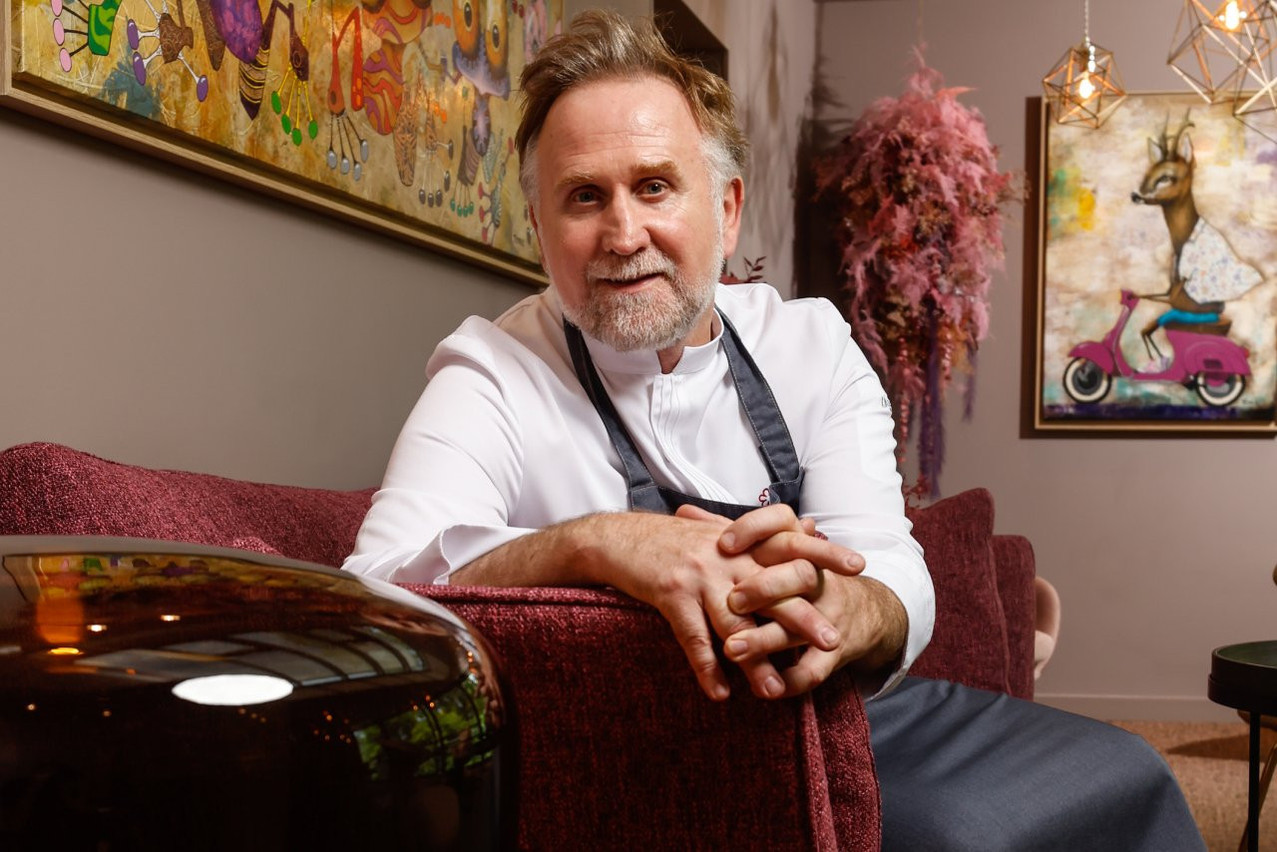
"We have a fairly classic scheme of a restaurant that doesn't lose money, but we have to fight." From the outset, chef 
Then it all depends on the costs and structure of the establishment, he adds, but the mechanics remain broadly the same. "Out of 100 euros, we estimate: 30% for staff, 30% for goods, 30% for expenses. If there's 10% left at the end, that's fine."
2. The real luxury is the staff
"For 1,000 to 1,200 covers a month, we still have a total of 20 employees." For Cyril Molard, the social equation has also become central. "Since Covid, if you want to keep your staff, you have to give them exceptional working conditions. Otherwise, they won't do the job any more. That means pay, but not just pay: "Holiday! Many restaurants in France and Belgium close three days a week. But three days means a day less turnover: you have to make five days' turnover in four days. Sometimes that's not possible"
Cyril Molard has not chosen this option. On the other hand, Sundays are off at his place. Ma Langue Sourit is open from Tuesday to Saturday inclusive, with two services a day. The key, according to the chef, is the organisation of the work. "If you want to keep people, you need the right schedules. Nobody likes a break any more. To remedy this, you need to be a little overstaffed if you can afford it financially. If you can afford to do that, you can produce decent schedules. But that means extra costs for the company, so a little less profit."
At Ma Langue Sourit, Cyril Molard is adding levers of attractiveness. "We're closed for almost seven weeks a year. Almost eight, with pay. And a principle: "Many of the big houses attract unpaid trainees. I don't use them. With me, they have to be paid. The guiding principle is clear: "If you want your restaurant to last, you have to invest in people."
If you want people to spend money in a gourmet restaurant, they have to feel good, confident and well regarded.

3. The average ticket, a compass for profitability
The chef thinks in terms of an economic target. "We try to come up with a median price. We calculate how much the goods cost, and above all the average ticket: how much people will spend in your store. Or rather: how much they would have to spend for the business to be healthy."
This ticket is not an abstract figure: it conditions the execution of the menu. "When you make 250-300 euros, you make a nice figure during the week. It's a lot of work, a lot of commitment. Customer psychology is very important: "If you want people to spend money in a gourmet restaurant, they have to feel good, confident and well regarded. The more they feel accompanied by serious people, the more they'll spend. You need people for that. Hence the direct link between level of service, wage bill and price.
4. The art of the profitable menu
"If I put a menu at 300 euros, obviously I'll have more money to buy very expensive goods. We've found some subtleties. When it comes to suppliers, we know where we can go and where we can't." Case in point: "When I buy a piece of lobster, it's a piece, not a whole lobster, and it already costs me 12 euros. I calculate: lobster 12 euros, fish 5 euros, meat 7 euros, to make a 'cost' that rises to 25-30 euros." And a word of caution: "In this day and age, you can't be too greedy. Everyone says to raise our prices, but we've always gone for a crescendo." At Ma Langue Sourit, the Meraki menu, offered in four (at lunch), six or eight courses, is priced at €95, €180 and €220.
Flexibility protects against hitches. "On the menu, we no longer call fish by its name. We replace it with the phrase 'current availability'. That gives me the flexibility of choice. If you put a plate of red mullet at 25 euros and there's a storm in Brittany, the red mullet goes up to 50 euros: your 'cost' is ruined. So I don't take any more risks: I don't name the fish."
Then there's material yield. "We buy large pieces, line fish. When we get a turbot or a meagre, it's 8kg. In 8kg, you have more profitability. It's not in what you sell that you make money, it's in what you don't throw away. In turbot, you lose 60%. With this, I optimise: super smoky, super juicy, super saucy". And the art of the product mix: "You need products that appeal: lobster, fine line fish, exceptional meat... Alongside these, things that are a little less expensive: a butternut raviole, it doesn't cost much, but it's magnificent. Where you can go further is with the desserts. Two or three desserts are dazzling and don't necessarily cost a lot."
For a small house like us, we're not doing so badly, but it's hard because it's 'up and down'.

5. To lunch or not to lunch?
The operational framework is tight. "30 covers on average. At the end of the week, we always set 40 covers." The attendance target is clear. "We need to do between 200 and 250 covers a week. With very busy weekends, we generally always achieve the same weekly figure, but in different ways. Yesterday evening it was packed, yesterday lunchtime there weren't many people (the interview was conducted on 22 October, editor's note). For a small house like us, we're not doing so badly, but it's hard because it's 'up and down.'
The midday area concentrates the fragilities. "In Luxembourg, people have less time, business has changed, there are a lot of company restaurants and teleworking has taken hold. Lunch is not as popular as it used to be. However, the chef has turned it into a loss leader. "For me, lunch is a way of opening up my home. It's not necessarily profitable, but I tell myself I'm doing the right thing. I never close. Even with four covers, I still open." He cites Resto Days as a showcase: "It was my promotional week. I didn't care if I didn't make any money. It was a great open door for people who didn't dare go into our restaurants. In the same way, I see lunch as business, promotion and discovery."
6. Wine, the best ally for sales
"What's easier to sell than a bottle? You open the bottle and say 'times three'." The wine lever weighs heavily, indeed. "On very high menus, it's the wine that makes the difference, not the food. There are people who make 'sick' additions just on wine." Even with a tighter offer. "Personally, I don't have a big wine list, I don't have a lot of storage space, but we try to have some nice bottles."
Genuineness frames the coefficients. "No one can exaggerate any more, life has become transparent. At the table, the customer picks up his mobile and looks at how much a claret costs to buy. OK, the restaurant owner offering me this bottle is not a thief, I'll take it. However, there's no excuse for price gouging. People now have the opportunity to check whether they are being taken for a ride. We've developed a 'non-alcoholic' product, entirely homemade. Alcohol-free red wine is a great alternative for our customers."
I calculated one year: almost 40,000 euros in losses due to no-shows. That's huge.

7. The costly shadow of no-shows
"Of course it's a problem. Now there are a lot of no-shows." There are measured responses. "Slightly restrictive possibilities, like bank card prints. We do it a bit on tables of four, not below. That doesn't stop some people not turning up, and without warning." Full pre-payment? "At Noma (a 3-star restaurant in Copenhagen), you pay for your menu before you eat. If you don't come, it's in the till anyway. I've experienced this, I paid the bill several months before I went there. Here, that would be unthinkable. It's not legal to charge someone who hasn't turned up."
The cost is tangible. "One year I calculated that we lost almost 40,000 euros due to no-shows. That's a huge amount. There are also customers who cancel at 7pm, without any problem for them. We've already had some very nice people who've cancelled and still paid us something in return. But very few do and we don't even ask for it."
8. Constant staging
"We try to be very visible. We have a very nice Instagram and we're trying to improve it." It's a budget line that's assumed. "We have three photographers a year who come. A photo shoot is expensive. We do series as promotion."
The care goes right down to the souvenir at the end of the experience. "We do a lot of quizzes and little gifts for customers when they leave. We give away salts, peppers, cakes... We spend a lot of money. Often, it's the little detail at the end: the last little souvenir, the little thing. We're not obliged to do it, but it's a way of thanking people."
At a second address, customers would imagine they were going to eat the Ma Langue Sourit way. Which can't be the case. The brand must not be misused.

9. Diversifying without going overboard
French chefs in particular have a second, more modest address alongside their starred restaurant. "Let's be clear: all those who open a second address generally do so in order to have a very nice personal salary that goes into a separate account, in a separate company. It's a business that may generate some turnover, but not too much profit. In any case, they're going to pay themselves a salary, a second, a third, a fourth. Why hasn't Cyril Molard done this before? "Because my wife doesn't want it. And because I find it very hard to leave this house to go somewhere else. My priority is to be present at every service. And also out of a concern for aligning brand and expectations. "If you open a brasserie, you need extremely reliable staff. In a second address, customers would imagine they were going to eat the Ma Langue Sourit way. But that can't be the case. The brand must not be misused"
Diversification, partnerships are another aspect. "I'm an ambassador for Mercedes in Luxembourg. I work with Sodexo. Here again, the aim is "visibility". And sometimes a financial cushion. "At my level, the sums aren't crazy. But for chefs who are much more 'level' than me, it can add up to a lot of money. He has a safeguard: "I always rely on the social link when organising partnerships, events or collaborations in Luxembourg. It's all about promotion to attract people."
10. The price of torment
What if, in the end, two Michelin stars were a poisoned chalice? "No, it's not a poisoned chalice. But it's a constant torment, that's for sure." The difference is in status. "If you're a chef at the Ritz or the Crillon, don't worry too much. When you're self-employed, an entrepreneur, it's a bloody torment: management, finances, customers, the days when things don't work out so well, the days when they do. It never stops. It's a dangerous job. It's a constant balancing act."
In his case, geographical discretion calls for a strategy of openness. "By being located here in Luxembourg, I had to open up to others. I bring in top chefs and organise a lot of events in Belgium. I'm trying to show that there's something going on. But Cyril Molard also sees a regional advantage. "From Reims to Luxembourg, there are very few great, good establishments. Over 400-500km, there isn't much. This could attract people to Luxembourg."