For years, discussions around sovereign cloud were largely confined to compliance teams and technology specialists. Today, the debate has moved into boardrooms.
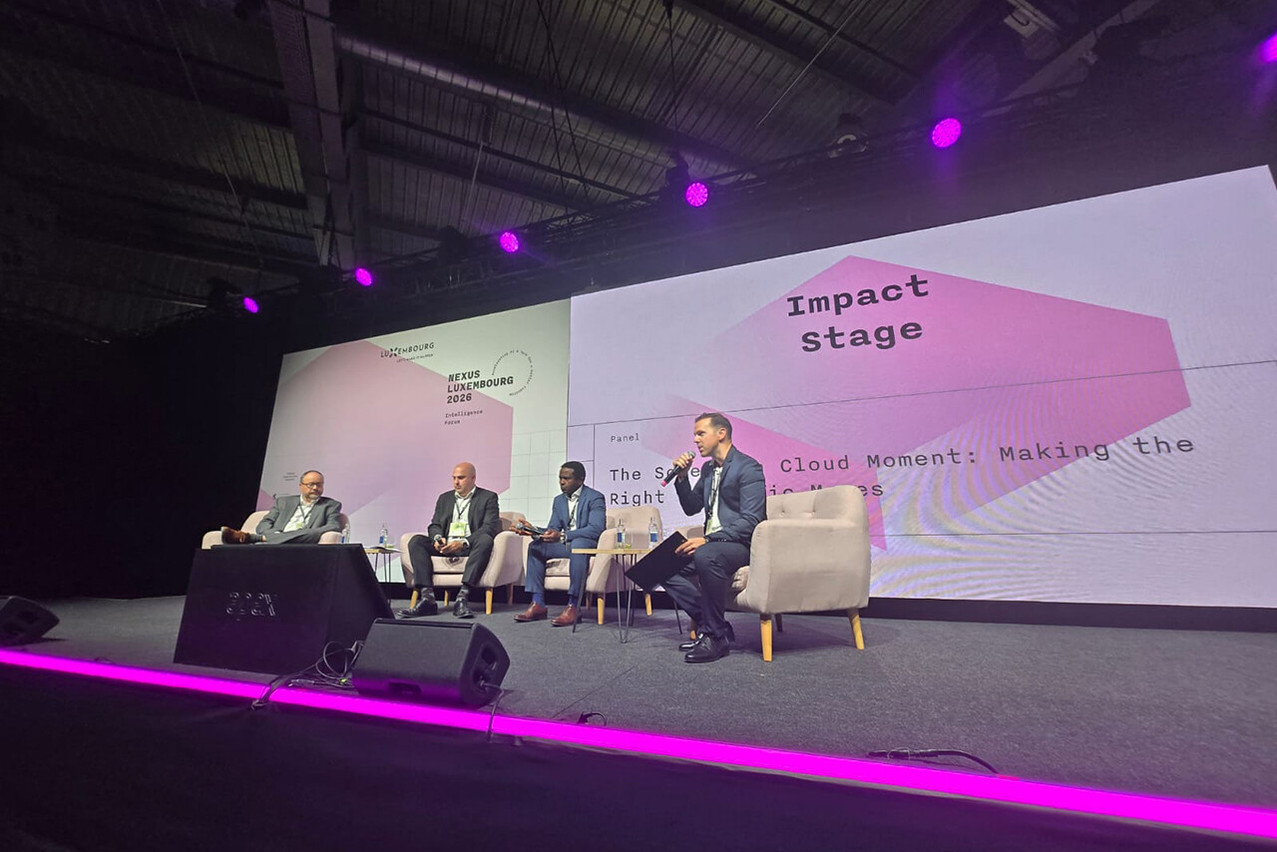
At Nexus 2026, representatives from the European Investment Bank (EIB), Creos and Microsoft argued that digital sovereignty is no longer simply a regulatory matter. It has become a question of resilience, competitiveness and strategic autonomy.
The shift reflects a broader change in how organisations view digital infrastructure. “Digital capabilities have become a major sovereignty topic, just like energy or telecommunications,” said Laurent Pulinckx, CIO at Creos Luxembourg. That observation captures a growing reality across Europe. Cloud infrastructure is increasingly viewed as a critical asset rather than a purely technical service.
From efficiency to resilience
The discussion repeatedly returned to one central theme: dependency. According to Abraham Takom, director of Core Platforms and Resilience at the EIB, the geopolitical environment has fundamentally changed the conversation. “The dependencies that a few years ago were acceptable may tomorrow become liabilities or vulnerabilities,” he said.
For institutions such as the EIB, sovereign cloud is therefore not about isolation or technological protectionism. Instead, it is about understanding strategic dependencies and ensuring operational continuity if those dependencies become problematic. Takom explained that the EIB now treats sovereignty as a component of operational resilience alongside cybersecurity, business continuity and crisis management.
The key question is no longer whether organisations should use cloud services. The question is whether they can continue operating if access to those services is disrupted. “Can we operate if one of the big providers we rely on becomes unavailable?” Takom asked.
Sovereignty is not an option
Despite growing concerns around strategic autonomy, speakers rejected the idea that sovereign cloud means disconnecting from global technology providers. Abraham Takom stressed that sovereignty should be understood as a better management of dependencies rather than an attempt to eliminate them altogether.
Similarly, Laurent Pulinckx argued that the objective is not to replace existing providers but to strengthen Europe’s digital ecosystem and create greater balance. “Sovereign cloud is not about mistrust,” he said. “It is about rebalancing Europe’s digital ambition and strengthening our autonomy and resilience.” That position reflects the pragmatic approach increasingly adopted by European institutions. The goal is not to build digital walls. The goal is to ensure that alternatives exist.
The AI factor
Artificial intelligence emerged as another major driver behind the sovereign cloud debate. According to Denis Rouard, enterprise partner lead at Microsoft Belgium, AI is accelerating the discussion because it is no longer simply an IT issue. “AI is a business solution, not an IT solution,” he said.
As organisations deploy AI at scale, questions around data location, processing power and control become increasingly important. For the EIB, AI is already reinforcing the need for sovereign cloud options. Abraham Takom explained that institutions must consider where data is stored, who can access it and where AI models are trained and executed. Sensitive information, regulatory obligations and operational risk all become more significant as AI adoption accelerates.
Europe’s opportunity
Beyond resilience, several speakers framed sovereign cloud as an opportunity for Europe to regain technological competitiveness. Denis Rouard argued that Europe has historically acted more as a consumer than a producer of digital platforms.
Artificial intelligence could change that. “AI may be the last major technological disruption capable of restoring Europe’s digital sovereignty,” he said. That view aligns with a broader European effort to develop domestic technology capabilities, cloud infrastructure and AI ecosystems. The EIB itself is financing European technology champions through initiatives such as TechEU while simultaneously assessing sovereign technologies for its own operations. The objective is to stimulate both supply and demand.
A gradual transition
Despite growing interest, speakers acknowledged that sovereign cloud adoption will take time. Both the EIB and Creos are currently evaluating workloads based on criticality, sensitivity and operational requirements before determining which environments are appropriate. Highly critical infrastructure systems may require stronger sovereignty guarantees. Other workloads may continue to operate in public cloud environments.
The future is therefore unlikely to be defined by a single model. Instead, organisations are expected to adopt hybrid approaches combining public cloud, sovereign cloud and local infrastructure depending on their specific needs.
The next five years
Asked how they see the market evolving, the panelists agreed that sovereign cloud is likely to become a standard component of digital strategies rather than a niche option. Laurent Pulinckx believes the next five years will determine whether Europe can build meaningful digital autonomy.
Denis Rouard expects sovereign cloud offerings to become as mainstream as public cloud services. Abraham Takom sees sovereignty, cybersecurity and resilience progressively merging into a single strategic conversation. If that prediction proves correct, sovereign cloud will no longer be discussed as a technology choice.
It will be viewed as a core element of Europe’s economic and strategic resilience.