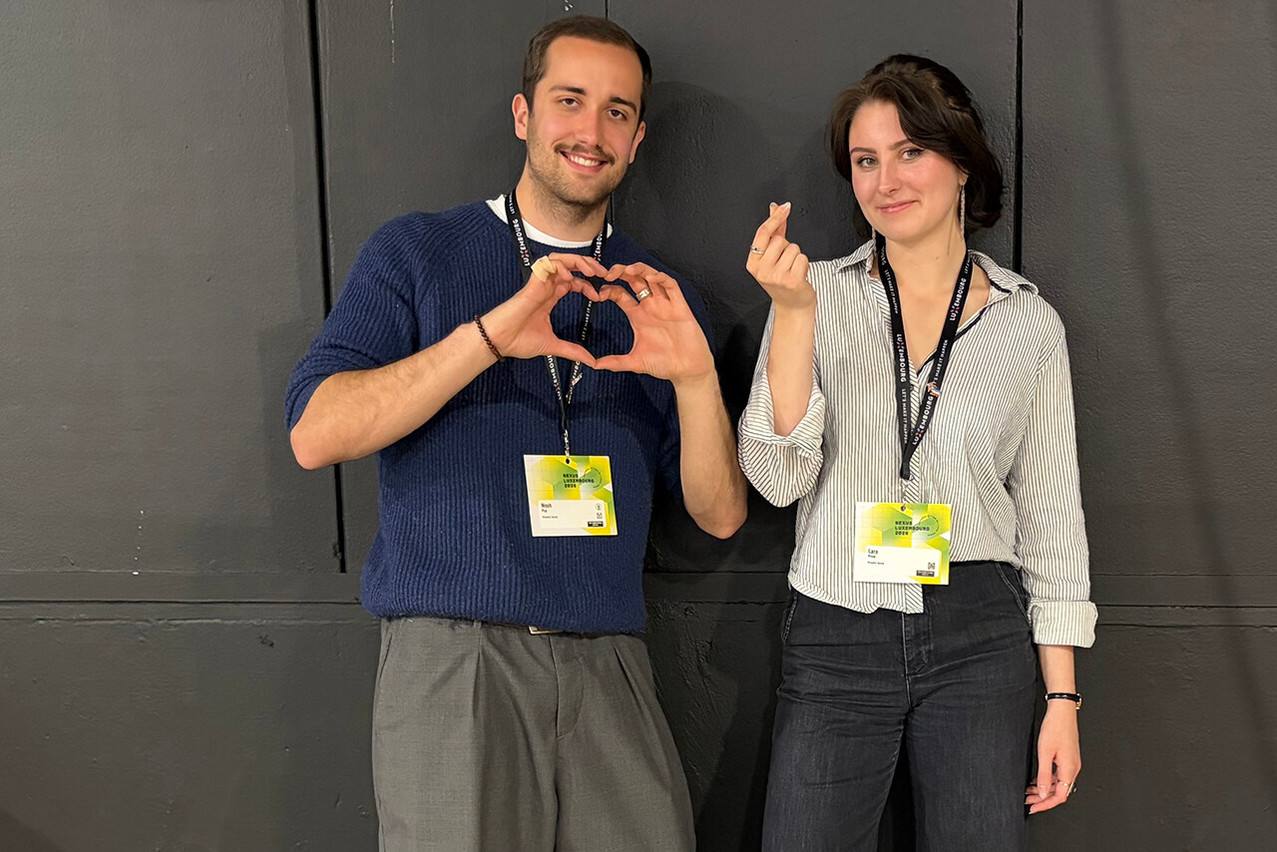
Not because he promises to replace humans with robots, but because he tackles an everyday object that nobody really talks about – the condom – the spotlight is now on Slippery Saints (a name that could be translated into English as “the lubricated saints”, or perhaps “the slippery sages”?). Behind the company are two Luxembourgers living in London: Lara and Noah, friends since school and entrepreneurs at heart.
“We met at school in Luxembourg before we both went to study in London,” the pair explain. Entrepreneurs at heart, before launching Slippery Saints, the two friends set up a co-working space on the German border to fund their business ventures.
A little chat between friends
The story began almost by chance. Lara explains: “While chatting with some friends in London, I realised that many of them had stopped using condoms, even though they didn’t want to take the pill – or had stopped taking it.”
This realisation prompted the two entrepreneurs to look into the matter further. They discovered that there were indeed several issues: traditional condoms take decades to break down and contain controversial substances used in their manufacture.
When you think about it, a condom is just a tiny plastic bag
It’s true that, on a smaller scale, a condom is essentially a tiny plastic bag. A simple sentence that sums up the problem. After several months of research, the pair have found, above all, that no company is really working on a biodegradable alternative capable of retaining the elastic properties essential to a condom.
The solution developed by Slippery Saints combines natural latex with a compound extracted from seaweed. “We’ve discovered something quite incredible,” explains the team. “The alginate derived from seaweed creates a second bonding structure with the latex. The result: the material is not only biodegradable, but also more durable.” In the parlance of a French-speaking Gen Xer, this is known as the “double Kiss Cool effect” of science.
When you point out that condoms can be thinner, that’s when everyone really listens.

This added strength even makes it possible to consider thinner condoms. “Consumers aren’t necessarily won over at first glance by the fact that condoms are biodegradable. However, when we tell them they can be thinner, that’s when everyone takes notice.” Third Kiss Cool effect. Noted.
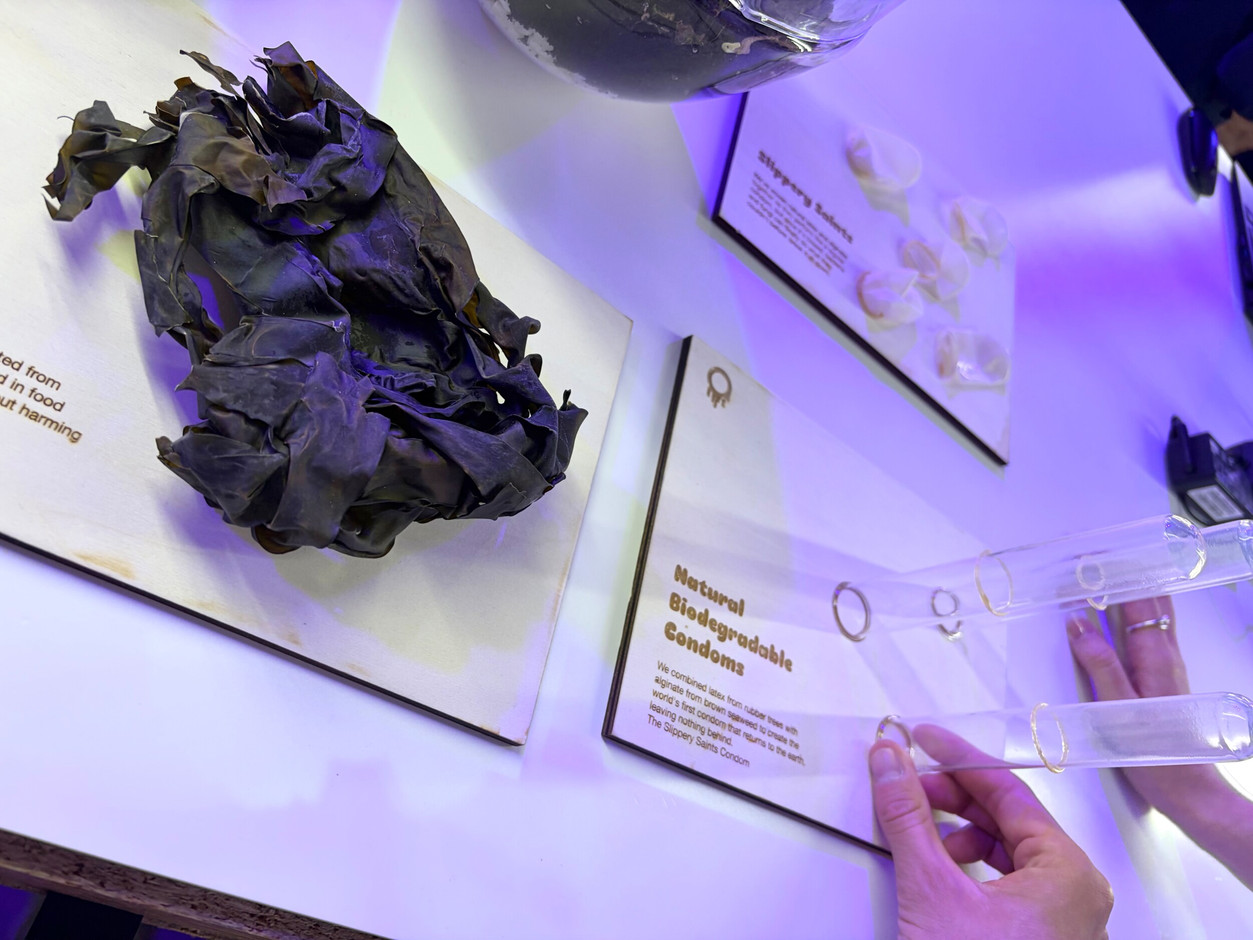
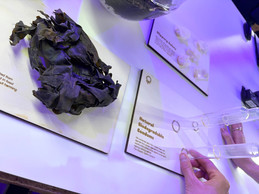
The stated aim is clear: to design a condom that can be stored for five years in its packaging, in line with industry standards, and then biodegrade naturally within about a year after use.
The principle is based on algae incorporated into the material. “The bacteria first break down the first part of the component and then attack the latex. It is this mechanism that makes biodegradation possible.”
A former Burger King executive is among the first supporters
To fund the initial development work, the founders dug into their own pockets. But they also received unexpected support from a well-known investor. Lara explains: “One of our investors is the former CEO of Burger King Germany.” Having met one of the founders whilst he was studying in Munich, he decided to fund the patent application, among other things.
The next major task is to obtain all the necessary certifications to bring the product to market.

A crucial step ahead of the next round of fundraising. Because the challenge today is no longer research, but regulation. “The next major task is to obtain all the necessary certifications to bring the product to market,” Noah points out.
When AI helps invent the condom of the future
Even in such an unexpected project, artificial intelligence played a significant role. “It enabled us to speed up scientific research enormously,” adds the young entrepreneur. Among the most useful discoveries were academic studies on biodegradable tyres. “It’s not exactly the same thing, but some of the material challenges were surprisingly similar,” smiles Lara.
AI has also made it easier to identify experts, academics and potential partners.
Xavier Bettel and the ambassadors
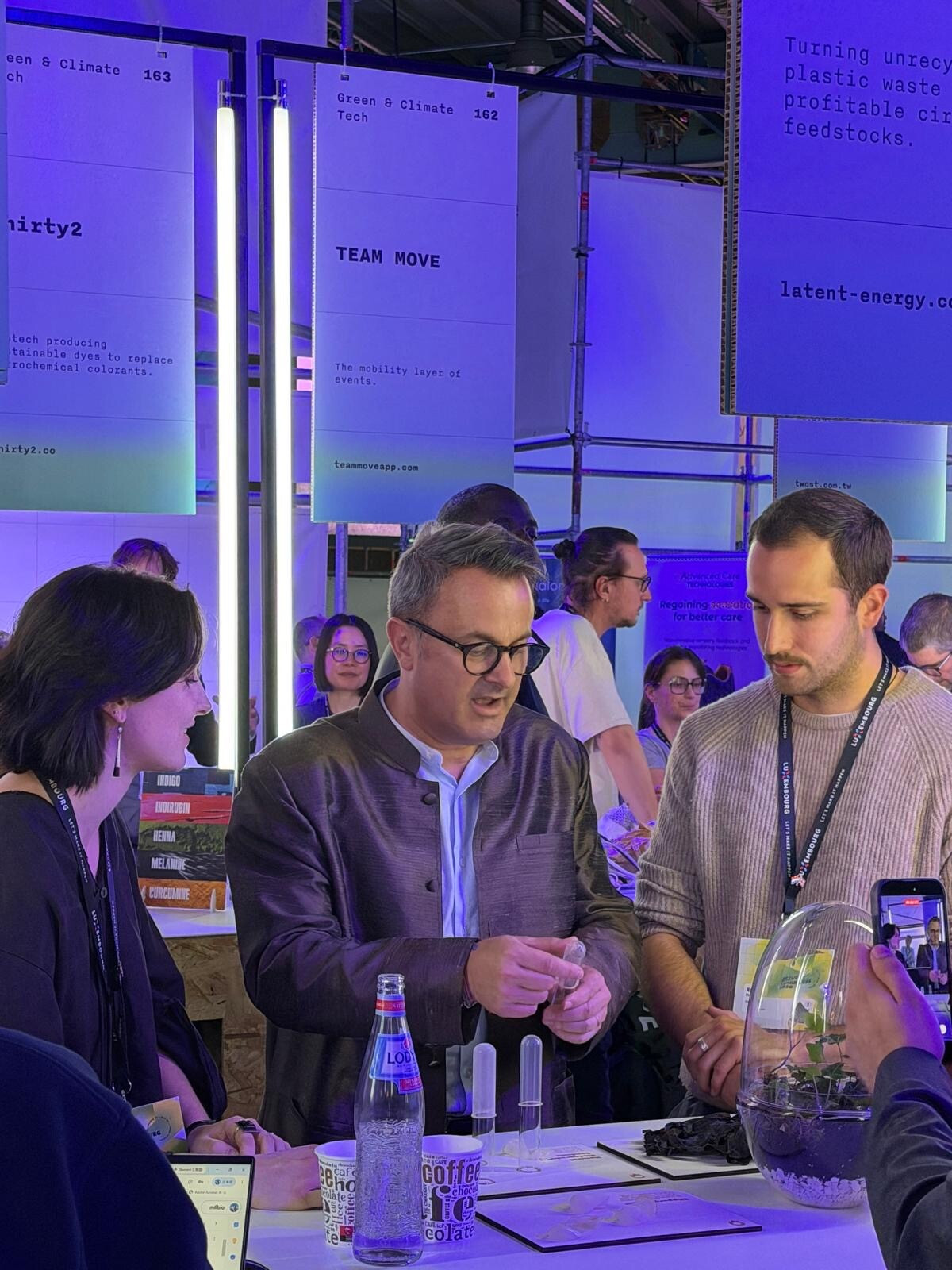
While at Nexus 2026, the founders held a series of meetings with the University of Luxembourg, representatives from the Luxembourg Embassy in the UK, and several politicians. Even Xavier Bettel stopped by their stand. “He thought the project was rather nice.”
But it’s often the audience’s reactions that make the biggest impression. “We often find ourselves at very serious events, with investors, executives and experts, and then… we start talking about condoms. People never expect that,” they laugh in unison. And yet, any awkwardness quickly disappears. “After a few minutes, everyone’s telling us a story.”
Dogs seem to be particularly affected
Of course, the founders of Slippery Saints have plenty of stories up their sleeves. Among the most memorable stories is that of a walker who recounted having to carry her dog during a walk in the Bois de Boulogne to avoid certain “rubbish” – edible but not really – left behind there and likely to harm her pet’s health.
But the prize undoubtedly goes to a teacher who came to explain that his dog had already eaten a condom. “He’d even done some research to find out how the animal would digest it.” It’s an anecdote that makes the founders smile as they recall this scholarly character, who was perfectly at ease with the idea of revealing that this sort of object might be lying about his home.
Upcoming fundraising event
“A fundraising round is planned for the end of the year to speed up the certification process and prepare for the product’s launch,” the duo explain. A step that should conclude successfully: “When we present Slippery Saints during a pitch, we often start with the same sentence: a reminder that every condom you’ve ever used still exists somewhere in the natural world.” A realisation that usually sends a shiver down people’s spines. Then comes a lot of discussion. Just like love, really.