Will a tax cut be spent or saved? Will a fall in interest rates be enough to boost spending and investment? Behind these questions lies a key challenge for economic policy: citizens and businesses base their decisions on what they expect to happen in the future.
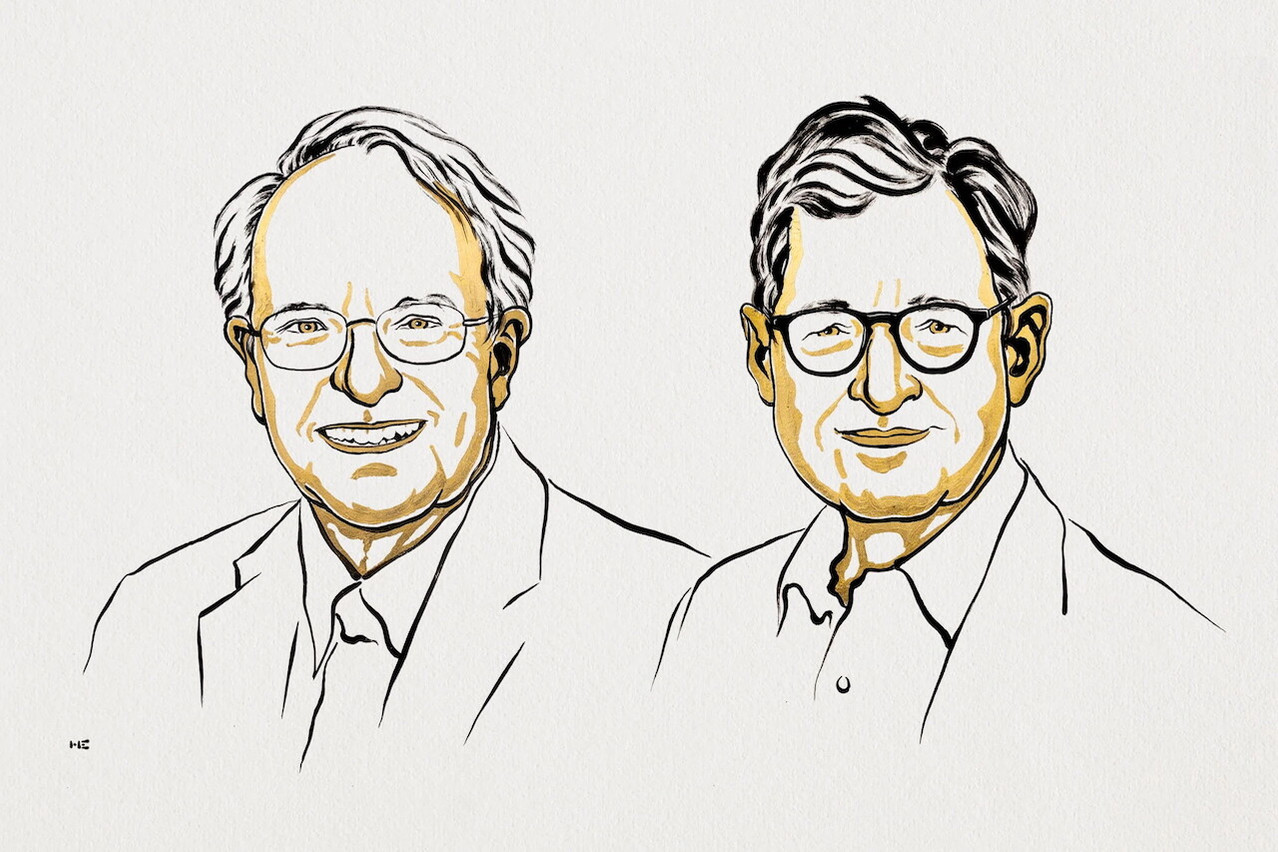
It is this link between individual behaviour and economic developments that the 2026 Nobel Prize in Economics recognises, awarded to the Americans Robert E. Hall of Stanford and Michael Woodford of Columbia. Their research into the ‘microeconomic foundations of macroeconomic stabilisation’ has helped to revitalise the tools used to mitigate recessions and curb inflation.
Understanding what drives household spending
Robert Hall’s contribution relates in particular to consumption. His work has shown how to analyse household decisions on the basis of their expectations of future income. A family does not determine its expenditure solely by looking at its monthly wage: its future prospects also play a part.
Let’s take an example: a household worried about its job security may put off buying a car, even if its income has not yet fallen. Conversely, a sustained improvement in its prospects may encourage it to spend more.
However, not everyone enjoys this freedom. Without savings or the ability to borrow, some households remain dependent on their immediate income. This distinction helps to explain why the same form of state support can have different effects depending on the recipients, and why an increase in disposable income does not automatically translate into higher consumption.
Informing decisions on interest rates
Michael Woodford has placed individual behaviour within a broader framework, as set out in particular in his book ‘Interest and Prices’, published in 2003. His research has helped to establish the so-called ‘New Keynesian’ models, which offer a fresh perspective on the analysis of government intervention in response to economic fluctuations.
These models make it possible to examine the potential effects of a change in interest rates on economic activity and prices. In particular, they take into account the fact that firms do not adjust their prices instantly and that they, too, look to the future.
Their purpose is similar to that of a laboratory: to compare different scenarios before taking action. They thus help decision-makers to assess the consequences of supporting demand or tightening monetary policy. They continue to be adapted and refined as economies evolve.
Explaining one’s policy is part of what makes it effective
A key implication of this research concerns communication. As households and businesses look ahead, the decisions they make today also depend on their understanding of the authorities’ intentions. Explaining the direction of economic policy can therefore help to enhance its effectiveness.
This approach has, in particular, underpinned ‘forward guidance’ – the signals given by central banks regarding the anticipated direction of their monetary policy. This tool came to play a significant role following the 2008 financial crisis, and subsequently during the pandemic, when interest rates were already very low.
The issue therefore goes beyond mathematical equations: it is about gaining a better understanding of reactions to a policy measure in order to better gauge its effects. A budgetary subsidy, a decision on interest rates or a public announcement affects an economy made up of millions of choices. Hall and Woodford have helped to place these choices at the heart of the analysis.