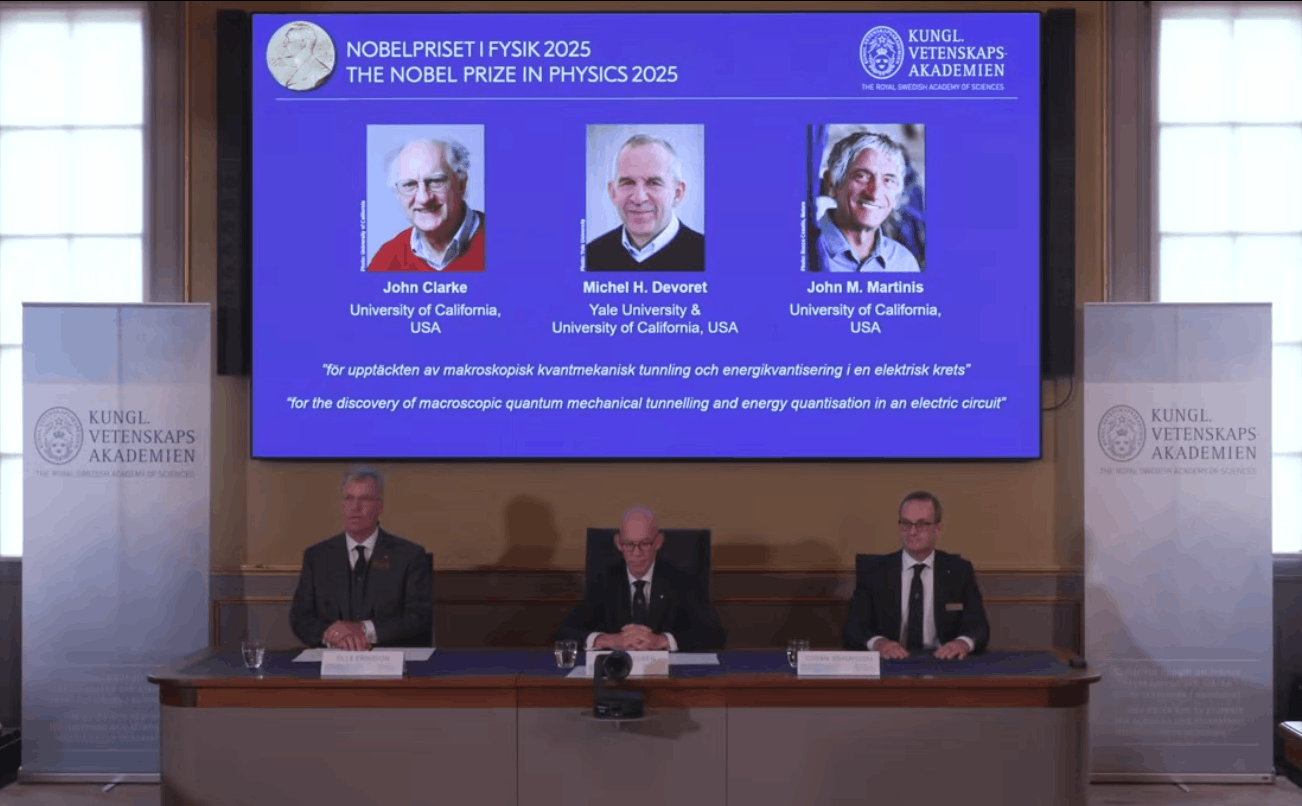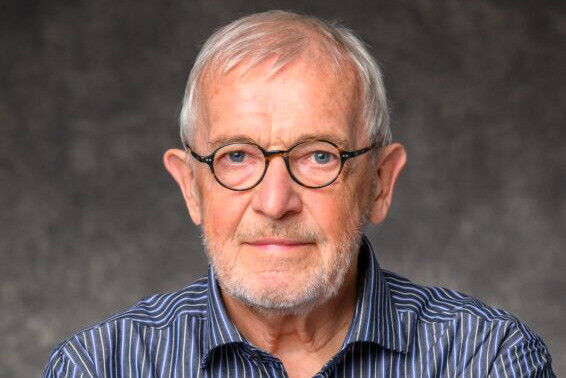
Observing the Universe from deep within the Antarctic ice. This is the challenge taken up by Francis Halzen, who was awarded the 2026 Nobel Prize in Physics on Tuesday 6 October. Born in Tirlemont, Belgium, in 1944, the professor at the University of Wisconsin – Madison has been honoured for his decisive contributions to the IceCube Observatory and the discovery of high-energy neutrinos of astrophysical origin.
These particles pass through the Earth and our bodies without us even realising it. Their elusiveness is precisely what makes them so difficult to detect. IceCube uses sensors installed in the ice to detect these signals and gather information about phenomena occurring far beyond our solar system. Francis Halzen first presented his idea back in 1988. It took more than two decades to complete IceCube, in 2011. The observatory covers one cubic kilometre of ice – a volume that is essential given how rare the collisions under investigation are. The ice at the South Pole also offers an environment that is protected from various forms of interference and is geologically stable.
With a prize fund of 12 million Swedish kronor – equivalent to approximately 1.07 million euros – the Nobel Prize also recognises the vision and tenacity of a scientist leading an international team of researchers and engineers. The observations that IceCube continues to gather could now reveal as yet unknown cosmic phenomena.