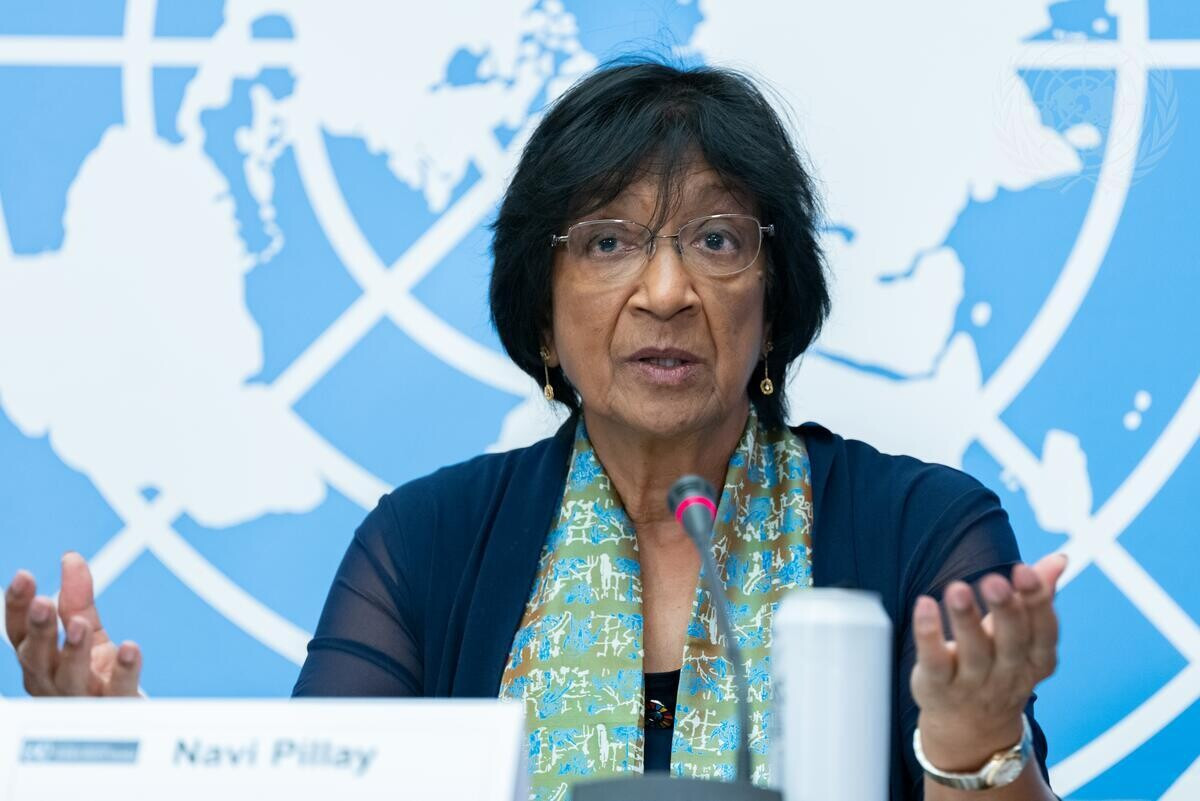
Holding states and their leaders to account for their actions, even when the balance of power seems to protect them. This is the cause championed by Navanethem ‘Navi’ Pillay, who was awarded the 2026 Nobel Peace Prize on Friday 9 October. The Norwegian Nobel Committee has praised her role in the prosecution of war crimes, crimes against humanity and genocide.
This decision also sends a message about the state of the world. The committee condemns a return to power politics at the expense of common rules, at a time when international judicial institutions are under attack and judges are being sanctioned. In its view, when force takes precedence over the law, it undermines stability, trust and peaceful coexistence.
Born in Durban to a family of Indian Tamil origin during the apartheid era, Navi Pillay began her career as a lawyer, representing, amongst others, Nelson Mandela and other opponents of segregation. She subsequently served as a judge on the High Court of South Africa, the International Criminal Tribunal for Rwanda and the International Criminal Court.
Jobs at the UN
Her work has helped to broaden the scope for prosecuting perpetrators of violence. The committee highlights, in particular, her influence in securing the International Criminal Tribunal for Rwanda’s recognition that rape and sexual violence could constitute not only crimes against humanity but also genocide.
A former UN high commissioner for human rights, Navi Pillay also chaired, until recently, the UN’s Independent International Commission of Inquiry on the Occupied Palestinian Territory. She is currently sitting as a judge at the International Court of Justice in the case in which Myanmar is accused of genocide.
The committee does, however, recognise the limitations of the system it advocates. The major powers have often shirked their responsibilities, and the procedures have produced different outcomes depending on the identity of the perpetrators and the victims.