“If you are not reducing emissions while growing, you are choosing not to,” says Polestar’s CEO, Michael Lohscheller, on the company’s sustainability report published on April 28, setting the tone for how the brand positions its development.
The figures that follow reflect that approach, but also its limits. In 2025, Polestar delivered 60,119 vehicles worldwide while greenhouse gas emissions per sold car fell by 30.9% compared with 2020, according to Polestar’s 2025 Sustainability Report. The company does not separate these developments. It presents them as the result of the same set of decisions, applied across materials, manufacturing and supply chains rather than driven by a single technological shift. According to the same report, its current models carry cradle-to-grave lifecycle emissions ranging from 27.6 tonnes of CO₂ for Polestar 4 to 32.6 tonnes for Polestar 3, with Polestar 2 at 28.3 tonnes.
The report also notes that absolute greenhouse gas emissions across Polestar’s value chain increased by 24.3% in 2025 to around 1.9 million tonnes of CO₂, mainly as a result of higher sales volumes.
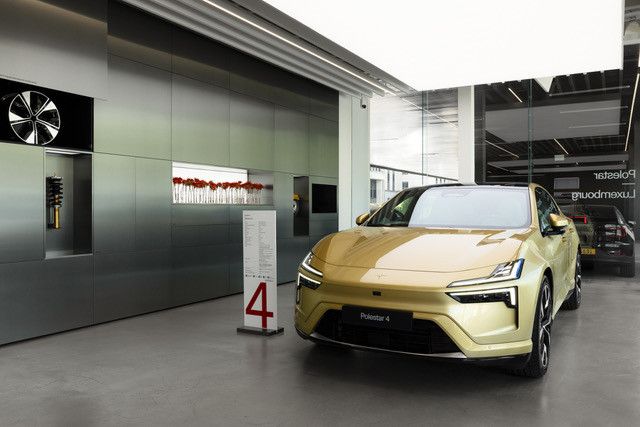
In Luxembourg, that trajectory takes a more concrete form. The brand records its strongest year to date, with 1,000 vehicles delivered in 2025, as demand for electric vehicles continues to grow and the company consolidates its position in the market.
The time for announcements on climate and sustainability is in the past.

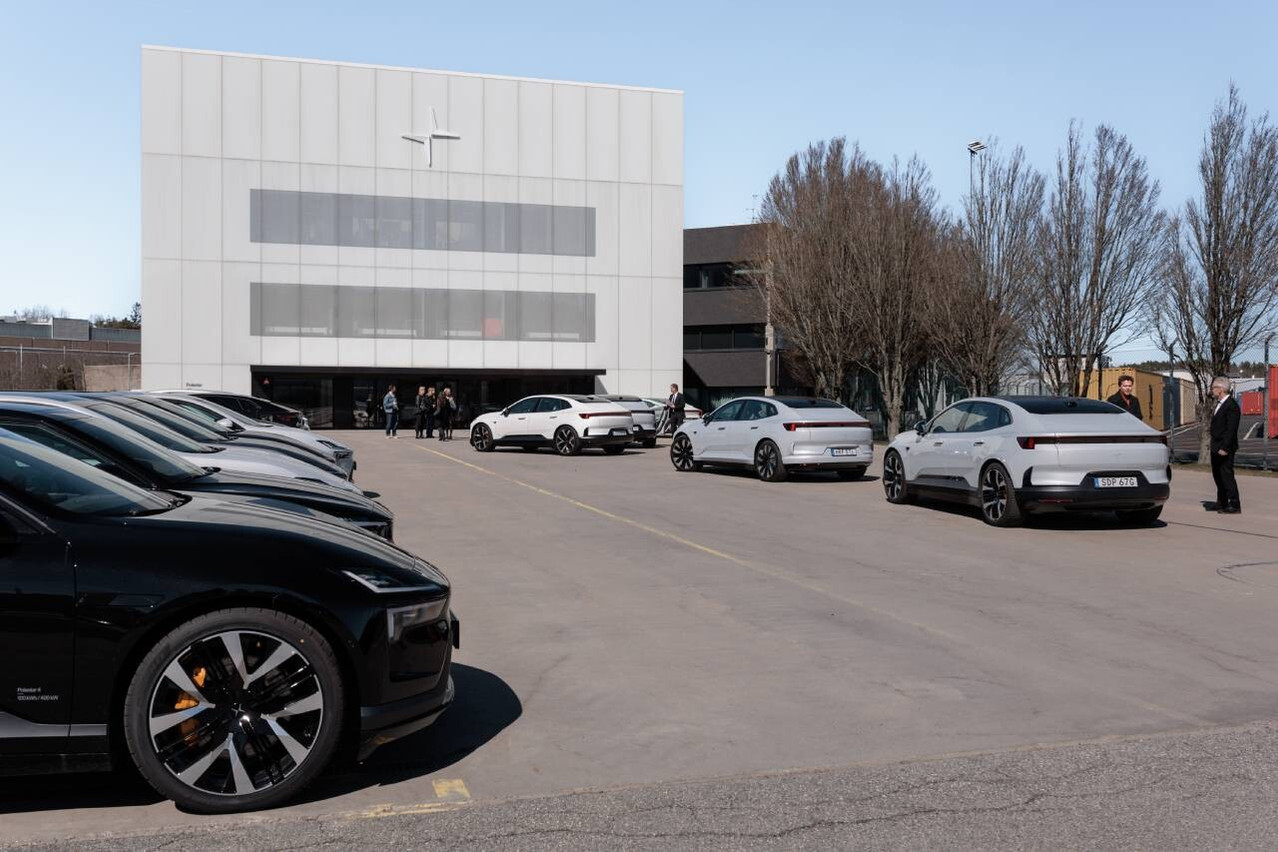
A few days earlier, on April 23, the company explained how these results are produced in practice. The discussions move quickly away from finished vehicles and towards the elements that define their footprint. “We have actually been able, as we scale our company, to reduce the greenhouse gas emissions per sold car,” says Head of Sustainability at Polestar, Fredrika Klarén, who insists that the progress “is not down to rocket science… it is really down to tangible solutions that are out there on the market.” She frames the approach in broader terms: “The time for announcements on climate and sustainability is in the past. This is about making sustainability part of everyone’s daily life.”
Polestar also positions transparency as a central element of its strategy, publishing detailed lifecycle data and expanding supply chain traceability in an effort to establish comparability across the industry.
The company’s own breakdown of emissions also highlights where the limits lie. Materials remain the largest contributor to the footprint, followed by the use phase, while manufacturing and transport account for smaller shares. Most emissions therefore occur before the car reaches the road, even as the total footprint per vehicle falls from 45.9 tonnes of CO₂ equivalent in 2020 to 31.7 in 2025, according to the report. Production and supply chains remain global, with vehicles manufactured through partner facilities across different regions, a structure that continues to shape the overall impact of the car. Polestar does not operate its own factories and relies on partner manufacturing facilities, even as it plans to expand production in Europe, with the Polestar 7 set to be built in Slovakia from 2028.
Growth and emissions moving together
Polestar structures its development around a dual objective that often appears difficult to reconcile: increasing sales while lowering emissions per unit. The company expands across 28 markets and establishes production in three countries, while continuing to reduce the footprint of each vehicle. The approach relies on a series of incremental adjustments, from sourcing to logistics, rather than on a single breakthrough.
“We want to scale,” Klarén says, “but at the same time we take responsibility for securing that it is done in a sustainable way.” That position runs through the report and the discussions in Gothenburg, where growth is not presented as a constraint but as a condition that requires continuous adjustment.
A roadmap defined by targets
The company’s climate strategy follows a roadmap extending to 2040, when it aims to reach net zero emissions. A central part of that strategy is the Polestar 0 project, a research and development programme launched in 2021 with the objective of creating a climate-neutral car without relying on carbon offsetting. “To achieve true climate neutrality, we must eliminate emissions across the entire value chain,” the report states. Climate Lead at Polestar, Emil Inberg, explains that each model carries a carbon footprint target that continues to decrease after production begins, allowing reductions to be introduced progressively over time.
The roadmap also reflects adjustments over time. The initial objective of delivering a climate-neutral car by 2030 through the Polestar 0 project has been postponed to 2035, according to the sustainability report, reflecting the industrial and technological constraints involved in eliminating emissions entirely.
The roadmap follows scientific guidance, including the principle that emissions must halve each decade. Between 2024 and 2025, emissions per car fall by 7.3%, a reduction linked to increased use of recycled materials, renewable electricity in manufacturing and a shift in product mix, with Polestar 4 carrying a lower carbon footprint than earlier models. “We need to make this transition as sustainable as possible,” Inberg says. “We need to have targets. We need to have a roadmap to get there.” Klarén adds: “We designed the carbon footprint of this car to enable these emissions reductions. It is very intentional work.”
Materials at the centre of the equation
At Mission 0 House, the company’s research hub, the focus turns to materials, where a large share of emissions occurs before a car is driven and where the gap between industries becomes visible. Designers and researchers point out that innovation in textiles has largely taken place in the fashion industry, while automotive continues to rely heavily on fossil based materials.
Polyester remains the dominant textile in car interiors, derived directly from petroleum. Alternatives such as hemp, flax, wool and regenerated cellulose fibres are already used in fashion, but their integration into automotive production introduces additional constraints. Extracting and processing these materials still releases CO₂, and the work focuses on physical processes powered by electricity rather than chemical treatments. “The ambition is to keep us as chemically clean as possible,” one researcher explains.
Within that footprint, batteries remain a central component. The report highlights efforts to reduce their impact through increased use of recycled materials, including more than 50% recycled cobalt in Polestar 2 and Polestar 3, as well as improved traceability across the supply chain.
At the same time, performance requirements remain strict. Materials must resist water, oil and dirt, maintain their appearance over time and comply with flammability regulations. These properties are typically achieved through chemical additives. The research explores how to reach similar results with fewer inputs.
We are going beyond electrification—not only talking about how great electric cars are, but how we do that in a truly sustainable way.

Water use adds another constraint. Textile dyeing remains water intensive, and researchers present an alternative based on CO₂, allowing colouring without water. “Dyeing textiles is water based,” one researcher says. “We look at how to achieve it with water free alternatives.” Klarén connects these developments to a broader ambition: “We are going beyond electrification—not only talking about how great electric cars are, but how we do that in a truly sustainable way.”
Essential materials under transformation
Some materials remain indispensable. Rubber is one of them, used in tyres and multiple components. “We cannot make cars without it,” says Focus Lead Chemicals at Polestar. Researchers explore a process in which phototrophic microorganisms capture CO₂ and convert it into molecules such as styrene, leading to bio based butadiene and synthetic rubber. “This is one strategy to use rubber materials without emissions,” he explains.
Metals present a similar constraint. Mining and metals production account for around 11% of global greenhouse gas emissions, with steel responsible for about 7%. A single car contains close to 900 kilograms of steel, and producing usable metal requires separating it from oxygen or sulphur, a process that consumes energy. “You cannot decarbonise the economy without metals,” says Focus Lead Metals at Polestar. “You cannot make cars with stones.” Technical Specialist Mobility at SSAB, points to recycled steel and lower emission production as the main levers currently available.
Design as part of the system
If you want to be sustainable, you cannot only take responsibility for the look.

In the design department, these constraints are integrated into product development rather than treated separately. Head of colour and material design at Polestar, Maria Uggla, describes a shift in the role of designers. “If you want to be sustainable, you cannot only take responsibility for the look,” she says. “You need to understand the full impact of the material you are putting in the car.”
For Polestar 3, the team sets a target of 100% recycled polyester for certain components, despite resistance from suppliers. “They said you can have 20%, max 20%,” Uggla recalls. “We said, no, we have 100.” Leather remains part of the material palette, treated as a by product that must meet traceability and animal welfare requirements. “A car we care for its whole life,” Klarén says.
Asked whether sustainability or performance takes priority, Uggla does not frame it as a trade-off. Both are developed in parallel, with materials, durability and design treated as part of the same system rather than competing constraints.
Borrowing from other industries






Design also draws on techniques developed in other sectors. For Polestar 4, the team adapts processes from the fashion industry, including 3D knitting, which allows materials to be produced directly in shape and reduces waste. “Something can look good in sneakers,” says CMF designer at Polestar, Komal Singh, “but in a car it has to look precise.”
Materials include recycled fibres such as Econyl, partly derived from fishing nets, as well as wool blends and natural fibre composites developed with partners such as Bcomp. Reducing weight becomes part of the same equation, contributing directly to lower emissions.
Fewer options, controlled production
Polestar limits the number of material and colour combinations available, presenting this as a way to reduce complexity in production. “We are the expert, we give you options,” the design team explains. The same logic applies to recycled materials. PET from plastic bottles already circulates in closed systems, and using it in cars requires ensuring that those loops are not disrupted. “We should not interfere with a closed loop,” the team notes, emphasising the need for traceability and certification.
A position within the transition
Beyond the factory, Polestar positions itself within a broader industrial and political context. Asked about its role in Europe’s energy transition, Klarén describes the company as “a very important player”, not only through its vehicles but through the system around them. “We are stimulating a whole value chain around those cars,” she says, referring to suppliers, charging infrastructure and industrial partners.
At the same time, she points to a contradiction in current policy frameworks. “They are trying to have the cake and eat it,” she says. Governments promote electrification while continuing to support fossil fuel industries, which slows the transition rather than accelerating it.