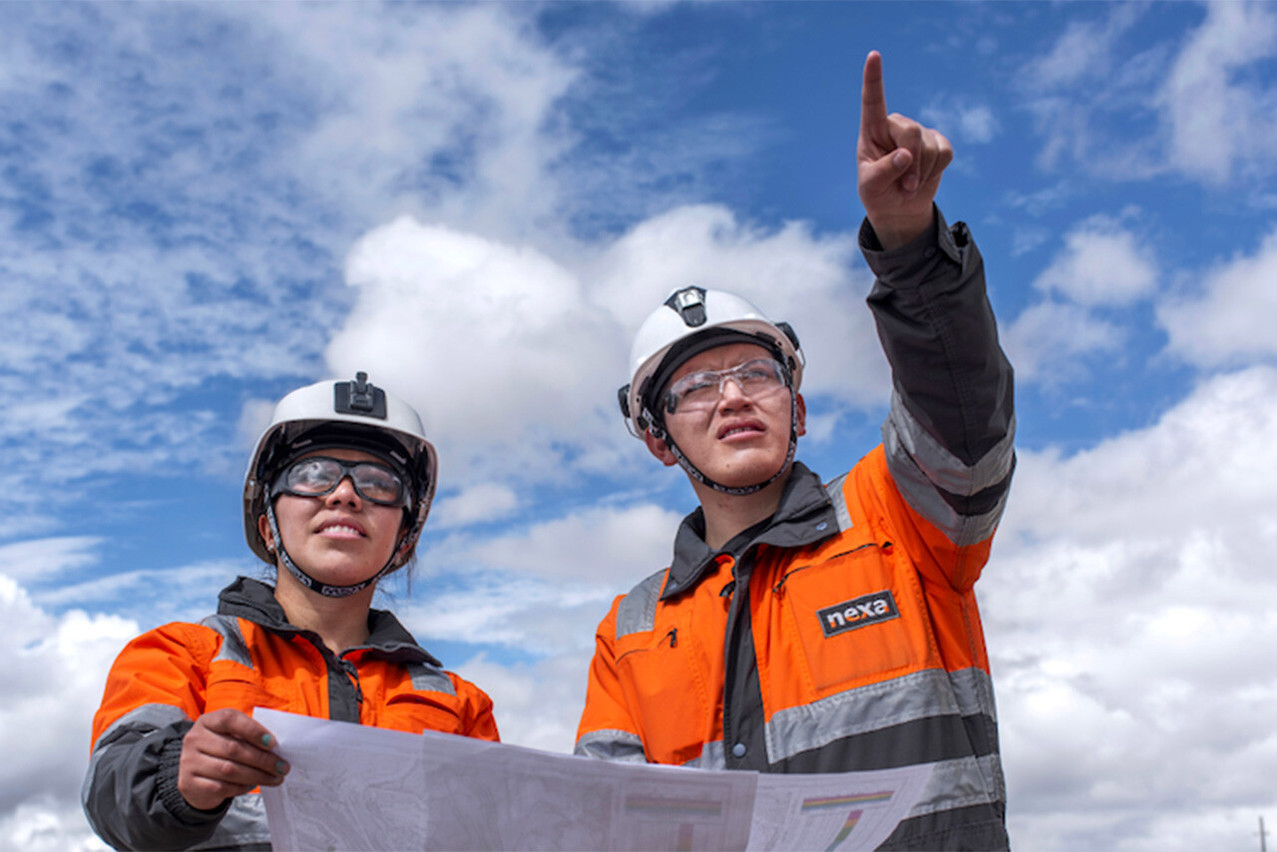
Nexa Resources, headquartered in Luxembourg, describes itself in its ‘2025 Annual Sustainability Report’, published on Friday 24 April, as an integrated metals company, active in both mining and metallurgy. The group ranks among the world’s six largest zinc producers, with 530,000 tonnes produced and a turnover of $3.3bn in 2025, following just over $3.03bn in 2024. Its operations, concentrated in Brazil and Peru, employ more than 20,000 people, including staff and subcontractors.
The financial year was marked by headwinds. “2025 was a year of significant operational challenges,” the management acknowledges in the document, citing difficult weather conditions and an unstable market environment. The group highlights a swift response, focused on productivity and discipline, enabling it to post “one of the highest levels of adjusted Ebitda in its history”.
In the environmental sphere, Nexa Resources is promoting a series of very concrete initiatives. The group places particular emphasis on water management, with an average recycling rate of 83% across its operations, and projects such as seawater desalination in Peru to ease the pressure on local resources. In its mines, it is also developing the backfilling of cavities with mining waste to reduce its environmental footprint, whilst continuing to invest in industrial effluent treatment infrastructure to increase water reuse.
Extend the lifespan of assets
The group is also making progress on key projects, such as the integration of the Cerro Pasco mining complex in Peru, which aims to extend the assets’ lifespan by up to 15 years with a total investment estimated at nearly $149m, of which over $117m is earmarked for a first phase that is already well underway. This project notably includes improvements to tailings facilities and water treatment systems, with the stated aim of reducing environmental and social impacts.
On the social front, Nexa Resources places great emphasis on its relationships with local communities and partners. The group works with around 5,000 suppliers and is strengthening its human rights and compliance standards throughout its supply chain. It also promotes local development programmes, such as agricultural initiatives that have helped to improve productivity and incomes in rural communities, whilst maintaining regular dialogue with local populations, particularly indigenous communities, around its sites.
Nevertheless, the shift towards ESG is proving to be a make-or-break issue. “This position entails greater responsibility,” insists the Chairman of the Board, Jaime Ardila. Nexa Resources claims to have a low carbon footprint and is stepping up its environmental risk management, whilst acknowledging its limitations and the growing pressure from regulators and investors. In a changing sector, the group is now staking its credibility as much on its results as on its ability to deliver on its promises.


