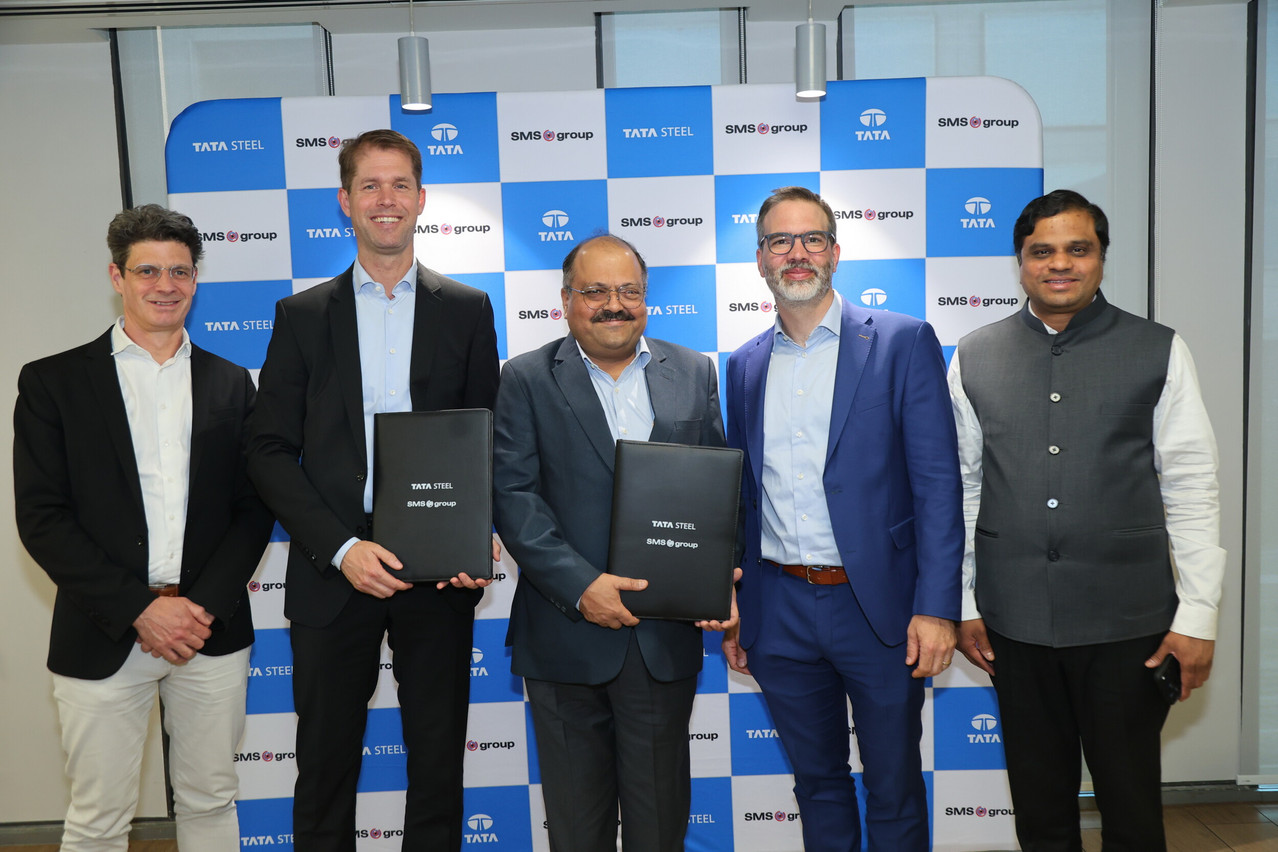
Tata Steel is stepping up its efforts to decarbonise. On Tuesday 21 April, the group announced that it had signed an agreement with Luxembourg-based Paul Wurth, part of the SMS Group, to deploy a technology described as a world first on an existing blast furnace in Jamshedpur.
Named EASyMelt, the solution aims to reduce CO2 emissions by more than 50% compared to conventional operations. “The transition to a low-carbon steel industry will depend on our ability to transform existing ecosystems,” explains Thachat Viswanath Narendran, CEO of Tata Steel, who sees this project as “an important step towards carbon neutrality”.
The process relies on a drastic reduction in the use of coke – a solid fuel, mainly carbon, produced by the pyrolysis of coal – which is partly replaced by synthesis gas injected into the furnace and heated by plasma torches. This change helps to limit emissions whilst retaining the industrial architecture of the blast furnaces. The key advantage highlighted is its flexibility. The system can operate using various energy sources, from natural gas to hydrogen, and adapts to local constraints. It also avoids the heavy reliance on very high-quality ores, which are rarer and more expensive.
For SMS, this is a strategic challenge. “Building the first EASyMelt on an industrial scale is a major milestone,” emphasises CEO Jochen Burg, who sees it as a catalyst for decarbonising existing sites. Tata Steel aims to be carbon neutral by 2045. This demonstration phase will be crucial in determining whether the technology can prove its worth on a large scale in an industry under climate pressure.