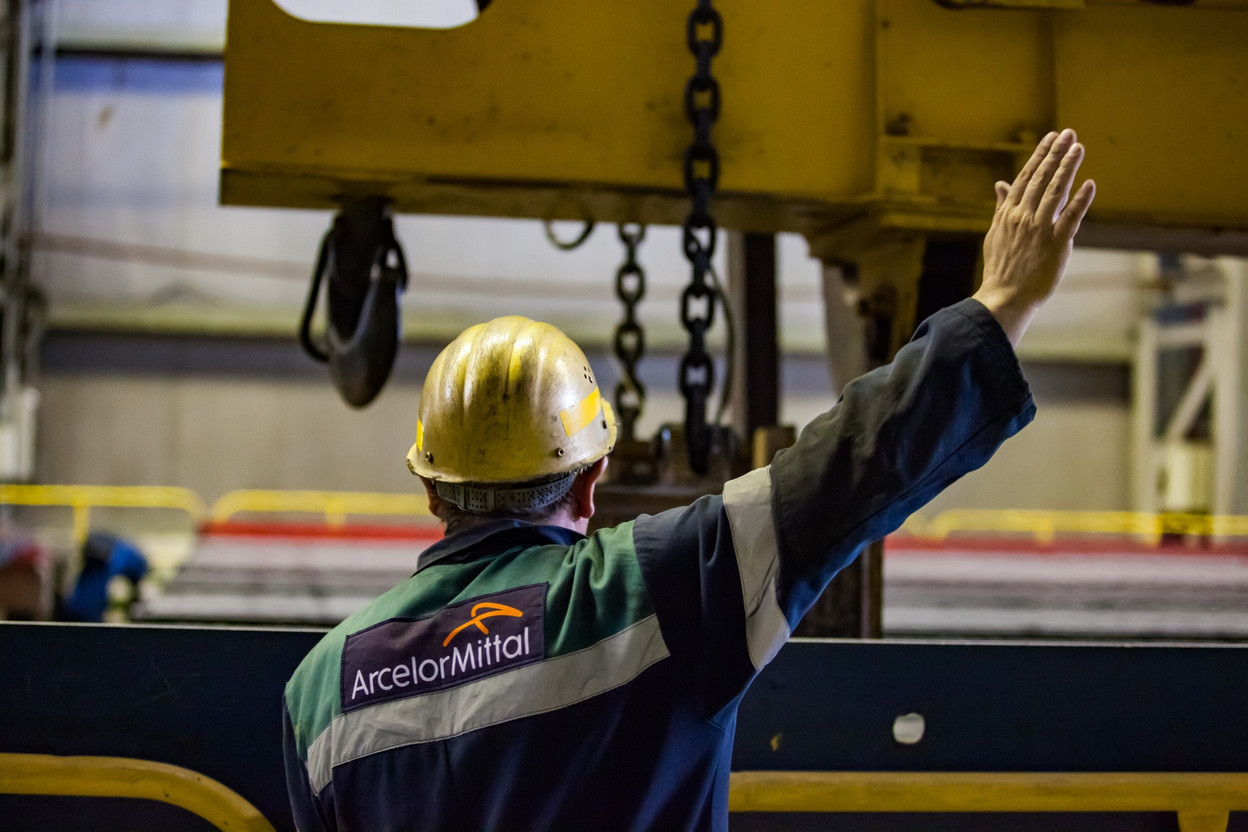
ArcelorMittal aims to demonstrate that it has stepped up its game in 2025. In its “Sustainability Report 2025”, the steel group highlights a widespread improvement in its safety indicators, which lie at the heart of its strategy. “All the KPIs we track improved in 2025 compared to 2024,” says management. The Lost Time Injury Frequency Rate (LTIFR) has thus fallen to 0.65 from 0.70 a year earlier, whilst the fatal accident frequency rate has been more than halved. But the toll remains heavy: six deaths were still recorded in 2025, compared with 13 in 2024, following a catastrophic 2023 with 61 fatalities.
This turnaround is part of a three-year transformation programme launched following a rigorous external audit. In 2024, the group acknowledged that “the policies are sound, but their implementation is inconsistent”. A year later, management believes the foundations have been laid: the roll-out of more than 130 safety roadmaps, the ramp-up of controls and increased pressure on subcontractors, who are often involved in accidents. The internal culture remains, however, the real test, with a stated but still distant goal of “zero fatal accidents”.
Balancing transformation with economic constraints
On the climate front, the company’s stance is evolving more slowly than its initial ambitions. As early as 2024, ArcelorMittal acknowledged that decarbonisation was progressing “more slowly than expected” due to regulatory uncertainties. This assessment was confirmed in 2025: the path to carbon neutrality by 2050 is maintained, but considered more complex, particularly in the case of heavy industries where competitiveness remains low. The group is aiming for a 10% reduction in carbon intensity by 2030, a far cry from the radical changes anticipated at the start of the decade.
This tension between transformation and economic constraints is also evident in Luxembourg, where the group is headquartered. The “Lux2029” agreement, signed in March, provides for up to 300 redundancies in local authorities, which are considered surplus to requirements. The group states that it intends to “adjust its internal organisation and the structure of its fixed costs” in order to remain competitive in an environment characterised by rising costs and pressure from low-cost imports. The scheme is based on voluntary redundancies, early retirement and redeployment, with the support of the government and the trade unions.
At the same time, ArcelorMittal is seeking to maintain a commitment to its industrial roots. An investment programme worth between €290m and €334m has been announced for the period 2026–2029, with projects focusing on digitalisation, cybersecurity and training. The group also promises to keep its headquarters in Luxembourg and to continue with its property projects. This is a way of providing social compensation for a restructuring that, at a local level, reflects the steelmaker’s global trade-offs.
R&D spending on the rise
Innovation is emerging as a more tangible driver of growth. The group has increased its R&D spending to $335m in 2025, up from $285m in 2024, and launched 38 new products. Beyond the figures, the group is primarily seeking to redefine the very concept of sustainability. “Sustainability is simply about running a business well,” insists CEO Aditya Mittal. A message that stands in stark contrast to the years when ESG was treated as an external imperative.
Industrial realities are taking centre stage: safety, competitiveness, access to energy and political trade-offs now set the pace. Between 2024 and 2025, ArcelorMittal is not changing course, but is adjusting its narrative. Fewer promises, more caution. And above all, an unchanged equation: transforming a heavy industry without undermining its profitability, even if it means cutting staff numbers where the pressure is greatest.