Luxembourg’s weather in 2025 was warmer than normal averages, while rainfall was “mixed depending on the regions”, Luxembourg authorities said in a joint annual review prepared by AgriMeteo, the meteorological service of the Administration of Technical Agricultural Services (ASTA), MeteoLux, the meteorological department of the Air Navigation Administration (ANA) and the Water Management Authority (AGE) and published on 2 January 2026 by the Ministry of Agriculture, Food and Viticulture.
Warmer than the reference period
The bulletin said 2025 was warmer than the 1991-2020 climate reference period, with temperature anomalies ranging from +0.1 to +0.9 C.
Most months were warmer than normal. At Remich and Findel, July was the only month colder than the climatic norm, the bulletin said. At Asselborn, January, February and July were below normal. At Clemency, the cooler-than-normal months were May, July, August, September and November.
June had the strongest positive anomaly of the year, according to the bulletin, while July recorded the most pronounced negative anomaly.
Rainfall split by region
Rainfall totals diverged across the country. The bulletin said annual precipitation was above the reference period at Asselborn and Findel but below normal at Clemency and Remich.
Even so, the year contained long dry stretches. All stations recorded a rainfall deficit over seven months, the bulletin said. At Asselborn, Findel and Remich the deficit months were February, March, May, June, August, November and December. At Clemency, the deficit ran from February to May, with further shortfalls in August, November and December.
September swung the other way. The bulletin reported the largest surplus then, with “historical records”, and anomalies of +211.6 mm at Clemency, +157.1 mm at Remich and +265.1 mm at Findel. The most marked negative rainfall anomaly was observed in December, it added.
Flooding in January and September
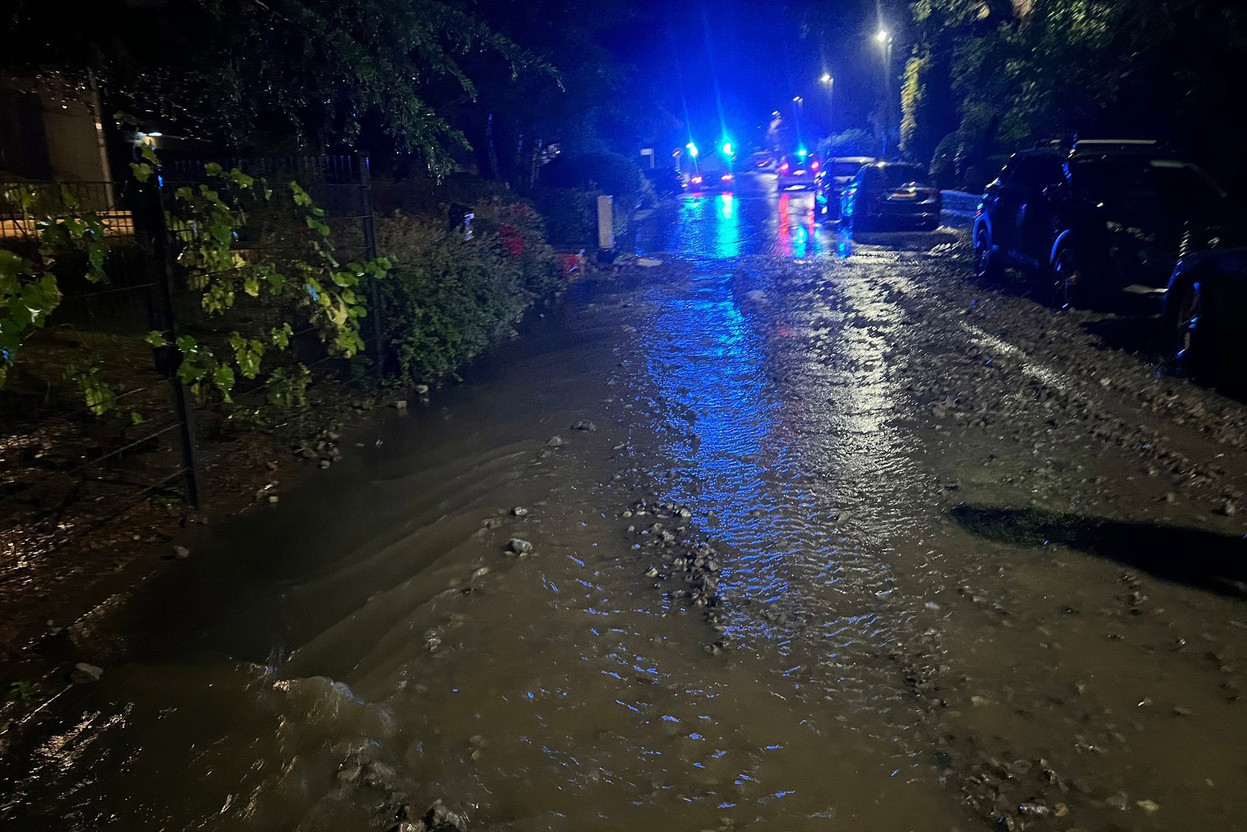
The pattern brought disruption at two points in the year. At the beginning of January, abundant rain and rapid snowmelt caused local flooding on the Alzette, the Sûre and the Moselle, the bulletin said. In September, intense rainfall triggered flooding in the Alzette valley, including Pfaffenthal and Steinsel, according to the bulletin.
What it meant for farms and vineyards
For agriculture, the bulletin noted that the strongly contrasting weather did not always make fieldwork easier. Still, it concluded that the year was “rather favourable” overall thanks to a balance between abundant rainfall and moderate warmth.
It reported very satisfactory yields for forage crops and cereals, as well as potatoes, fruit and vegetables. Viticulture also had a strong year, the bulletin said, with a dry spring and favourable conditions until the harvest period. Heavy September rain then made picking more difficult and forced winegrowers to select grapes carefully, it said, but the 2025 harvest produced very good results.