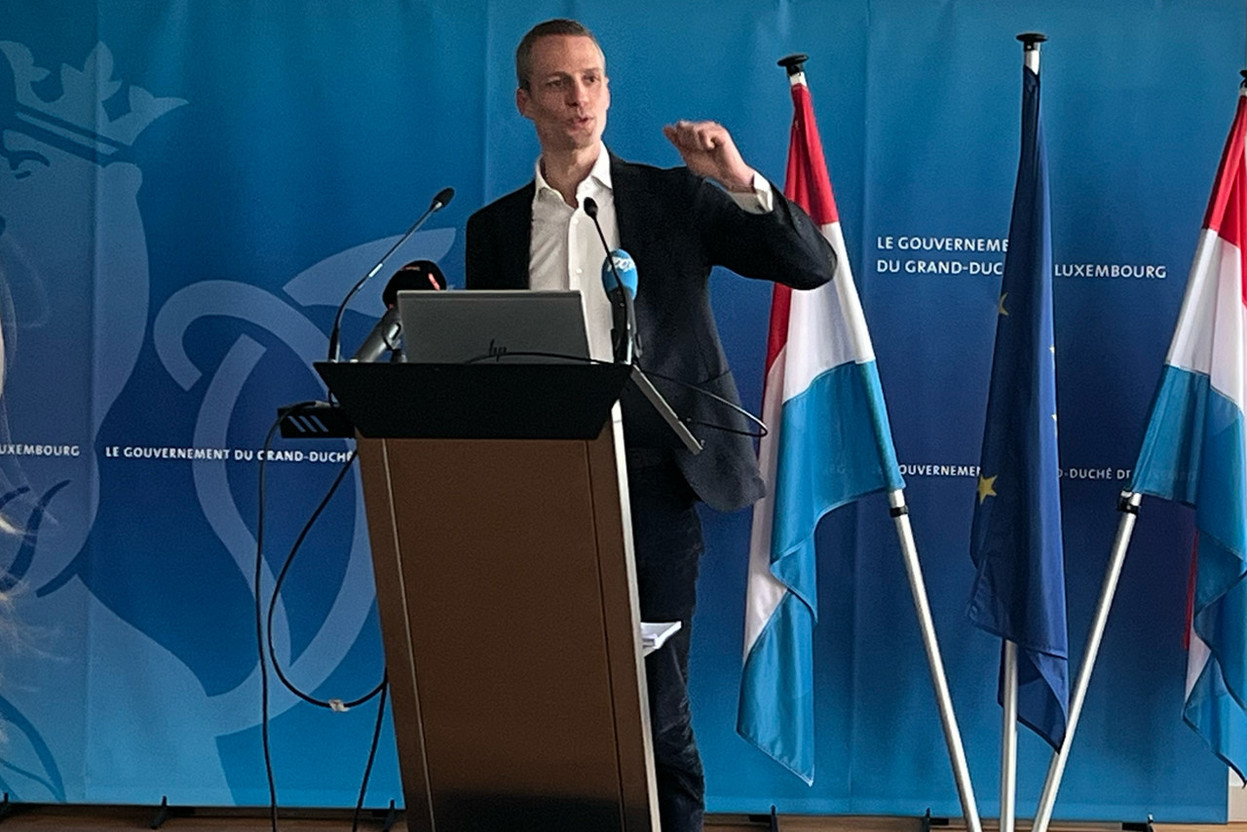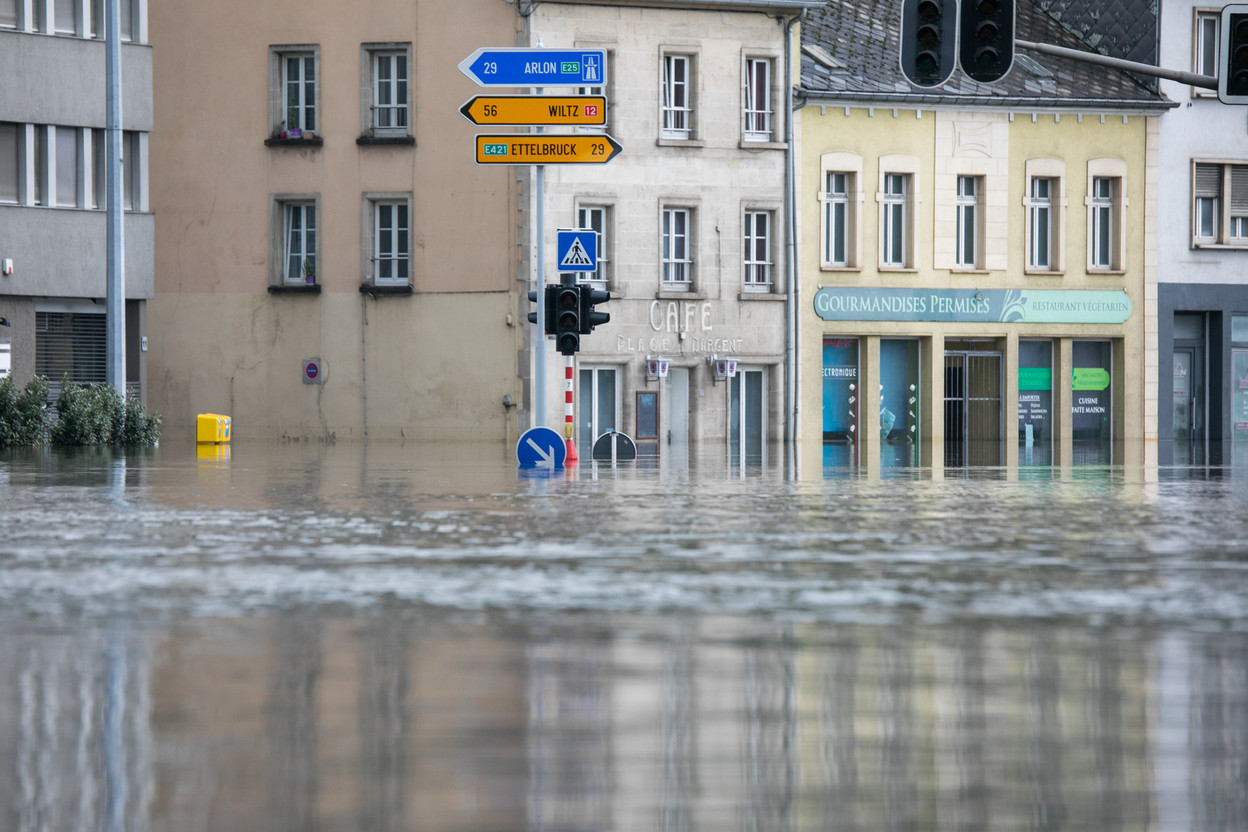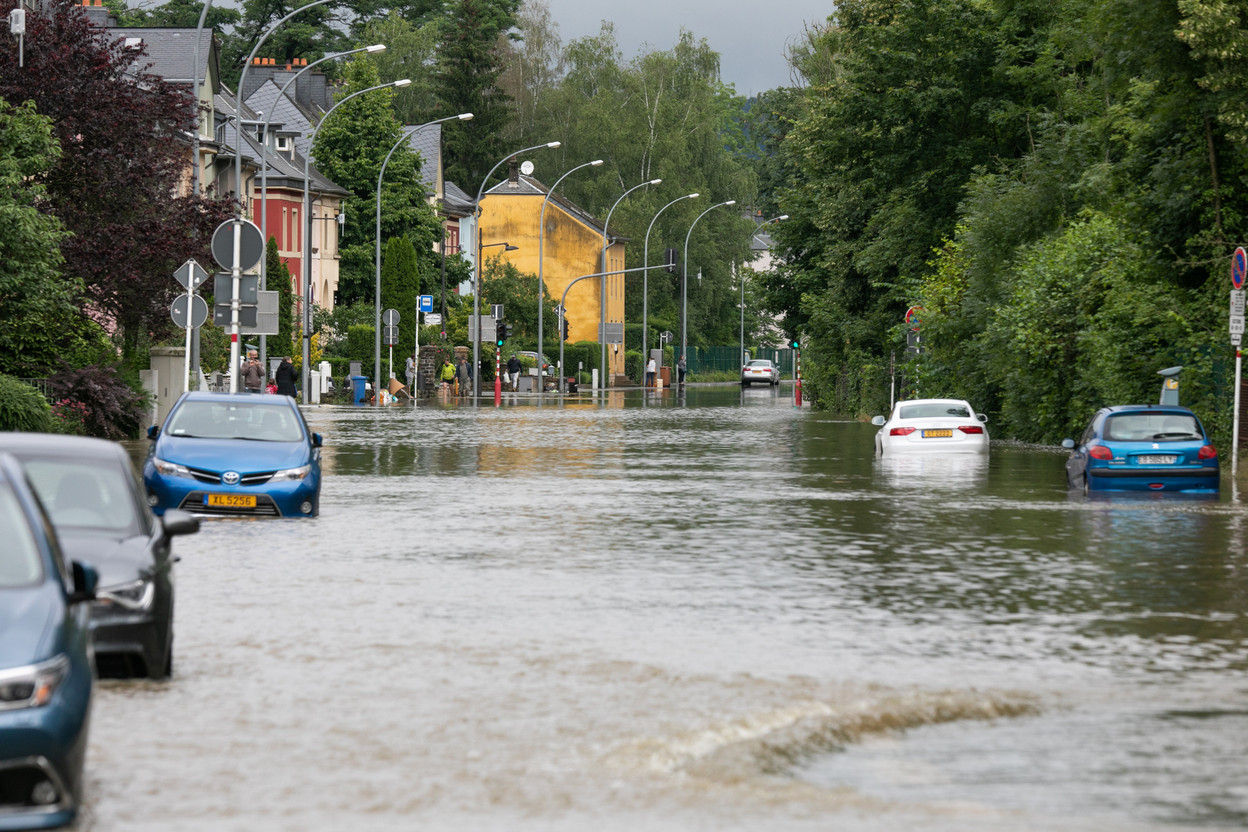
According to data from the International Labour Organisation (ILO), 40% of workers in the EU are employed in jobs that will be affected by climate change. On a global scale, the NGO Oxfam also indicates that in twenty years, climate change has caused the loss of 650bn working hours per year, the equivalent of 148m full-time jobs. Although “Luxembourg has been spared for the time being, it is essential to monitor climate trends. Climate change is not going to diminish, and we need to learn how to manage this phenomenon,” emphasised David Büchel, an occupational psychologist and management consultant at the Chamber of Employes (CSL).
The Chamber of Employees has taken stock of the current situation, particularly in terms of regulations to protect employees. It now expects the government to take action, and in particular to amend legislation that does not take sufficient account of the issues at stake.
“The impact on jobs and working conditions is not necessarily the first thing we think of when we talk about climate change, but we can no longer turn a blind eye. Spending on the fight against climate change has fallen, and at government level we feel that we are heading in the wrong direction. It costs money to anticipate climate change, but there are ways of financing it, such as through wealth tax. It’s the richest people who are contributing to global warming, so they have to contribute financially,” insisted CSL president 
In its analysis presented on Tuesday morning, the CSL used criteria analysed by the International Labour Organisation to identify the risks weighing on Luxembourg and its economy. “We are witnessing a multiplication of risks, with direct and indirect dangers,” explained Büchel. Heatwaves and extreme heat, risks linked to UV radiation, episodes of extreme cold, extreme meteorological phenomena and air pollution are all concrete risks identified by both the ILO and the CSL. And while all workers are exposed, those who work outdoors or in certain sectors are even more so.
Industry, agriculture and construction: sensitive sectors
Industry, agriculture and construction are particularly at risk. In total, they account for some 81,000 employees in Luxembourg. “These sectors require urgent adjustments to protect jobs and working conditions,” insisted Büchel. This does not mean that other sectors are not exposed. Based on feedback from the field, in particular from “staff representatives who are important intermediaries,” as vice-president Jean-Claude Reding pointed out, the CSL has identified a number of problems and is proposing some areas for consideration.
With regard to heatwaves and hot spells, the CSL is concerned about the increased risk of mortality, the deterioration of infrastructures and a drop in productivity. It should be noted that on a European scale, climate change could lead to a fall in productivity of around -0.1% by 2030. It also fears an increase in work-related accidents. Whilst the Inspectorate of Labour and Mines (ITM) has, to date, formulated safety requirements (which are legal obligations), such as “maintaining workplaces at an adequate temperature,” these are insufficient, says the Chamber of Employees. “In workplaces, the outside temperature cannot normally exceed 26°C, unless the outside temperature exceeds this value. This means that the authorised indoor temperature can rise with the outside temperature, so there is no de facto maximum authorised temperature,” explains Büchel. In addition to these rules, the ITM makes recommendations such as providing shaded areas and drinking water for those working outside. Some companies can also make use of a weather-related unemployment scheme under certain conditions.
The CSL feels that this is not enough, given the rise in temperatures and the increasingly frequent heatwaves. It recommends “the introduction of European or national regulations on protection against heat at work, with action limits that specify when measures should be taken, and exposure limit values to define when work should be stopped,” explained Büchel. Other measures proposed by the CSL include the use of the WBGT (Wet Bulb Globe Temperature) index, which is a measure of heat stress in direct sunlight and offers more precise indicators, and the recognition of heat-related illnesses as occupational diseases.
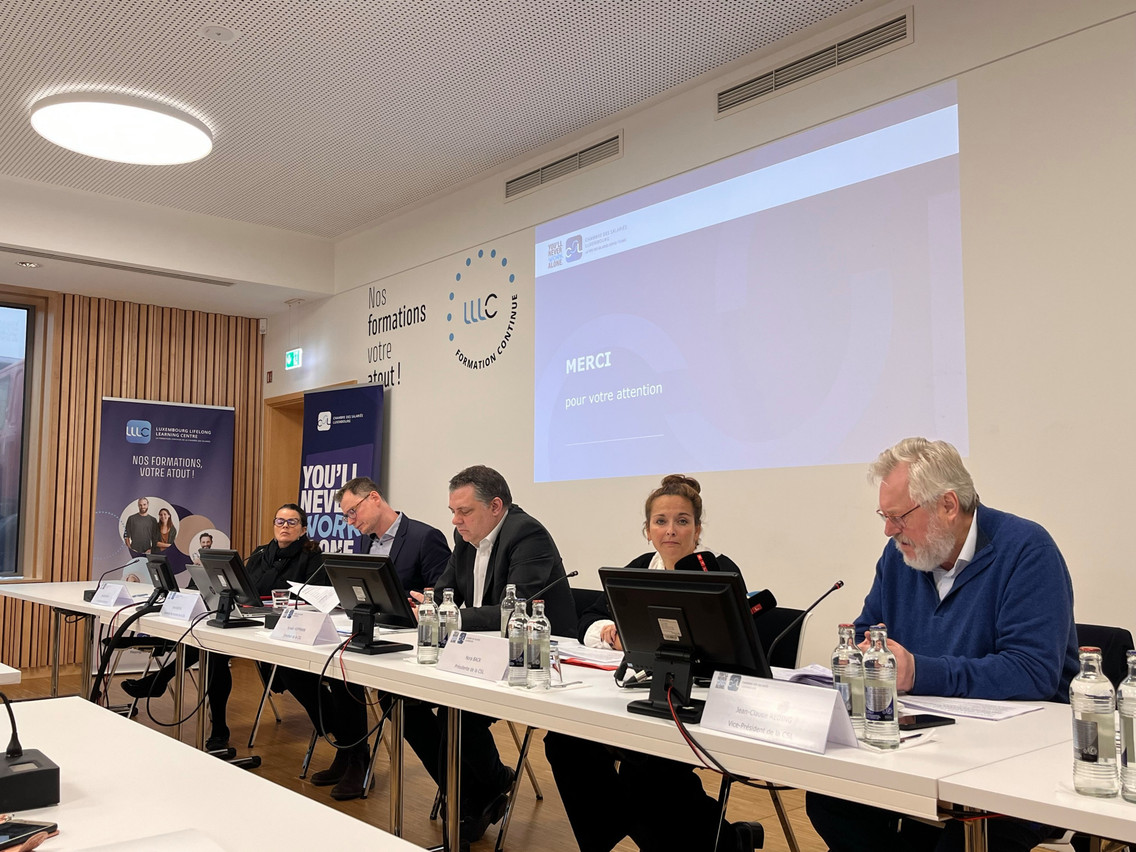
The Chamber of Employees presented its analysis to the press on the morning of Tuesday 11 February. Photo: Maëlle Hamma/Maison Moderne
Linked to heat waves, the CSL also examined the risk of UV radiation, which is particularly strong for people who work outdoors. “During the summer months, exposure limits are generally exceeded in just ten minutes of exposure for unprotected employees. UV radiation is considered to be carcinogenic, but there is no specific law requiring employees to be protected over and above their general obligations,” pointed out Büchel, who advocates the introduction of specific regulations and the distribution of high-protection clothing and sun cream. To date, according to the World Health Organisation (WHO), Europe is the continent least exposed to this risk, but 18.5% of the population is nevertheless affected.
Unlike heatwaves, cold snaps and disturbances such as storms, snowfalls and icy conditions also pose a risk to safety in the workplace, “although for the time being, Luxembourg is still coping well,” noted Büchel. Legal obligations govern the minimum temperatures required in offices (20°C), and the Accident Insurance Association recognises commuting accidents and covers costs related to health or material damage. The CSL wants to go further and is calling for the introduction of flexible working hours and the provision of insulating clothing.
More generally, the CSL is also calling for the right of withdrawal--a provision of the Labour Code that allows an employee to withdraw from his or her post on reasonable grounds if the post presents a serious and imminent danger--to be imposed on employers in the event of a government alert linked to an extreme phenomenon.
As far as the economy is concerned, the government, in its National Climate Change Adaptation Plan unveiled on 7 February, plans to take a measure to better inform businesses and reduce risks. “Industry and businesses are the source of the innovations, skills and important partnerships that are likely to help mitigate and adapt to climate change. In order to mobilise the business sector’s potential to adapt to climate change, this measure will support businesses to take climate change adaptation actively into account and integrate it into their operations and structure. This could take the form of adapting production processes to increase resilience to climate change disruptions, integrating new technologies that improve working conditions in the face of heat waves or optimising the resource efficiency of production processes, for example in the face of climate change. The commitment of any company to improve its impact on the climate would be on a voluntary, participative and, where appropriate, incentive basis. The concepts of adaptation to the effects of climate change could be integrated into existing initiatives,” said the government strategy.
This article was originally published in French.