Around 60 large industrial electricity consumers in Luxembourg could receive up to €52.2m in state aid between 2026 and 2028 under a Resilienzpak bill filed by Economy Minister Lex Delles.
The draft law would lower power costs for companies exposed to international competition. It was approved by the government council on 17 June and filed in parliament on 22 June.
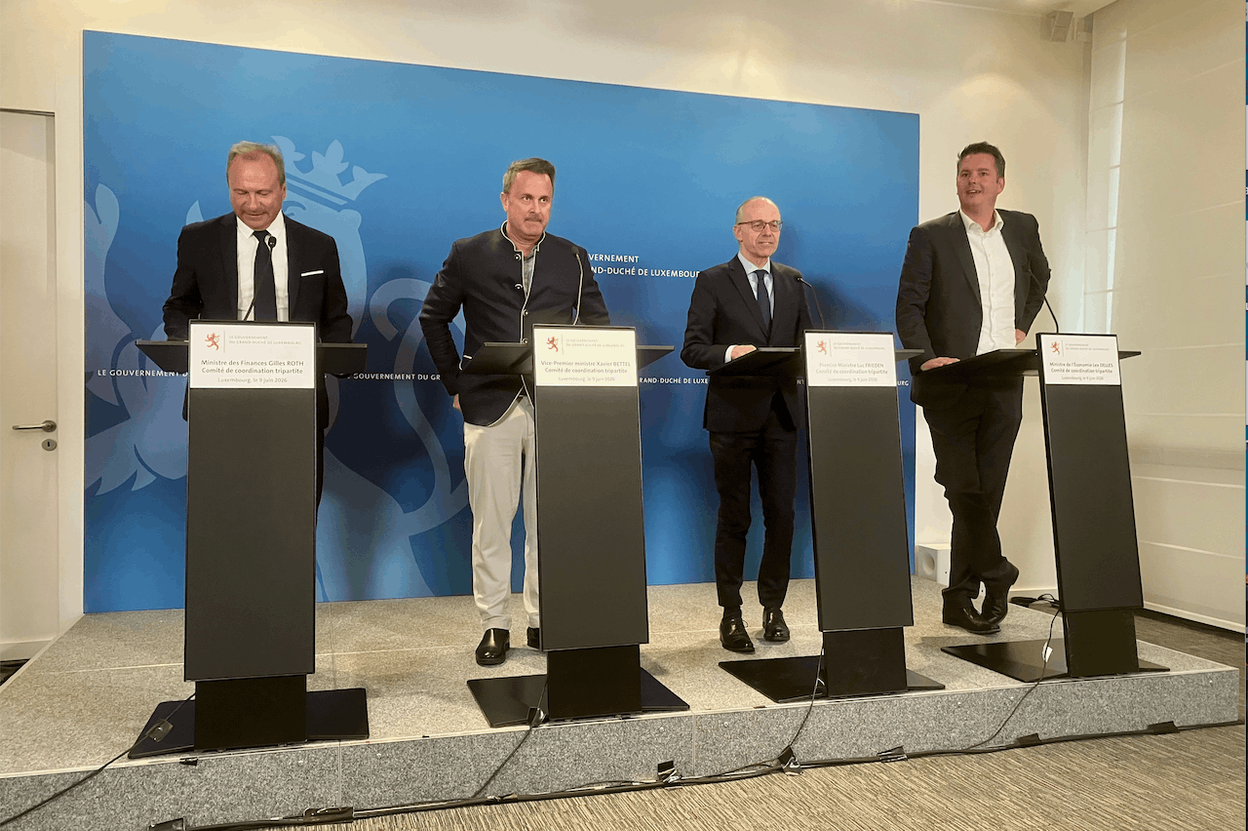
The bill is listed by the government as measure 11 of the 8 June tripartite agreement. It is meant to preserve competitiveness, keep production in Luxembourg and support companies’ decarbonisation efforts.
The measure adds a separate business-aid track to a package that has so far been more visible through household and consumer energy measures. Earlier Resilienzpak files covered household gas support, heating-oil and agricultural-gasoil relief, transport-company fuel aid and a Grand-Ducal regulation lowering petrol and diesel excise duties.
For large power users, the logic is different. The bill uses public money to reduce electricity costs for energy-intensive firms, while requiring beneficiaries to reinvest part of the aid in projects linked to the energy transition.
Industrial pressure
The bill targets large industrial electricity consumers whose production depends heavily on power and whose markets expose them to international competition.
The explanatory note says electricity costs remain a determining factor for Luxembourg’s industrial competitiveness, particularly compared with neighbouring countries. It argues that high power prices risk slowing electrification and encouraging production to move to countries with weaker environmental constraints.
The scheme is based on the European Commission’s Clean Industrial Deal state-aid framework, which allows temporary support for companies in sectors exposed to international trade and dependent on electricity.
Companies already eligible for aid linked to indirect costs under the EU emissions trading system would be excluded from the new regime.
Cost depends on power prices
The financial statement estimates the bill’s budget impact at between €32.4m and €52.2m over 2026, 2027 and 2028.
The final cost will depend mainly on wholesale electricity prices, the number of companies accepted into the scheme and their eligible consumption. The file does not provide an annual euro split.
The estimate is based on electricity-price scenarios ranging from €90/MWh in 2026, €80/MWh in 2027 and €70/MWh in 2028 at the low end, to €110/MWh, €100/MWh and €90/MWh at the high end.
The file says recent wholesale prices remain above the European Commission’s long-term reference of around €50/MWh for industry. It cites average prices of €95.6/MWh in 2023, €78.4/MWh in 2024, about €89.6/MWh in 2025 and €102/MWh in the first quarter of 2026.
No aid would be paid when the annual average wholesale price is at or below €50/MWh. Above that level, support would rise according to formulas set out in the bill.
Climate strings
The scheme does not simply compensate companies for high power costs. Beneficiaries must allocate at least 50% of the aid they receive to projects or investments in Luxembourg that contribute to the energy transition, improve the efficiency of the electricity system or strengthen national energy autonomy.
The bill says eligible investments may include renewable-energy production, energy storage, demand-side flexibility, energy-efficiency improvements affecting electricity demand, renewable-hydrogen electrolysers and electrification.
The supported assets must not increase fossil-fuel consumption. They must normally be put into service within 48 months of the aid being granted, with a possible 12-month extension if the delay is justified and outside the company’s control.
The effect of those conditions will depend on which companies apply, which investments are accepted and how the ministry enforces the commitments over time.
EU approval needed
The scheme still needs European Commission clearance under state-aid rules. The bill says no aid may be granted before a final Commission decision declaring the regime compatible with the internal market.
Companies would also face publication requirements for aid above €100,000, possible checks for up to 10 years and repayment obligations if they provide inaccurate information or fail to meet the scheme’s conditions.
The bill therefore makes the industrial side of the Resilienzpak more visible. It is not a short-term household price measure, but a public-cost commitment designed to keep large electricity users producing in Luxembourg while steering part of the support towards energy-transition projects.