Artificial intelligence (AI) is moving from isolated experiments to the core of investment operations. At JP Morgan Asset Management, 75% of equity trading flow is now automated, following nearly a decade of investment in AI and machine learning capabilities.
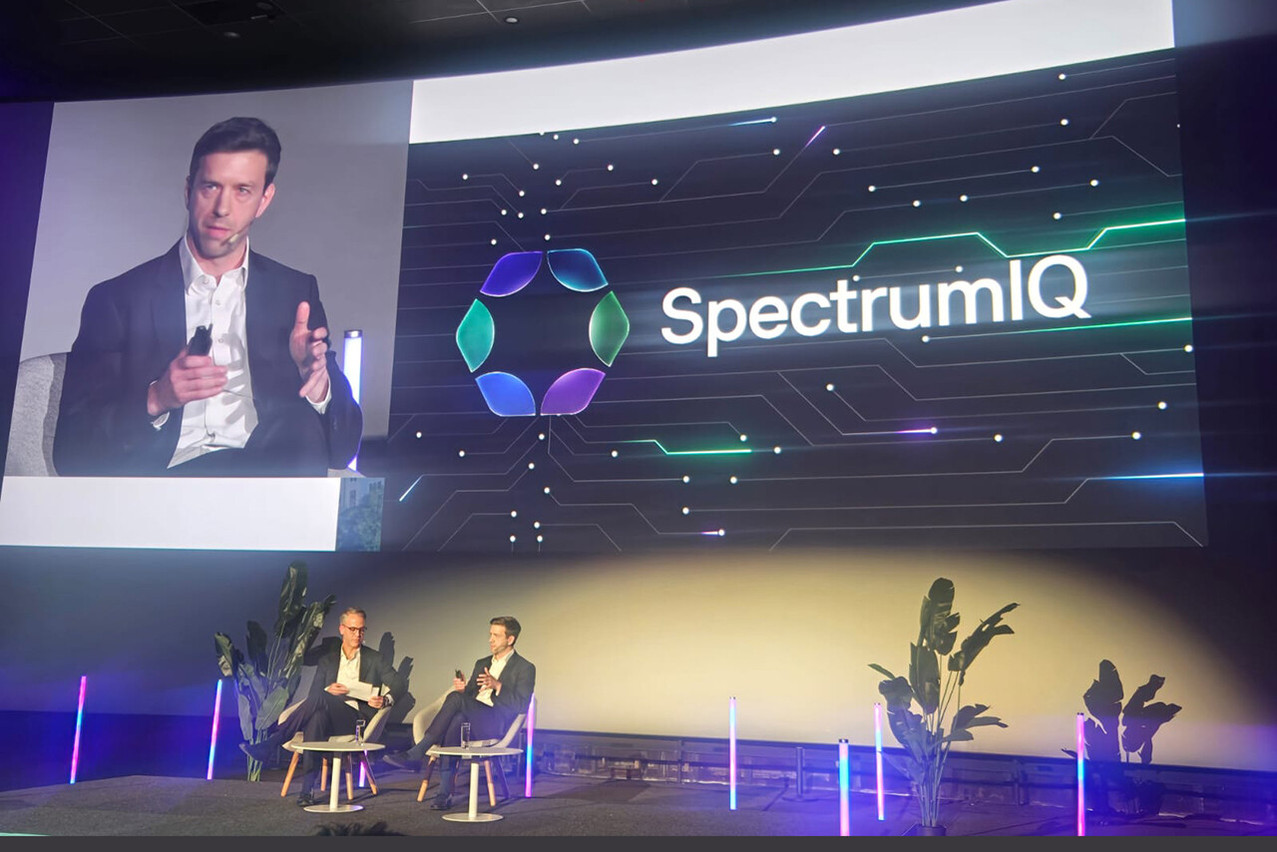
The figure was disclosed by Edward Ralph, head of AI product management at JP Morgan Asset Management, during a discussion with Daniel Besse, head of technology at Clearstream and chief digital transformation officer at Deutsche Börse Group, at the Global Fund Summit 2026 in Luxembourg.
For one of the world’s largest asset managers, the transformation is no longer about testing individual AI applications. It is about integrating the technology directly into how investment professionals research securities, manage portfolios and execute trades.
From experimentation to 750 weekly users
At the centre of this transformation is Spectrum, JP Morgan Asset Management’s proprietary investment platform, supporting approximately $4trn in assets across 600 investment strategies. The platform connects three main activities: investment research, portfolio management and trading.
Its AI layer, Spectrum IQ, integrates artificial intelligence capabilities into these existing workflows rather than offering a separate tool for occasional queries or document summaries. According to Edward Ralph, approximately 750 investment professionals now use Spectrum IQ every week, representing 70% to 80% of the firm’s relevant investment workforce.
Usage has increased fivefold in 2026. The platform is designed to support portfolio managers, research analysts and traders in completing complex investment processes, from analysing company information to identifying opportunities and preparing investment decisions. The ambition is to eliminate repetitive, low-value tasks and allow investment professionals to focus on activities that can generate differentiated returns for clients.
From 700,000 documents to 28 million
One of the most striking aspects of JP Morgan’s AI strategy is the scale of its underlying data infrastructure. When Spectrum IQ was first introduced approximately three years ago, its searchable information base included around 700,000 documents from four external brokers, alongside internal research.
That has now expanded to approximately 28 million documents, drawing on research from 35 brokers, earnings call transcripts, corporate filings and the firm’s own investment analysis. The group has established a dedicated team to prepare external textual research for AI applications.
But Edward Ralph argued that the competitive advantage increasingly lies not simply in accessing more information, but in capturing the knowledge embedded in investment processes. One example is Smart Monitor, a personalised daily briefing delivered to more than 500 investment professionals. Rather than distributing identical market updates, the system adapts its content to each user’s investment universe, research approach and historical decision-making process.
This allows investors to receive information aligned with the way they manage portfolios and evaluate opportunities. The technology is therefore moving beyond information retrieval towards supporting more complete investment workflows.
Technology road maps shrink to three months
The rapid development of artificial intelligence is also forcing changes in how financial institutions organise technology projects. Traditional annual development plans are becoming increasingly difficult to maintain. “We are frankly starting to just spec out a three-month road map,” Ralph explained.
JP Morgan Asset Management is also seeking to remain flexible in its choice of AI models, rather than relying exclusively on a single technology provider. This approach allows the firm to integrate new capabilities as the market evolves. However, deploying the technology remains as much an organisational challenge as a technical one.
Edward Ralph acknowledged that a relatively small group of investment professionals, around 10% to 15%, currently drives a significant proportion of usage. To encourage wider adoption, JP Morgan relies on dedicated training teams, internal champions and closer collaboration between investment professionals, engineers and data scientists.
The objective is to ensure that AI tools become part of everyday investment processes rather than remaining concentrated among a limited number of enthusiastic users.
The unresolved question of AI returns
Despite the scale of deployment, measuring the financial return generated specifically by artificial intelligence remains difficult. Edward Ralph acknowledged that JP Morgan Asset Management has not yet developed a perfect method for assessing AI’s return on investment. The firm monitors several indicators, including the adoption and frequency of use of its tools, broader research coverage, the speed of processing new investment opportunities and improvements in investment workflows.
But attributing these outcomes exclusively to AI remains challenging. The group is also examining AI token consumption as a way of understanding how investment professionals use the technology and where it generates value. For the asset management industry, this distinction is increasingly important: widespread AI adoption does not automatically demonstrate higher investment performance or measurable financial returns.
AI becomes a business transformation
For Daniel Besse, the discussion illustrated why AI cannot be treated solely as an IT project. Deutsche Börse Group has introduced leadership training focused on operating in an AI-driven environment, alongside reverse mentoring initiatives connecting senior executives with more digitally experienced employees.
Daniel Besse argued that successful AI transformation requires business leadership, integrated processes and deployment at scale. The implications extend across the fund industry, including Luxembourg’s asset management and servicing ecosystem, where the challenge is increasingly to integrate AI into established operational processes rather than multiply standalone experiments.
JP Morgan’s experience suggests that the next phase of competition will not necessarily be defined by who adopts AI first, but by who succeeds in embedding it most effectively into investment decisions. The technology is already changing how investment professionals work. Demonstrating precisely how much additional value it creates remains the next challenge.