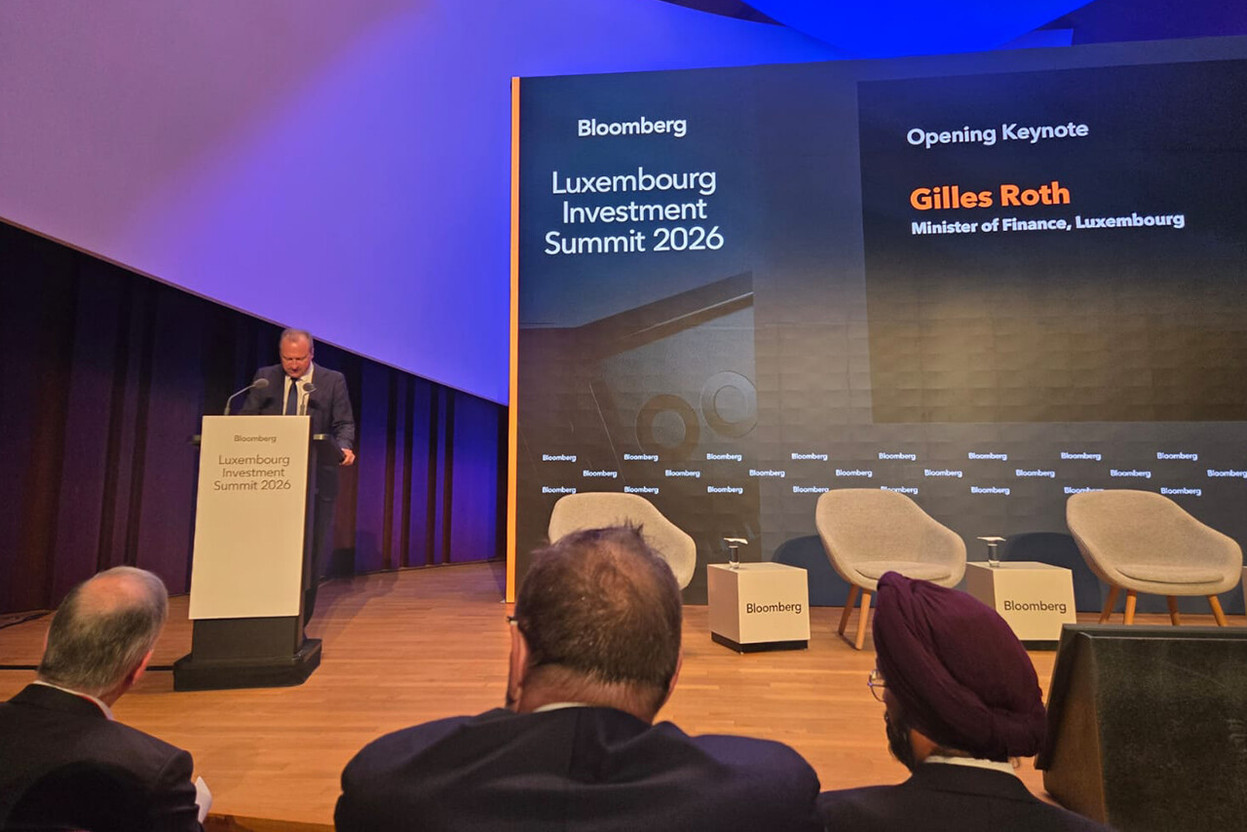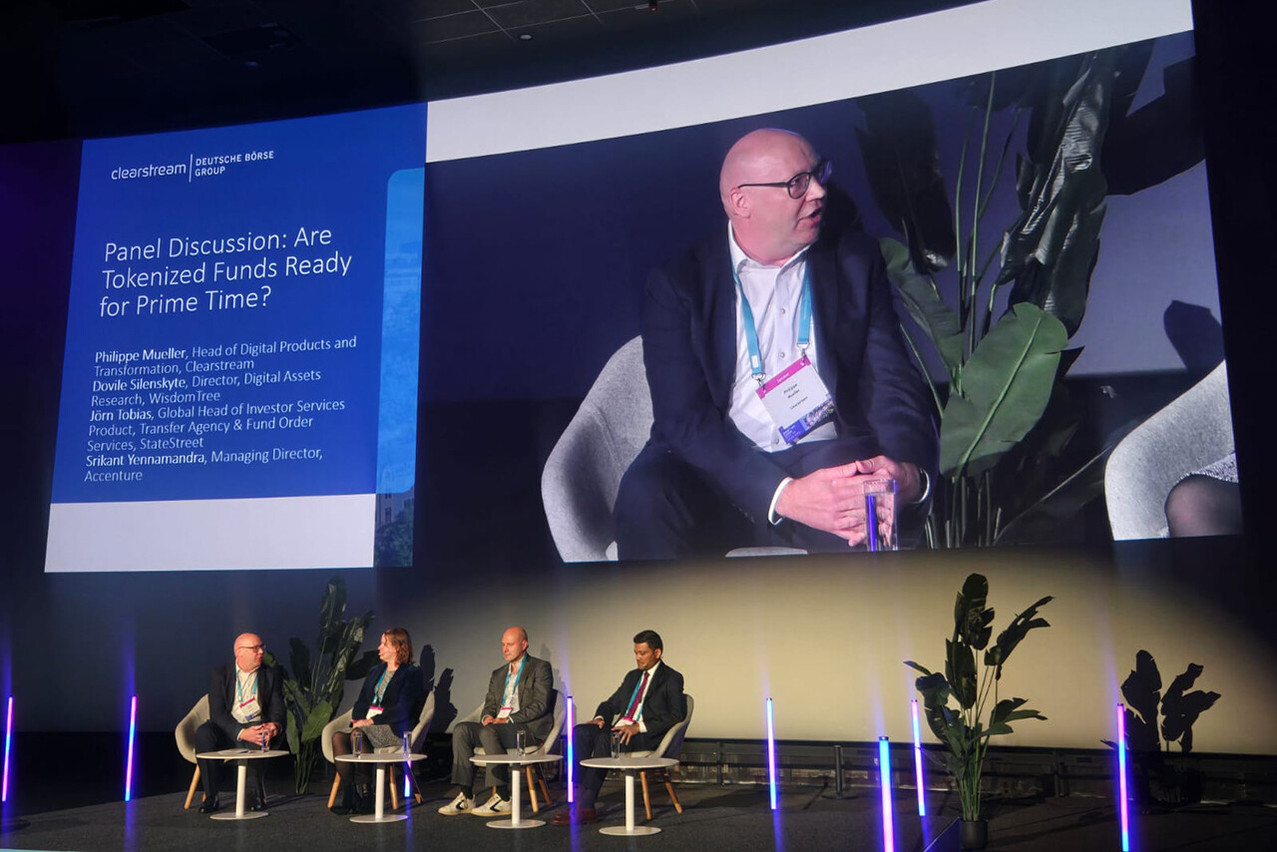
Tokenisation may be moving beyond experimentation, but the investment fund industry is preparing for a much longer transition than technology enthusiasts might suggest. Speaking at the Global Fund Summit 2026, organised by Deutsche Börse, representatives from WisdomTree, State Street and Accenture highlighted a growing gap between the commercial promise of tokenised funds and the operational challenges of integrating them into existing financial infrastructure.
According to the fifth edition of State Street’s Digital Assets Survey, conducted among 300 senior executives across asset management, asset owners and wealth management, 38% believe blockchain could eventually replace the hybrid model, but not for at least ten years. Another 20% expect traditional and blockchain-based infrastructures to coexist indefinitely.
“Coexistence is a fact, and that will probably take years, if not decades,” said Jörn Tobias, global head of investor servicing product at State Street.
Institutional investors are already deploying capital
Despite these challenges, tokenisation is no longer confined to pilot projects. At WisdomTree, institutional investors are already driving demand for tokenised investment products. Dovile Silenskyte, director of digital assets research, highlighted the group’s Treasury Money Market Digital Fund (WTGXX), which had reportedly reached $1.2bn in assets earlier this month, illustrating the growing role of tokenised funds in stablecoin reserve management and corporate treasury operations.
The strongest use cases are emerging in stablecoin reserve management and corporate treasury operations. For institutions holding substantial cash balances, tokenised money market funds offer the possibility of earning returns outside traditional market hours.
Retail investors, meanwhile, are attracted by a different proposition: fractional ownership. Tokenised fund shares could provide access to asset classes such as private equity and real estate, where high minimum investment thresholds have traditionally restricted participation.
Srikant Yennamandra, managing director and global head of digital assets at Accenture, pointed to distinct regional approaches. North America is primarily focusing on tokenised money market funds and their potential use as collateral, while Europe is concentrating on integrating tokenised products into existing distribution networks and regulatory frameworks.
The key measure of progress, he argued, is no longer simply how many tokenised funds are launched, but whether investors can actually use them.
Higher costs, but no premium for service providers
Behind the technological transformation lies a difficult economic reality. Asset managers launching tokenised share classes are not abandoning their traditional funds. Instead, both models must operate simultaneously, creating additional complexity for transfer agents, custodians and other fund service providers.
For State Street, the challenge is to avoid building two entirely separate operating models. The group has integrated digital transfer agency capabilities and blockchain wallets into its existing operational and compliance infrastructure, rather than creating an independent digital business. Yet this approach still involves additional costs, particularly during the initial implementation phase.
Asked whether asset managers were willing to pay a premium for maintaining traditional and blockchain-based registers, Jörn Tobias delivered one of the panel’s most revealing answers. “There are no premiums. There are rather further discounts.”
The remark highlights a central contradiction facing the fund servicing industry: providers are expected to invest in new infrastructure while clients continue to demand lower fees. Accenture acknowledged that the transition would remain expensive for some time.
Extended trading hours, on-chain reconciliations, wallet screening and sanctions monitoring all introduce new operational requirements. The long-term objective is greater automation and efficiency. In the meantime, however, the industry must finance the coexistence of two systems.
The missing piece: cash settlement
Another major obstacle remains the settlement of transactions. Tokenising fund shares does not automatically create an entirely digital transaction process. To achieve genuine delivery-versus-payment settlement on blockchain, the cash leg must also be addressed. Different regions are exploring different solutions.
In the United States, stablecoins have emerged as an important part of the discussion, while Europe is developing approaches involving central bank money and tokenised commercial bank deposits. For Srikant Yennamandra, several forms of digital money are likely to coexist.
He nevertheless cautioned that stablecoins are not necessarily the preferred solution for large financial institutions, particularly given their credit risks and accounting treatment. The debate also raises broader questions about monetary sovereignty and the role of central banks in future financial market infrastructure.
Luxembourg’s challenge moves beyond regulation
For Luxembourg, which has progressively developed a legal framework supporting blockchain-based securities and fund structures, the discussion points to the next stage of the industry’s development. The challenge is no longer simply whether tokenised fund shares can be issued, but whether they can be efficiently distributed, serviced and settled across international markets.
Investor identification and compliance remain essential. As Jörn Tobias explained, a blockchain wallet records where an asset is held, but does not establish who ultimately controls it. Financial institutions must, therefore, connect verified investor identities to digital wallets while maintaining effective know-your-customer and anti-money laundering procedures.
For WisdomTree, regulatory fragmentation remains one of the most significant barriers to wider adoption. Dovile Silenskyte argued that greater consistency across jurisdictions would be necessary for tokenised funds to achieve meaningful international scale.
The conclusion emerging from the panel was clear: tokenisation is unlikely to replace traditional fund infrastructure overnight. Instead, the industry faces a prolonged period of coexistence, during which the commercial success of tokenised funds will depend less on technological innovation itself than on their ability to deliver tangible benefits to investors.
As Philippe Müller of Clearstream, who moderated the discussion, concluded, tokenisation is not an end in itself. It is an infrastructure upgrade – and one that still has significant challenges to overcome.