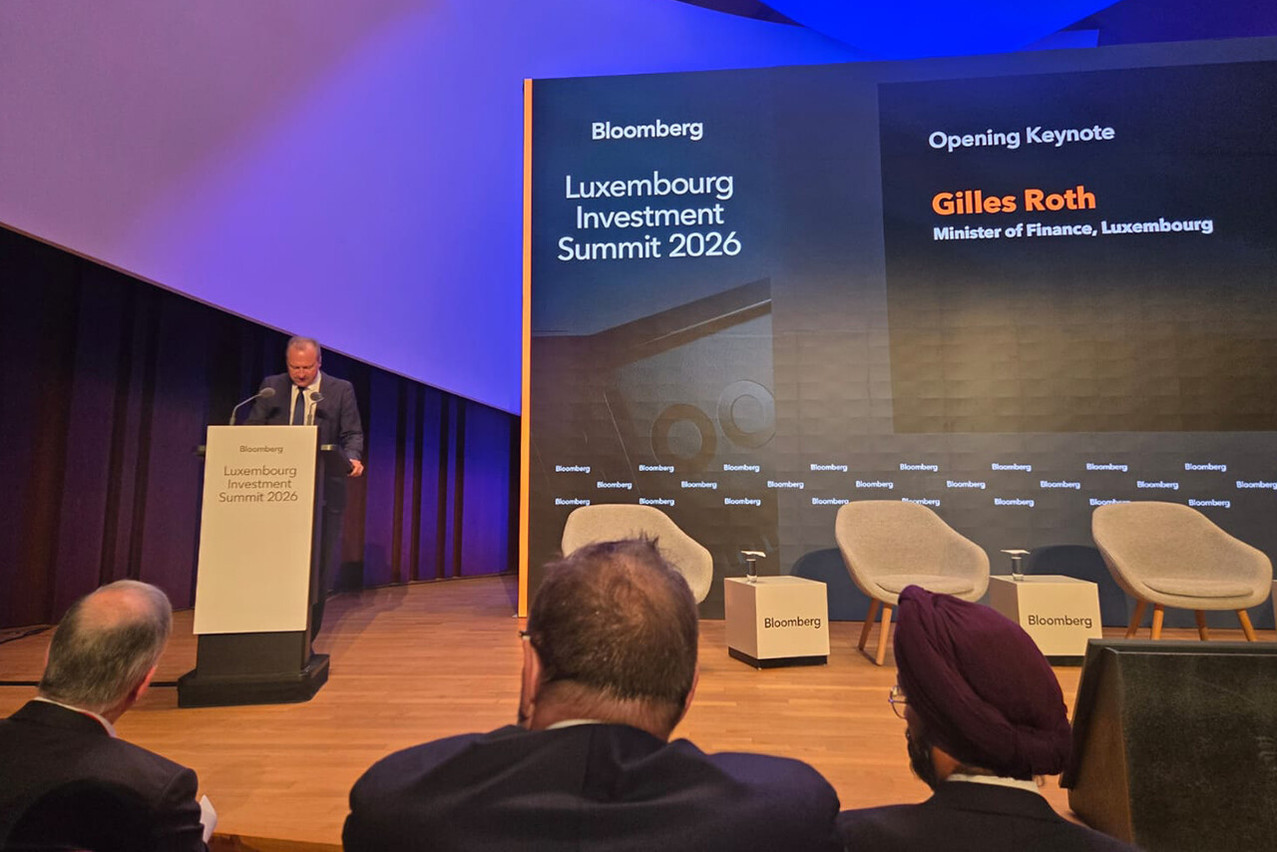
Luxembourg intends to move from experimentation towards broader use of new financial market infrastructure. Speaking at the Bloomberg Luxembourg Investment Summit on Thursday, Finance minister 
“We prepare further tokenised government issuances,” he said, while stopping short of providing further details. “You will have to wait for my budget speech next week.”In June 2025, Luxembourg’s Treasury issued €50m in six-month digital Treasury certificates using distributed ledger technology. Luxembourg became the second European sovereign to issue such an instrument and the first to manage the issuance through a digital platform based in Luxembourg, HSBC’s Orion.
Pontes changes the scale
The next step comes as the European environment for tokenised finance is evolving rapidly. On 21 September, the Eurosystem launched Pontes, its infrastructure enabling distributed ledger technology transactions to settle in central bank money. Clearstream is among the DLT market operators already connected to the initiative. For Gilels Roth, Europe now has an opportunity to build this new market infrastructure at home rather than allowing it to develop elsewhere. He also argued that governments should be prepared to use the technologies they encourage financial markets to adopt.
The European Central Bank is itself moving in that direction. It announced in September that it would invest a small portion of its own funds in tokenised assets, with settlement taking place through Pontes.
Finance cannot solve geopolitics by itself, but it can give Europe greater capacity to act.

Mobilising European capital
Beyond technology, Gilles Roth placed these developments within a much broader challenge: financing Europe’s needs in defence, energy, cybersecurity, artificial intelligence and infrastructure. His message was that public budgets alone will not be sufficient. More European savings and private capital will have to be channelled towards companies and infrastructure projects on the continent.
“Finance cannot solve geopolitics by itself, but it can give Europe greater capacity to act,” Roth said. The minister linked the future development of Luxembourg’s financial centre to the EU’s Savings and Investments Union and the broader effort to mobilise private capital.
According to the latest Alfi figures cited by Roth, assets in Luxembourg-domiciled funds exceeded €9tn at the end of June 2026, reaching €9.065trn – an all-time high and close to 20% higher than a year earlier. Much of that expansion has been driven by private assets. For Roth, their growth represents an opportunity for Luxembourg to position itself as a hub for the long-term capital Europe increasingly needs.
“The truth is that the investment needs of Europe are being met right here in Europe’s leading financial centre,” he said, arguing that Luxembourg could become a leading home for a new generation of long-term investments.
Defence and resilience
Defence was one of the clearest examples highlighted by Gilles Roth. In January, Luxembourg launched its first Defence Bond, a €150m issuance aimed at retail investors. Demand was strong enough for the portion reserved for individual investors to be fully subscribed in less than 24 hours.
The government has also launched a National Defence Fund to support Luxembourg-based start-ups, scale ups and innovative companies operating in defence and dual-use technologies.
At international level, Luxembourg is working with Canada and other partners on the proposed Defence, Security and Resilience Bank, intended to mobilise long-term capital for defence and resilience investments across participating countries.
We need less discussion about what AI might eventually do and more about using it today.
The Luxembourg Future Fund 3 fits into the same broader strategy. With €270m in commitments, the fund targets areas including cybersecurity, deeptech, fintech, healthtech, proptech, space tech and green technologies. For Gilles Roth, these initiatives illustrate the role Luxembourg can play in a changing geopolitical environment: remaining firmly anchored in Europe while building financial links with trusted international partners.
Government wants to accelerate on AI
Artificial intelligence was another area where Gilles Roth called for faster implementation. “We need less discussion about what AI might eventually do and more about using it today,” he said, pointing to potential applications in banks and investment funds, but also within the CSSF, the tax administration and government more broadly.
Luxembourg has already begun moving in that direction through its partnership with Mistral AI and investments in sovereign AI infrastructure. For Gilles Roth, this is also a matter of credibility. If governments expect businesses to use technology to become more productive, the public sector should make the same effort.
“We have to practise what we preach,” he said. The minister nevertheless left the most concrete announcements for next week. His Bloomberg speech provided the direction rather than the details: sound public finances, greater mobilisation of private capital, investment in security and infrastructure, and increased use of digital technologies.
The next indication of how far Luxembourg intends to take that strategy – particularly regarding further digital government financing – is expected with the presentation of the 2027 budget.