I need to understand the structure of your group, how it’s organized, and your place within it. Could you clarify the structure?

In Luxembourg, our operations are 100% aligned with this group strategy. From a CIB perspective, we operate mainly as an inbound market, providing banking and securities services to large multinationals and institutional client groups that have subsidiaries here. On the IWPB side, we have a management company where we launch our global funds, and we operate our regional private bank for continental Europe out of Luxembourg, covering the entire EEA market. We have also invested heavily in the digital asset space, pioneering our tokenized platform Orion two years ago, and more recently launching a tokenized deposit service. We chose Luxembourg specifically because of its advanced legislation in the blockchain space.
You now have a dual role: managing the local entity and acting as market head for continental Europe in private banking. How do you manage both?
“It is an exciting position. Previously, as CEO across all businesses, I spent almost 80% of my time focusing on growing the local entity and setting up the business structure. Now, I also spend more time on the private bank because it’s a key business we really want to grow. I can do this because I now have much stronger teams managing the other areas we set up over the past three years, although I still retain overall responsibility from a regulatory perspective. Simplifying the structure by merging the country and business CEO roles is much more effective. It ensures consistency in our message to regulators, and provides a clear benefit to our clients who now hear a single.
Luxembourg is increasingly presented as a key European hub for your company. How does it differentiate itself from centers like Switzerland or Dublin?
“To be clear, our European hub for continental Europe is France; we are a branch and subsidiary of HSBC Continental Europe. However, Luxembourg has really differentiated itself in the digital asset space thanks to very advanced blockchain legislation and dedicated support from the CSSF. Regarding private banking,. The UK is our home market, Switzerland is the largest wealth center globally, and Luxembourg is key as a booking site for the EEA market. Thanks to EU passporting rules and upcoming regulations like CRD6, operating in Luxembourg offers great optionality for European clients. Furthermore, its AAA credit rating and stable geopolitical environment make it highly attractive.
We truly believe tokenized assets—whether bonds, deposits, or even gold—are the future of finance.

Regarding digital assets, did you feel a strong market appetite, or was this move purely a question of efficiency?
“We truly believe tokenized assets—whether bonds, deposits, or even gold—are the future of finance. The biggest benefit is the settlement time, with D+1 or even same-day settlement offering major marginal gains over the traditional much longer delays. While regulations and the market are still developing, we definitely see this as a key future development.
What timeline do you expect for this transition?
“It’s a bit early to tell. Traditional and digital assets will run in parallel for a few years. While larger operators can transition quickly, smaller issuers and private equity houses currently running on legacy technology will take longer to adapt.
Luxembourg is becoming very competitive in the ultra-high-net-worth segment. What truly differentiates you from other established players here?
“Ultra-high-net-worth clients are our main focus. While product offerings are similar among top banks, our primary differentiator is international connectivity. We help clients manage their liquidity globally, offering them transparent and immediate access to their funds through our worldwide network. Secondly, our investment platform is highly sophisticated, offering competitive access to alternative and private equity funds. Finally, our service model is designed to establish long-term relationships and stay closely connected to our clients, especially during difficult times.
A few years ago, banks wanted to be a “one-stop shop”, but the trend is shifting toward orchestration capabilities. Is that your approach?
“Absolutely. If you’re a global player, it is crucial to have one global bank that can help you across all different markets. Helping clients navigate global complexity is in HSBC’s DNA. While varying regulations across over 50 jurisdictions pose a challenge, that is exactly where our competitive advantage lies. A client can deal with one dedicated global relationship banker who brings in local experts—whether in Europe, Asia, the Middle East, or the US—to navigate specific jurisdictions, ensuring a seamless experience on a single platform.
Do you prioritize certain client segments over others?
“It’s a mixture. We work with international clients, entrepreneurs, founders and VCs from our corporate banking business, as well as single and multi-family offices. We are open to anyone as long as we can add value to their proposition.
We often hear about the massive generational wealth transfer. Could you elaborate on the shifts you are identifying?
“It is estimated that between $18 to 19trn in wealth will transition between 2030 and 2040, making it the biggest intra-generational transfer of all time. Succession planning for the next generation is one of our top priorities. We organize educational events, to help the next generation structure their wealth effectively, think about their family’s future, and integrate philanthropy.
We see a clear, genuine interest from [the new generation] in investments that are great for society.
Is the younger generation’s desire for responsible, sustainable investment a reality, or just a media myth?
“It is definitely a reality. The new generation is significantly more aware of responsible investing, clean energy, and sustainability. We see a clear, genuine interest from them in investments that are great for society.
This younger generation is digital by design. Does this force a historical player like you to change your mindset?
“It definitely changes our focus. We need to be more agile and provide much better digital front-end platforms so they can view, operate, and interact with their funds globally and quickly, without having to visit an office. However, because of the massive size and complexity of their investments, they still want the security of a large, established bank with a strong balance sheet behind them.
HSBC has over 220 billion in assets under management in Luxembourg. How do you position your securities services against local competitors?
“Just to clarify, the 220 billion plus figure encompasses everything, including funds and securities services. For securities services, we have gained position, increased our assets, and almost doubled our revenues. Our public aspiration is to enter the top 10 administrators in the market, which is definitely doable.
Is Luxembourg’s attractiveness under increasing pressure from other European centers like Ireland?
“Luxembourg still has the competitive edge on alternatives and private assets. Ireland has a stronger role in ETFs due to its double taxation agreement with the US. The two markets are the main competitors in Europe, but they are also highly complementary. We mirror the market by having a strong presence in Ireland for ETFs and in Luxembourg for alternative and private assets.
How do Europe and Luxembourg fit into the Asian strategy of global players?
“HSBC’s legacy comes from Asia, but we are a truly global bank present in over 50 markets. We are still the largest capitalized bank in Europe. The corridor strategy is highly relevant: we help European clients with business interests in Asia to grow there, and conversely, we assist Asian clients in settling in Europe and connecting with the rest of the world.
How is your business model evolving with increasing regulations like Basel and Dora?
“For a bank like ours, regulation is simply business as usual. It is crucial to protect both the bank and our consumers. While some see it as a barrier, we view it as a value-add: we adapt to the jurisdiction, implement regulations, and help our clients navigate them.
How are geopolitical tensions and changing tariffs affecting your corporate clients in Luxembourg?
“As a global bank, we are exposed to geopolitical complexities everywhere. Our approach is to advise and guide our clients through these difficulties using our global expertise and network of economists. Agility is key: if there is conflict in a certain area, clients may urgently need to move funds to a more stable jurisdiction like Luxembourg for example, and we must be agile enough to facilitate that seamlessly.
Do you have technological “radars” to detect these trends faster?
“Rather than a technological radar, we rely on our fantastic economists who provide updated predictions and advice to our clients.
What is the impact of AI on your recent developments?
“AI is a vital enabler for effectiveness. We use internal AI tools better serve our clients “and help employees digest information efficiently. AI and open infrastructure technology are also essential in giving clients access to different types of investment funds.
I would phrase it differently: “Don’t take risks you can’t mitigate.”
You started your career in transaction banking in London. What did that teach you about risk management?
“Transaction banking operates at the core of a client’s treasury system. It is the best place to understand a client’s risk profile—whether they are conservative or highly acquisitive—as well as the bank’s risk. It was a fantastic starting point for learning risk management.
Is your management philosophy “never take risks you can’t afford”?
“I would phrase it differently: “Don’t take risks you can’t mitigate.” You first need to understand the risk, then discuss whether you have the right internal mitigants and procedures in place. If the risk appetite is right and we can control it, we are comfortable taking it.
You are known as being quite discreet in Luxembourg. Is that a personal choice?
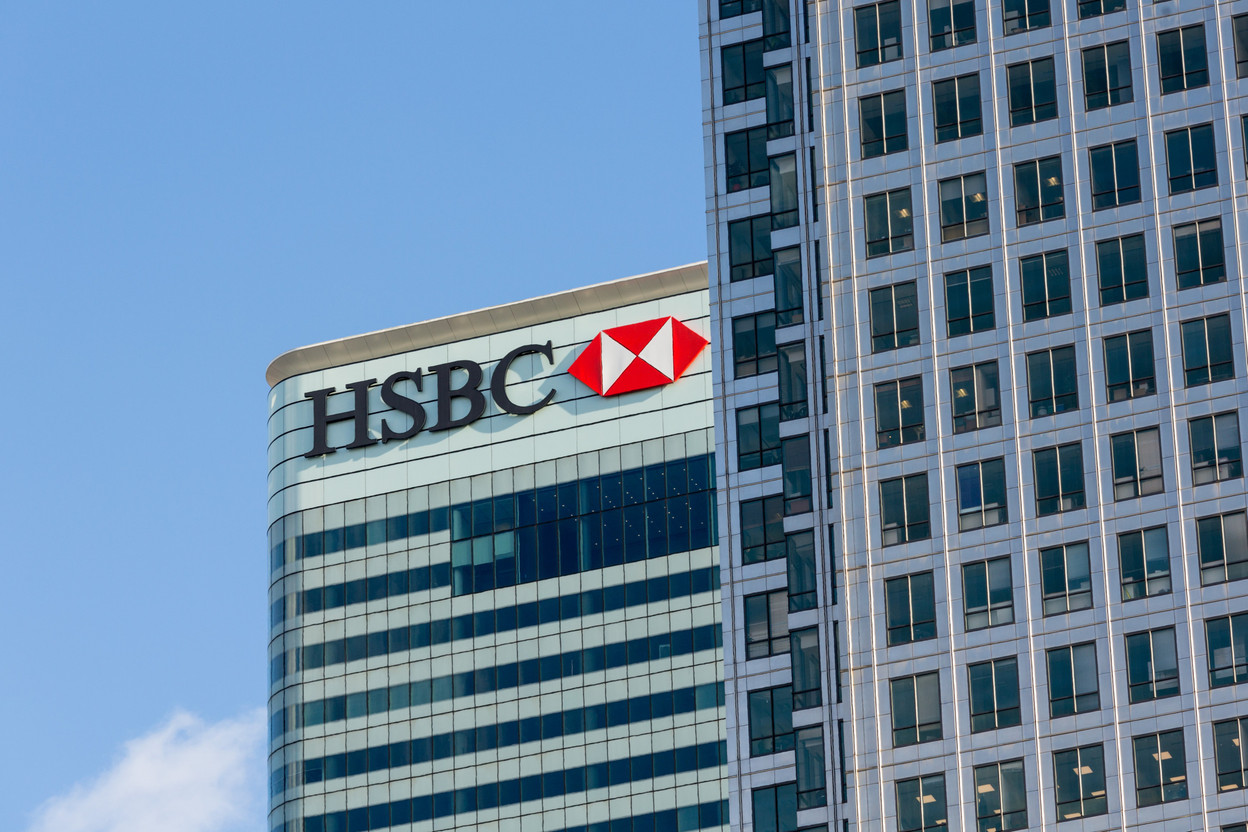
“It’s mostly a matter of time. Historically, I invested a lot of time networking and was honored to receive the Banking Personality award from Paperjam last year. Recently, with my new regional responsibilities, I have less time to attend external events. However, I have tasked my local team to be much more visible and involved in the market. As for our building, we recently installed nice signs at the top, so our definite aspiration is to be less discreet and much more visible!
What would success look like to you in the next three to five years?
“The main goal is to keep growing in a sustainable way. Specifically, that means entering the top 10 for securities services, becoming the global bank of choice in continental Europe for international private banking clients, and continuing to grow our corporate banking franchise here in Luxembourg.”
This article was written for the May 2026 issue of Paperjam magazine, published on 29 April. The content is produced exclusively for the magazine. It is published on the site to contribute to Paperjam’s comprehensive archive. Click on this link to subscribe to the magazine.
Is your company a member of Club Paperjam? You can request a subscription in your name. Please let us know via club@paperjam.lu.