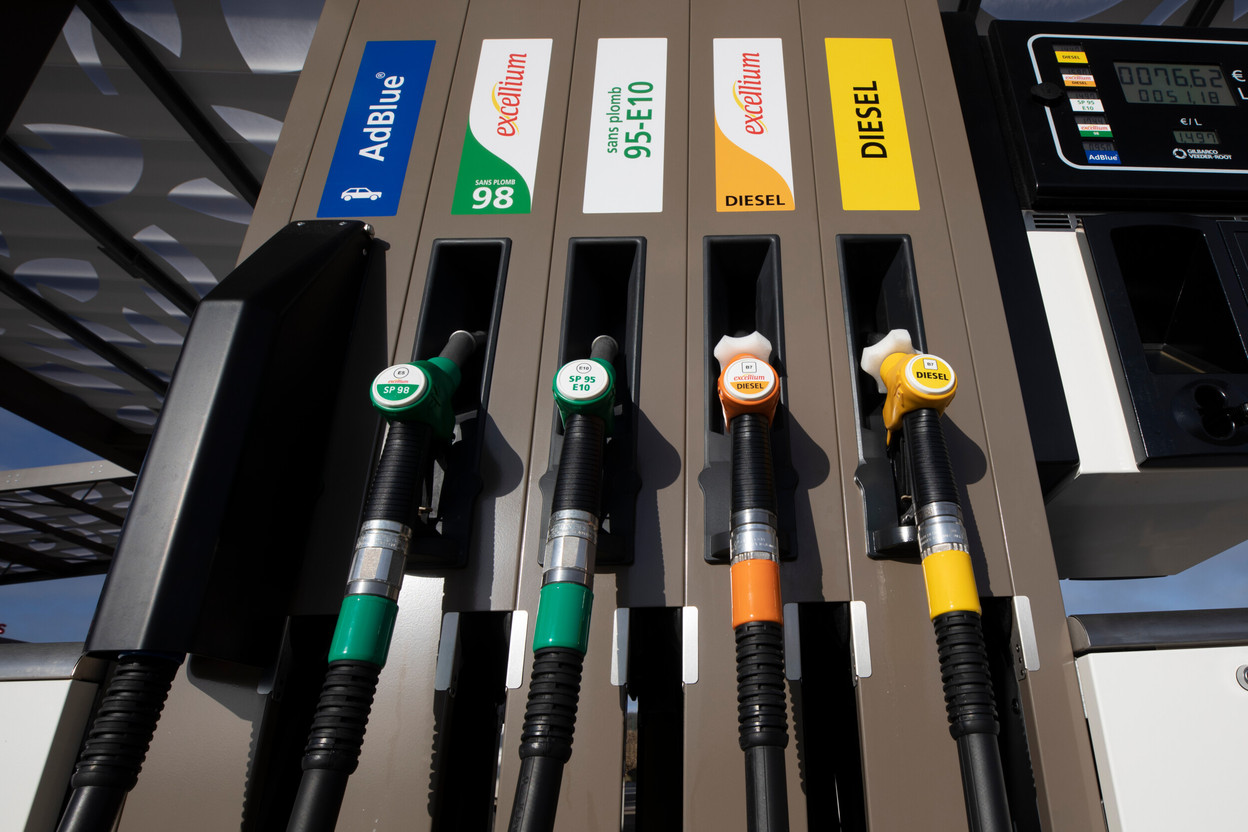
€102 and 75 centimes. That is what a 50-litre tank of diesel will cost, at the maximum price in Luxembourg, from this Wednesday, 23 September. What’s more, the price is down by 5.9 centimes compared with the €2.114 charged since 19 September.
The two-euro threshold is striking, but it is no longer quite a first. The official history of the Luxembourg Oil Group, available since January 2009, identifies six distinct periods during which diesel prices exceeded this level. The first dates back to 10 March 2022, in the days following Russia’s invasion of Ukraine. The second occurred in October of the same year. The other four were recorded in 2026.
This year, diesel has seen a rise above two euros for the first time on 20 March. It then fluctuated sharply around this level until mid-April. It reached an all-time high on 4 and 9 April, at €2.186 per litre. On 10 April, it fell by 30.4 centimes in a single day to €1.882, before rising again the very next day to €2.007. These unusual fluctuations illustrate the volatility caused by the oil crisis. Diesel once again broke the two-euro barrier on 3 September, reaching €2.024. It reached €2.160 on 17 and 18 September, then €2.114 on 19 September. The drop to €2.055 announced for this Wednesday therefore still does not bring it back below the symbolic threshold.
Petrol prices have followed a different trajectory. Since 2009, 95-octane unleaded petrol has only exceeded two euros during two brief periods, both in June 2022. Its record high stands at €2.017. 98-octane petrol has crossed the two-euro threshold on seven occasions, reaching a high of €2.270 in June 2022. It will return to €2.075 this Wednesday, whilst E10 will remain at €1.849. These figures refer to continuous periods above two euros, and not to the number of days or the number of published price changes.
A tempting idea… which overlooks certain phenomena
This latest development fuels a tempting notion: the higher the price at the pump, the more revenue the state collects. The reality initially seems to prove this partially correct. On a litre of E10 sold at €1.849, VAT accounts for around 26.9 centimes. On diesel at €2.055, it amounts to 29.9 centimes.
VAT increases in line with the price of fuel. Every ten-centime rise (including VAT) adds approximately 1.45 centimes of additional VAT per litre. For a 50-litre full tank, this amounts to 73 centimes in additional revenue. Assuming consumption remains constant, more expensive fuel therefore generates significantly more VAT for the Treasury. Excise duties work differently. They are set in euros per litre and do not rise in line with the price of oil. When the current excise duties and VAT are added together, the total tax burden amounts to around 79.5 centimes per litre of E10 and 72 centimes per litre of diesel.
However, these figures already take account of public support. Since 1 July, the government will subsidise five centimes (including VAT) per litre of petrol or diesel through a reduction in excise duty. The measure, as provided for in the tripartite agreement of 8 June, is to remain in force until 31 December, as long as prices remain above their level on 1 February.
In other words, the state collects more VAT as a result of soaring prices, but at the same time forgoes five centimes in tax per litre to limit the impact on consumers. To recoup these five centimes through VAT alone, the price including VAT would need to rise by around 34.4 centimes. If the price rise is less than this, and assuming sales volumes remain the same, the government collects less per litre than it would have done without the tripartite measure.
Fuel subsidies are only one part of the “Resilienzpak”. The government has estimated the cost of the 20 measures at €432.5m over two years: €180m in 2026 and €252.5m in 2027. This total also includes electricity subsidies, gas and heating oil, the temporary tax credit, measures relating to the minimum living wage and various forms of support for the energy transition. The tax credit alone amounts to €190m. It would therefore be misleading to present the figure of €432.5m as the cost of the fuel price rebate alone.
However, the figures show that the energy crisis does not merely generate revenue. It also leads to tax losses, subsidies and expenditure aimed at protecting purchasing power and businesses. Not to mention that the rise in fuel prices also has an impact on indexation, which itself places a heavy burden on public finances.
For non-residents, the calculator has become essential
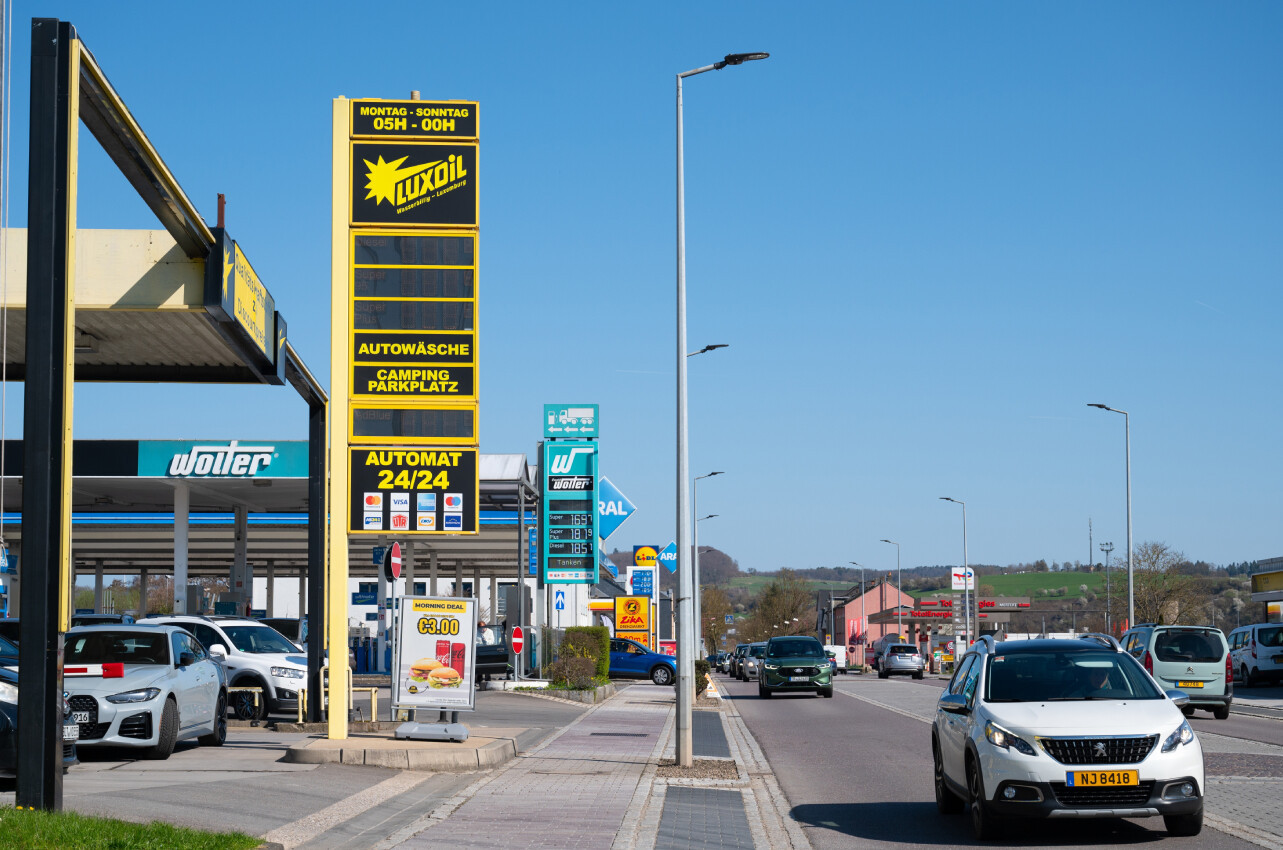
Luxembourg does, however, have a particular advantage: a significant proportion of the fuel sold there is purchased by non-residents. Statec points out that this distinctive feature makes demand highly sensitive to price differences with neighbouring countries. This is where the real windfall may lie. A litre sold to a Belgian, German or French motorist generates VAT and excise duty revenue for Luxembourg, even if the fuel is subsequently consumed on the other side of the border. A visit to the petrol station may, moreover, be accompanied by purchases of tobacco or alcohol. For the customer, the value of the trip is therefore calculated on the basis of the total shopping basket.
National averages still place Luxembourg amongst the cheapest countries in the region. In the latest comparable European survey, carried out in mid-September, diesel cost an average of €2.123 in Luxembourg, compared with €2.290 in Belgium, €2.291 in France and €2.426 in Germany. For petrol, the average was €1.793 in Luxembourg, €1.976 in Belgium, €2.172 in France and €2.357 in Germany.
However, these averages do not give an accurate picture of the price actually paid by motorists. In France, there are significant differences between motorway service stations, traditional petrol stations and those at supermarkets. At E.Leclerc in Thionville, diesel was recently priced at €1.877. Even after the price in Luxembourg fell to €2.055, a 50-litre fill-up there remained €8.90 cheaper. For E10, sold at €1.888 in Thionville, the saving in Luxembourg amounted to just €1.95 per full tank.
It is therefore not always worthwhile for a French cross-border commuter to make a special trip to Luxembourg. A driver who is already crossing the border may still enjoy a slight saving on petrol. Those driving diesel vehicles, on the other hand, may find it cheaper to fill up at a French supermarket. The detour only makes financial sense if the price difference covers the fuel consumed, the time taken and, possibly, other purchases. Even then, the saving must be put into perspective when considering the vehicle’s cost per kilometre, which is rarely factored in, unlike the difference in fuel prices per litre.
When comparing with Belgium, the figures are on a different scale. At Q8 Easy in Messancy, diesel cost €2.468 and E10 €2.034. Filling up in Luxembourg therefore meant a saving of €20.65 on 50 litres of diesel and €9.25 on petrol. The prices observed in Messancy were in line with the comparison published between the Belgian and Luxembourg sides of Martelange.
The difference is also very noticeable compared with Germany. At the Orlen petrol station on Kaiserstraße in Trier, diesel was priced at €2.459 and E10 at €2.349. Filling up in Luxembourg meant a saving of €20.20 on diesel and €25 on petrol. On the motorway, the difference becomes striking. At the Shell petrol station at Hochwald Ost, on the A1 near Reinsfeld, diesel cost €2.849 and E10 €2.729. Buying 50 litres in Luxembourg meant savings of €39.70 and €44 respectively.
Not a magic line
These readings are photographs taken at a specific point in time. In Germany, as in France, prices can fluctuate several times a day. They nevertheless demonstrate why national averages are not sufficient: Luxembourg may face competition from a supermarket petrol station in Thionville whilst remaining very attractive compared to a petrol station in Trier, Messancy or on the motorway.
The state can, therefore, capitalise on the crisis if the price difference with neighbouring countries attracts enough extra litres. Let us suppose that a full tank of diesel is purchased in Luxembourg rather than in Germany. At current rates, some €36 in tax is collected in the Grand Duchy on 50 litres. Without this shift, this revenue would be collected elsewhere. The potential gain stems primarily from this shift in sales, not from the few fractions of VAT added by the rise in oil prices.
However, this is only true if volumes keep pace. Statec reports that excise duties on fuels fell by 2.2% in 2025, following a 0.9% decline in 2024. Very expensive fuel can reduce travel, change transport operators’ habits or accelerate the switch to electric vehicles. The answer is, therefore, not so straightforward. Yes, a higher price generates more VAT per litre. Just as the price difference compared with Belgium and Germany may attract additional consumers and their associated spending. But at the same time, the Government is forgoing five centimes per litre, funding a €432.5m support scheme and risks seeing consumption fall.
The two-euro mark hits motorists hard because it turns an ordinary full-tank fill-up into an expense of over €100. For the public finances, it is not a magic threshold beyond which money flows in. The windfall only begins if Luxembourg’s petrol stations attract enough foreign customers to offset the lost revenue and the cost of the support measures.