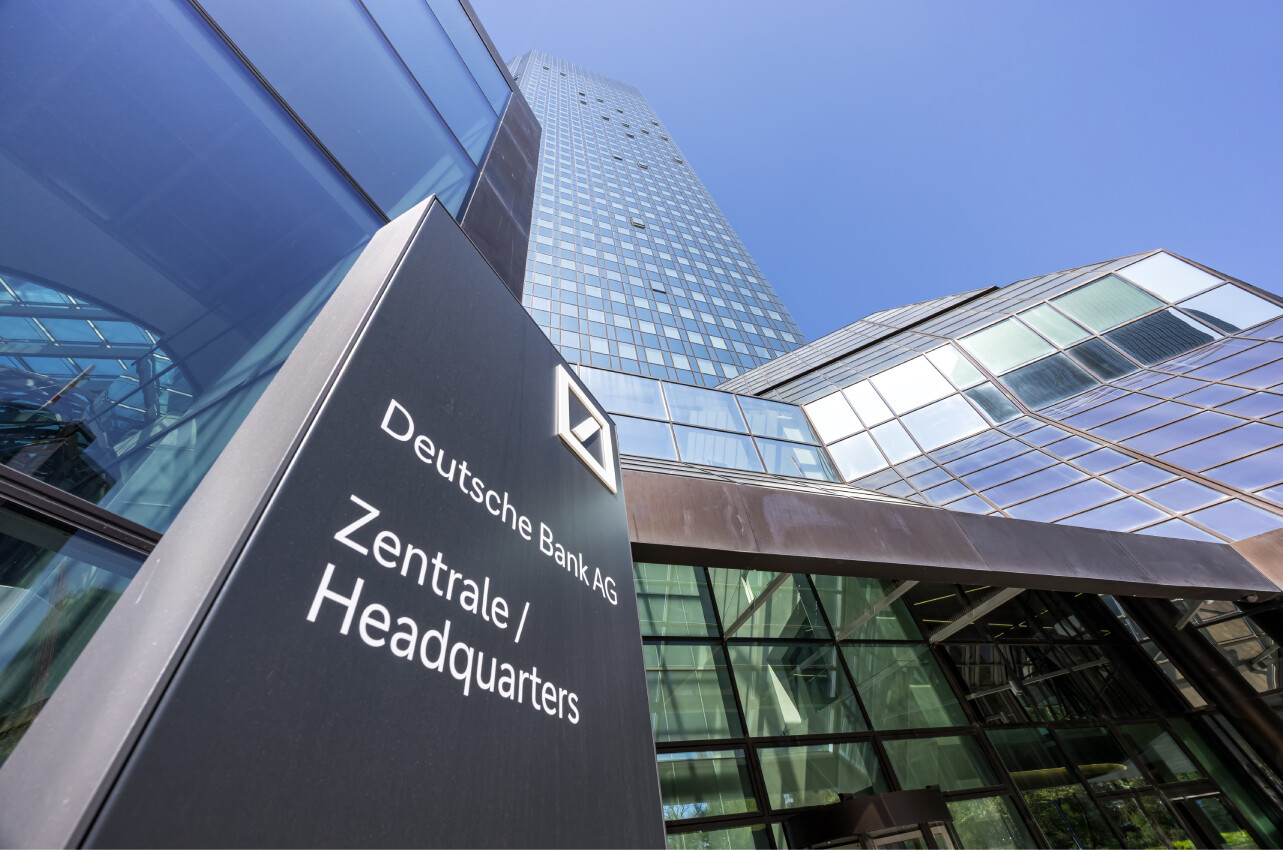
Europe sees itself as falling behind. International investors still see it as leading the way. In a survey conducted by Deutsche Bank amongst 1,200 business leaders based outside the continent, 90% ranked Europe amongst their top three most attractive regions.
When asked to name just one region, 35% chose Europe, compared with 24% for the Asia-Pacific region (excluding China) and 19% for North America. The Middle East accounts for 10% of responses, China 6% and Latin America 5%. However, this preference depends on experience of the European market. Among companies already operating there, 45% rank Europe as their top choice. This proportion falls to 15% amongst those merely planning to enter the market. For the latter, the Asia-Pacific region (excluding China) comes top with 44%.
The survey, carried out in July and August 2026, involved 600 respondents from the Asia-Pacific region, 400 from the Americas and 200 from the Middle East. The companies have at least 100 employees. Telecommunications, IT and software account for 16% of the sample, ahead of manufacturing at 15% and financial services at 12%.
Europe: first and foremost a trading market
Interest in Europe is growing. For 81% of the executives surveyed, the continent carries greater weight in investment decisions than it did three years ago. This figure rises to 89% in the Middle East, 85% in the Americas and 77% in the Asia-Pacific region. This confidence is reflected in stated intentions. Among all respondents, 61% work for a company that already has a presence in Europe and wishes to expand there over the next five years. A further 33% are considering establishing their first presence there. Only 6 per cent are already present but have no plans to expand.
The detailed report adds that these investments would not simply serve to boost companies’ global budgets. For 41% of respondents, an increased focus on Europe could lead to a reallocation of capital away from North America. This figure stands at 36% for the Asia-Pacific region (excluding China) and 28% for the Middle East. Multiple answers were permitted. Only 20% stated that they would not shift any investment from another region.
Europe’s primary role remains that of a trading market. Of the 807 companies already operating there, 73% sell goods or services there and 59% have their own sales or distribution teams. Only 19% currently manufacture products there.
Growth driven by innovation and international relations
The gap between actual performance and intentions is considerable. Looking ahead to the next three to five years, 99% of respondents regard Europe as important for their business growth, with 58% describing it as ‘very important’. Furthermore, 92% attribute an important role to Europe as a location for production, research and development, or securing supply chains. However, this last question combines three different activities and does not allow their respective importance to be assessed individually.
Investors highlight Europe’s growth prospects, which 74% of respondents cited as an advantage. Its capacity for innovation, particularly in relation to artificial intelligence, wins over 71% of them. This is followed by international relations at 70% and economic and trade stability at 68%.
“The global economy has confidence in Europe,” says Alexander von zur Muehlen, a member of Deutsche Bank’s executive board. He believes, however, that the continent still needs to improve its competitiveness and the conditions available to businesses in order to turn that confidence into investment.
Two-thirds of companies with a European bank
Germany stands out among the most popular destinations. Indeed, the country features amongst the top three European destinations for 56% of respondents and is the first choice for 29%. The United Kingdom follows with 47% and 23% respectively, then France with 35% and 9%. The Netherlands accounts for 22% of mentions in the top three, ahead of Italy and Spain at 20%, followed by Switzerland at 12%.
Luxembourg does not feature in the published ranking. Neither the detailed report nor Deutsche Bank’s presentation specifies whether it was among the options offered. These results therefore do not allow for an assessment of its attractiveness in comparison with other European financial centres.
The survey nevertheless offers some insights for the Luxembourg financial sector. When investing in Europe, 60% of the companies surveyed prefer to work with a European bank. This proportion rises to 97% amongst respondents from the Middle East, compared with 57% in the Americas and 49% in the Asia-Pacific region.
Financial stability tops the list of criteria for choosing a bank, with 37% of respondents citing it. Risk management and compliance capabilities follow at 36%, ahead of knowledge of local markets and regulations at 33%. The quality of digital banking services accounts for 31%, whilst competitive pricing trails behind at 26%. An existing banking relationship accounts for just 19%.
European fragmentation remains a hindrance
However, the continent is still far from functioning as a single market. Only 20% of respondents consider it to be fully unified and 42% consider it to be largely unified. Conversely, 30% regard it as rather fragmented and 8% as entirely fragmented. These divisions have a direct impact on investment decisions. For 43% of executives, cross-border friction significantly or very significantly reduces Europe’s attractiveness. It has some impact for a further 42%. Their impact is particularly pronounced in the Middle East, where 86% of respondents describe it as strong or very strong, compared with 49% in the Americas and 26% in the Asia-Pacific region.
Four criteria received fewer than 50% of favourable opinions compared with other regions: labour costs (42%), the tax environment and incentives (44%), energy costs (47%) and the speed of authorisation procedures (47%). When it comes to artificial intelligence, 33% of respondents prioritise simpler and more harmonised regulation. The modernisation of technological infrastructure received 31%, the development of digital skills and incentives for technology 29%, and access to capital to finance the growth of AI companies 28%.
Finally, the results have one key limitation. Deutsche Bank did not survey a representative sample of all international companies. To take part, companies had to already be operating or investing in Europe, or be actively considering doing so within the next five years. The survey therefore gauges the views of companies that already have an interest in the continent. It shows that capital is available, but also that where it is channelled will depend on Europe’s ability to reduce the fragmentation that these same investors criticise.