Luxembourg has three official languages: Luxembourgish, French and German. While Luxembourgish is the national language and widely spoken in everyday life, French is often used in shops, restaurants and administrative procedures, while German is common in the media and education system.
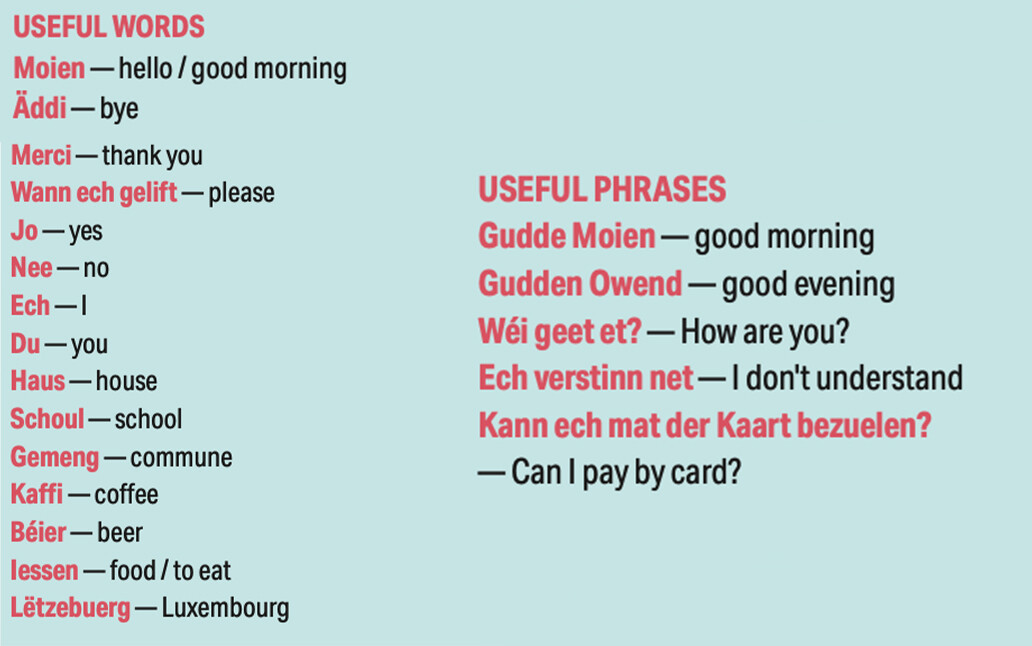
The good news? You don’t need to master all three to get by. English is widely spoken in many workplaces, and even a few Luxembourgish words can go a long way. Whether you’re greeting a neighbour, ordering a coffee or chatting with colleagues, these expressions are a useful place to start.
Where to learn languages?
Luxembourg offers language courses for all levels and objectives. The National Institute of Languages (INLL) is the country’s largest public provider, offering courses in Luxembourgish, French, German, English and many other languages. Prolingua specialises in adult and corporate training, while Inlingua and Berlitz are known for their flexible schedules and business-focused programmes. Cap Langues provides language training for both private individuals and professionals, with courses tailored to different needs and levels.
Good to know
Many communes organise language courses for residents. Luxembourg City, for example, offers Luxembourgish language and culture classes designed specifically for newcomers.
This article was written for the 13th edition of the Expat Guide, published by Paperjam, on 8 July. The content is produced exclusively for the magazine. It is published on the site to contribute to the full Paperjam archive. Click this link to subscribe to the magazine.
Is your company a member of the Paperjam Club? You can apply for a subscription in your name. Please let us know via club@paperjam.lu.