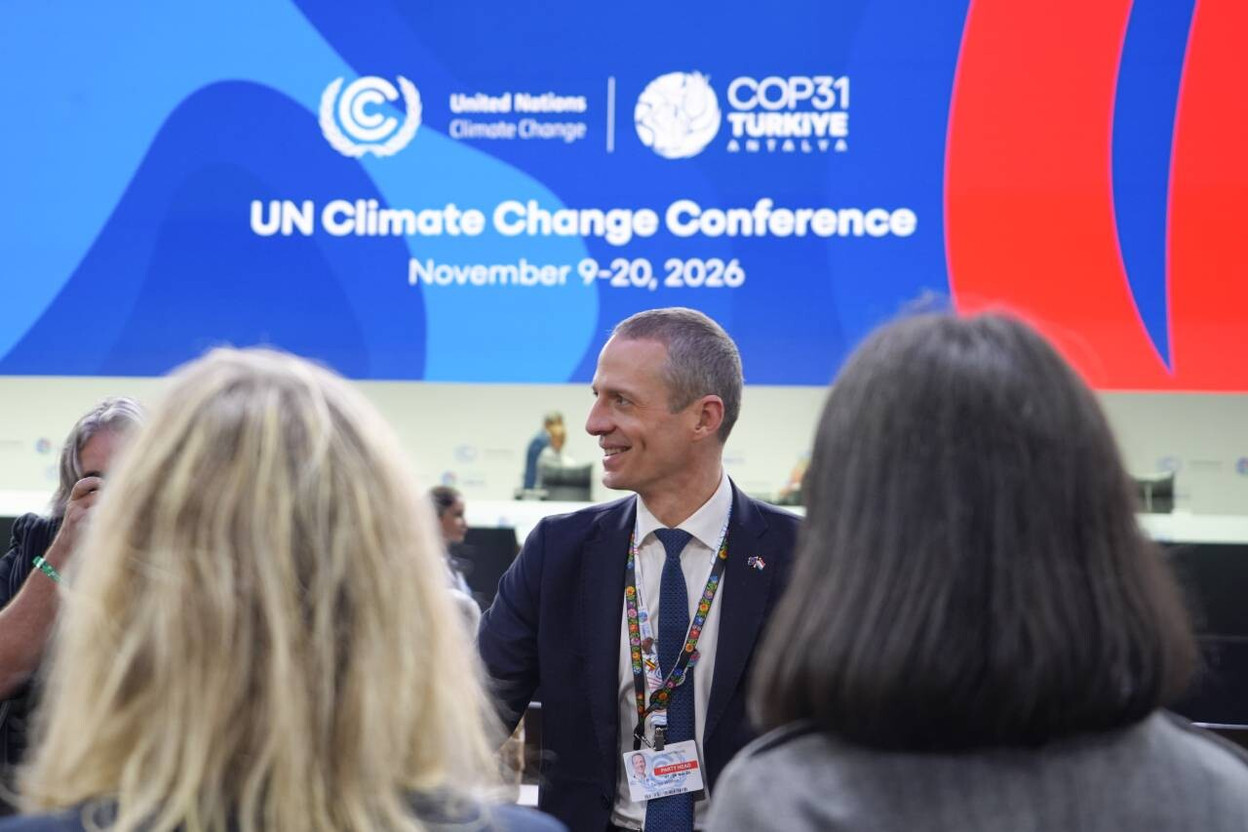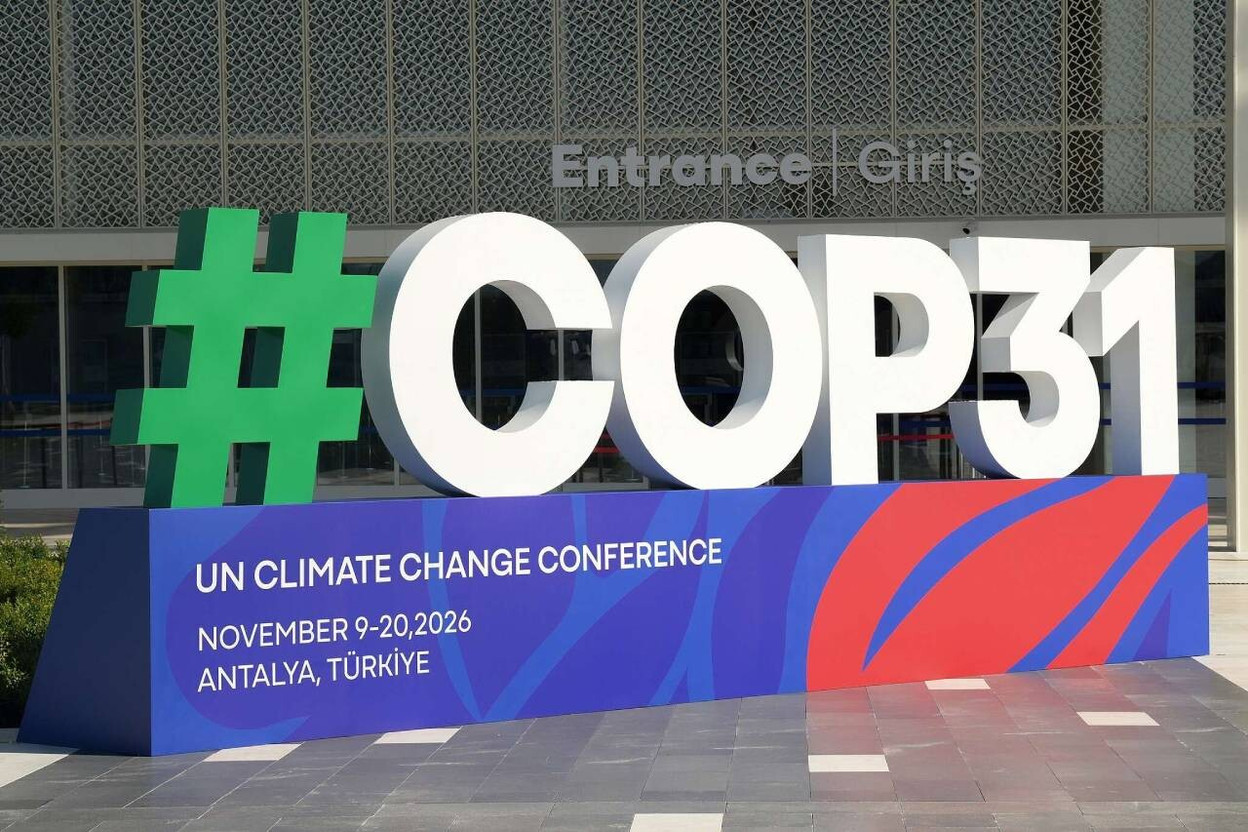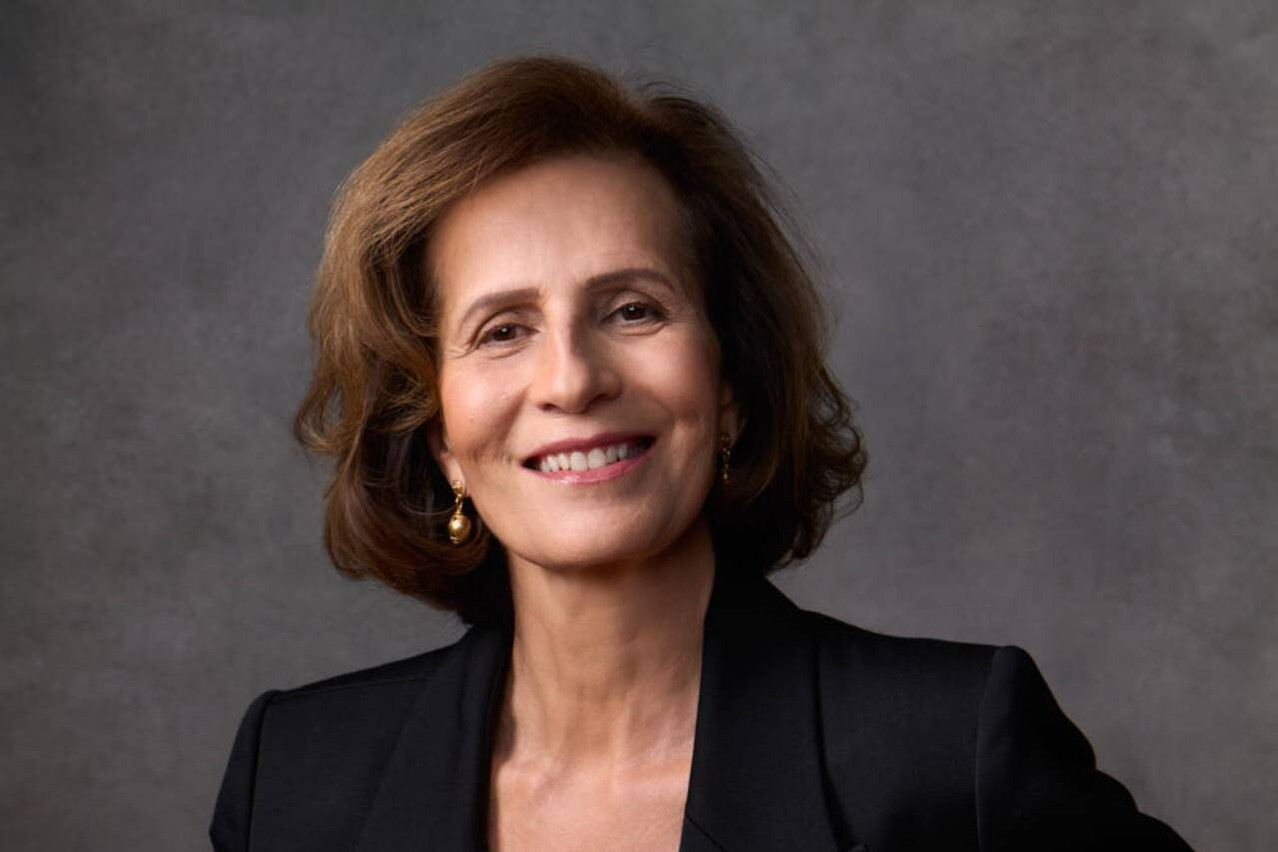
A few days after COP31 ended without an agreement – which she describes as “a massive betrayal for many countries” – Princess Esmeralda of Belgium is calling on rich countries to help the most vulnerable and is advocating for indigenous peoples to have a seat at the table. A journalist turned activist, she chairs the Leopold III Fund and the NGO Friendship Belgium, and is an ambassador for WWF Belgium and Stop Ecocide International. She believes that the climate crisis and the loss of biodiversity are “essentially crises of human rights and inequality”.
She was visiting Luxembourg for two engagements. On 24 November, at the Belgian Residence, she opened an exhibition of photographs taken by her father, King Leopold III, during his four trips to Brazil. The following day, at the Dräi Eechelen Museum, she attended a screening of the film ‘Amazonia, Heart of Mother Earth’. She co-directed and co-produced it with Gert-Peter Bruch, founder of the NGO Planète Amazone.
Entitled ‘Respect Nature, Respect Peoples’, the exhibition is being held at the Belgian Residence from 30 November to 18 December 2026. It brings together large-format photographs taken in Brazil between 1962 and 1967, accompanied by texts taken from the King’s travel diary. After his abdication, Leopold III undertook several exploratory journeys around the world. In Brazil, he met the Villas-Bôas brothers, visited the fledgling Xingu National Park with them and struck up a friendship with Chief Raoni.
You are committed to the climate, nature and indigenous peoples. When did this commitment begin?
Princess Esmeralda of Belgium: – “I developed an interest in nature from a very early age. My father had been involved in this work as far back as the 1920s and 1930s. As a child, I experienced this first-hand because he would set off on countless expeditions to Brazil and elsewhere, such as Indonesia. When he came home, he’d tell me all about it and show me the photos. I’ve always had this passion for the environment and indigenous communities, because he used to tell me how important their knowledge and culture were, and how essential it was to work with these communities and protect them. It was in my blood.
He set up the Leopold III Fund for Nature Exploration and Conservation in 1972 and appointed me vice-chair quite soon afterwards. When he passed away in 1983, I took over as chair. That was the environmental side of things – nature conservation. Then, as a journalist, I had the opportunity to travel, to see the impact of human activity on biodiversity, and also the climate crisis, which was being discussed more and more. I felt I needed to do more than just be a journalist and become an activist. That’s more or less how my journey unfolded.
These two crises are, at their core, human rights crises.

You are known for your very strong views on nature and international affairs. Is it difficult to express yourself in this way given your position, or is it an opportunity for your message to reach a wider audience?
“Two things. Firstly, I’m very lucky, because I’m free to speak my mind. I don’t receive any funding from the government, so I’m truly free. Whilst I do have to abide by certain rules: I’m not allowed to criticise my family or my ancestors – that’s a different matter. Nor am I going to criticise the Belgian government. But apart from that, I have complete freedom. And I think that’s precisely what’s important.
I think that, whether you have a small platform or a large one – in my case, a small one – it’s important to talk about the issues that affect us all, in this instance specifically the climate and the loss of biodiversity, which, for me, always go hand in hand with human rights violations. That’s what I’ve seen since I started working in this field: these two crises are essentially crises of human rights and inequality. The gender perspective is also very important. It’s all linked, and I’m trying to take stock of all these crises.
I believe the COP shocked a great many people, not least because the offer made for the Adaptation Fund – intended for the developing countries that are suffering the most – was incredibly insulting.

Luxembourg is one of the world’s leading centres for investment funds. What can a financial centre like ours do to finance the transition?
“Enormously, in my view. As you’ve just said, it’s a major financial centre. The COP, I believe, shocked a great many people, particularly because the offer made for the Adaptation Fund – for the developing countries that are suffering the most – was incredibly insulting. When they offered 50 million on top of what was already there, it was insulting, given that billions are needed.
We’re talking about survival for so many countries: the small Pacific islands, countries in sub-Saharan Africa, Bangladesh. These are all countries that are now in survival mode.
According to a study by Votum Klima, Luxembourg is the second country in the world to reach its Earth Overshoot Day. Can a country with this profile maintain its climate rhetoric?
“Yes, he should do just that, precisely because we need to recognise the historical contribution of all our countries and, as you say, the proportional contribution is very important. Of course, we must recognise this and we must try to bring about change.
What was your reaction following COP31, which ended without an agreement on the ‘Antalya Pact’?
“I’ve been to many COPs since the famous Paris COP. They’re generally always disappointing, but necessary, because it’s the only place where all countries come together and where civil society can be present too. This one ended without an agreement, which was even more disappointing. But many people have said that it’s better not to have an agreement at all than to have a bad one. That’s obvious, but it’s still a huge let-down for many countries, especially as we have so little time left. Constantly postponing this to the next COP, several months down the line, is a disaster.
I would also like to add one point: Europe and the United Kingdom refused to sign, which was the right thing to do, because they supported the countries that felt the agreement was completely unacceptable. But it is also very hypocritical to portray them as the great saviours simply because they stood alongside the countries that did not want to sign. Throughout the COP, they could have done much more, and above all, they could have lectured people about fossil fuels, whilst they themselves continue to support them. That, too, is unacceptable.
Yet there are promising companies in the European Union. Do you consider its efforts to be insufficient?
“Absolutely. Europe was leading the way with the Green Deal, and now it’s constantly being undermined. It’s very worrying.
Europe was leading the way with the Green Deal, and now it’s constantly being unravelled.

How do you explain this sluggishness on the part of Europe?
“Fossil fuel lobbies are becoming increasingly prevalent everywhere, in the United States and elsewhere. I would say there is a general lack of courage, because, of course, it’s going to cost a lot of money. But scientists – and even insurance companies – are now saying that it’s going to cost far more. Every year that goes by, it will become more expensive. We need to be able to take radical and difficult measures, but we must act quickly.
Does Europe have the expertise, the scientists and the funding to rise to the challenge?
“Scientists, certainly. Money, unfortunately, I think goes on a lot of other things. There’s a lot of talk about security, a lot of talk about armaments. Of course, security is important. But scientists tell us that the greatest threat to security is climate change and the loss of biodiversity. For our food security, for our security plain and simple, given the displacement of populations. The scenarios are so clear. It was Al Gore who, having made ‘An Inconvenient Truth’, now says: ‘I was far too conservative; it’s happening much faster, and the damage is far greater.’ Scientists, civil society and indigenous peoples are telling us this all the time. We are in a situation where tipping points are accelerating, and it is truly dangerous.
Looking ahead to the next COPs, do you expect more from politicians or from businesses?
“Certainly more so from businesses than from political leaders – that’s for sure. They can put pressure on leaders, just as civil society can. It’s very important that we all take action.
I also often feel like saying that at the COP, there are a lot of key players missing from the table. There aren’t enough women; there aren’t enough young people – our generation. Indigenous communities – whom we talk about in our film – are missing; they are there at the COP, but on the fringes. They aren’t at the table, even though they are the ones most directly affected. The COP needs to be reformed so that there really are more key stakeholders around the table.
How can we better support indigenous peoples?
“Through much greater support. They have a wealth of solutions and are always saying that they need us, of course, for our support, our technology, and everything that modern science has to offer. But they, too, possess a vast amount of knowledge that could be incredibly important and incredibly useful to us.
How does deforestation affect Europe?
“I remember that in the film, one of the young women from WWF Belgium told us that an area the size of Belgium is being deforested in the Amazon and that we are contributing to this deforestation. How are we contributing to it? By consuming products, of course, that are the result of illegal deforestation. This includes meat as well as timber-related products, and so on. That is our responsibility.
But how does this affect us now? Of course, deforestation and ocean degradation affect us all across the world. Because both, for example, absorb CO₂. And both are in grave danger. And this affects us all, of course, because of the climate crisis. It’s as simple as that. Climate change doesn’t stop at borders. It affects everyone. So far, it has affected countries in the Global South far more severely. But as we saw recently, last summer, it hit us extremely hard, with the heatwave that caused a huge number of deaths in Europe.
As far as I’m concerned, it’s absolutely disgraceful to hear rich countries lecturing others.

How can the least developed countries finance and implement this transition?
“That’s precisely the point: they can’t. That’s where help from industrialised, wealthy countries is crucial. How do you expect a country like Bangladesh – where the cost of the adaptation measures they need to take is estimated at one billion – to manage it? They simply can’t. Of course, they need help from rich countries.”
And that is why, in my view, it is absolutely disgraceful to hear rich countries lecturing others, saying: ‘But you must do this, but you must do that; it isn’t us who are polluting so much, it’s those countries.’ They can’t. They need our help.
In the current global political climate, is cooperation between countries still possible?
“It’s difficult at the moment because geopolitics and polarisation are so rife. But if we want to save ourselves, if we want to have a future, that future can only be achieved through collaboration. Whether it’s the climate crisis or artificial intelligence, collaboration is essential. At the moment, it’s hard to imagine all these countries sitting round a table and having a calm discussion. But it’s the only solution.
We mustn’t punish people – consumers. They aren’t the ones who caused the problem.

How can we re-engage an audience that sometimes feels powerless?
“What saddens me a little is that the public, who were very motivated at one point thanks to the youth movement, for example, now feel very disillusioned, as though they’re powerless to change things. Perhaps we need to re-motivate people with a different message. A message that is more… I wouldn’t say positive, but one that shows there is still hope. Just a tiny window of opportunity, but if we all pull together… That’s why films are important, why music is important. It’s all about trying to bring people together for a better future.
There has been a lot of talk about punishment: we need to travel less, we mustn’t eat meat. All of this is important, it’s true, but we mustn’t punish people – the consumers. They aren’t the ones who created the problem. We need to try to motivate them with greater empathy and show that we can have a better future for our health, our safety and our happiness.
How can we get young people interested in the environment and indigenous peoples, and help them understand that these issues affect them?
“For Indigenous peoples, I think it’s the encounters. It’s a project I’d really like Gert to talk about, from an educational perspective. As for the rest, I think we’re all concerned about at least one thing. Some of us have a particular love of nature and realise just how important it is for our physical wellbeing. We are completely dependent on it, but it’s also vital for our mental wellbeing.
For others, who enjoy different activities, this has such a profound impact on our whole lives and what we do that we can certainly spark people’s interest in one way or another. I think we should try everything.
How can we foster this sense of commitment among young people who are already experiencing eco-anxiety?
“What you’re saying is absolutely true. I have two children, aged 28 and 25, and both of them tell me, ‘We don’t want children.’ There’s this anxiety. I have another friend who has two daughters. One of them says, ‘I don’t want to fly any more.’ She’s incredible – she’s given up meat. At the moment, she’s at university in Italy and has told her parents she won’t be flying. So they have to go and pick her up by train. She’s really committed.
Her little sister says: ‘Not me, absolutely not. You’re the ones who caused the whole problem. I want to see the world, I want to be able to…’ There are two sides to it. It’s very difficult to get them motivated again, it’s true, because things are going rather badly, it has to be said.
In your generation, you mustn’t lose your sense of joy – it’s very important.

And I believe it’s all about the connections we can make: highlighting the injustice suffered by these indigenous peoples who have always been warning us about this issue, who depend on nature, and who are on the front line of the climate crisis. I don’t know, a sense of responsibility. But I always say – because I know Adélaïde Charlier and Anuna De Wever very well in Belgium – ‘Don’t forget the joy and happiness in taking action either.’ And it’s true, when we’re all together and doing something, there’s a huge sense of satisfaction and joy. In your generation, you mustn’t lose that joy; it’s very important.
Do previous generations have a responsibility towards current generations?
“Of course. You can’t hide that. Not just ordinary citizens, of course, but the leaders of countries as well. That’s obvious.
If you were to have one dream for the planet, what would it be?
“My dream would be for everyone to really spring into action at the same time. Not just young people, because it’s very hard to keep saying, ‘It’s the young people who will find a solution.’ No, all generations together must find a solution for the planet and for people. I’ve been involved in the environmental movement for a very long time and the message hasn’t always been very clear. People have thought: ‘It’s to save the planet, the animals and all that.’ In fact, if we’re honest, the planet will be just fine if we’re no longer here. There’s an incredible resilience in nature. If you leave it alone, it recovers. Species don’t come back once they’ve gone extinct, unfortunately. But everything else flourishes again.
It’s difficult to talk about the climate with people who barely have enough to survive on.

It is we who are in danger, really – the human race. I hope there will be a wake-up call for our future and for a future that is so much more pleasant. For me, the central issue is also the inequality that prevails in the world, both in our own countries and in developing nations. It’s becoming increasingly glaring. It’s difficult to talk about the climate to people who barely have enough to survive on. I live in England, one of the richest countries, where the level of inequality is absolutely staggering. It’s difficult to motivate people to care about the climate when they’re in that situation. We need to try to tackle all these issues together and build a better future for all of us and for nature.”
Gert-Peter Bruch, how does your film help to bring these people together?
Gert-Peter Bruch: – “We’re taking our film to schools on a small scale. We’d love to find a way to show it much more widely and raise its profile considerably. But that’s exactly what it was created for. It was created to spark dialogue. And then we enable students and teachers to communicate via technology – thanks in part to Elon Musk, it has to be said, whose technology also makes it possible to bring the internet to certain villages. This means these young people can speak directly with village leaders from a distance and connect with their reality. And the impact is impressive.”