There seemed to be a lot of excitement from the market when the draft regulatory technical standards (RTS) on the European long-term investment fund were published in March of this year, which you’ve previously called a “step in the right direction” that would be welcomed by asset managers. Why is this the case and have you seen an increased interest in Eltifs since then?

There’s a lot of excitement, and many sponsors who were a little bit scared by all that back-and-forth between Esma and the European Commission have now launched their projects. We have a full range of Eltifs in the make--some already approved, some about to submit. So there’s a lot of activity.
And why is there such excitement? For any Eltifs that would allow redemption--be they open-ended or semi-liquid--there was a big question mark around redemption requirements, the constraints around redemptions, liquidity management tools, also the matching. And so that was a bit of a question mark of where we would land. In order to enable sponsors to set up their semi-liquid or open-ended Eltifs, they needed to know whether they could implement these things or whether the constraints would be not viable.
You’ve seen some of the proposals that were made, which, in a one-size-fits-all approach, were imposing a mandatory notice period, a certain liquidity bucket, which was very high--up to 40%. If you have a 40% mandatory liquidity bucket in a fund where you only have--by law--45%, that means you need to juggle all the time to be exactly between 40% and 45%, and that also affects the attractiveness and financial performance.
Read also
So having now the final version, which is much more aligned with the needs of the practice, and which also reflects the large variety of Eltifs we are seeing on the market--the different features, different investment strategies, different liquidity profiles and so on--it now leaves more discretion and adjustment possibilities to fund managers and sponsors to build an Eltif according to realistic needs. So yes, definitely. There is an uptick.
The European Commission on 19 July 2024 adopted the RTS. What were the key points addressed in these RTS and how do you see them affecting the market?
The RTS--in their final form and shape--are more aligned to reality, as I said, in that they allow the structuring of Eltifs according to different models. You will have seen that there are different options, for instance, for the minimum liquidity bucket; if you allow redemptions, you can structure it in different ways, which allow managers to have a more flexible approach.
Also, some little things in the text have changed, for instance, to clarify that when you have an open-ended fund and there are redemptions, your liquidity bucket will drop, and you can rebuild it in a reasonable amount of time. So that is just clarifying or stating the obvious: that you will have some time to rebuild your liquidity.
It is really--to me--a very good reconciliation between practical needs and investor protection. To me, it is a very successful piece of legislation.

Then there was one very technical, small point, that is, the RTS requiring that certain information had to be in the constitutional documents. But if you have, for instance, an umbrella, you could not put all the details on percentages, notice periods and so on in the constitutional documents, because you may have 20 sub-funds or so, so that would have inflated the constitutional documents. So there is some adjustment.
I think the main comment I would make is that the legislator--so here, the European Commission--has just listened to what works in practice and adjusted without--and I wish to stress it--without decreasing the investor protection. So, for the investors, it’s neutral whether the notice period is in the articles or in the PPM. It doesn’t make any change. But in practice, that could have created big headaches.
So it is really--to me--a very good reconciliation between practical needs and investor protection. To me, it is a very successful piece of legislation.
What should we expect as a next step in the process?
We are now in the period that the European Parliament and European Council need to formally endorse, or vote, on the text, because they are co-legislators. I understand that the first date the European Parliament could do that was in mid-September.
Personally, I would not expect there to be any new comments or re-opening of the text. I think it will simply, as is quite standard, be endorsed and voted on. I would not expect any late surprises to come up.
So probably, we can expect endorsement by the two co-legislators, and then publication after, and then it’s final, published and official.
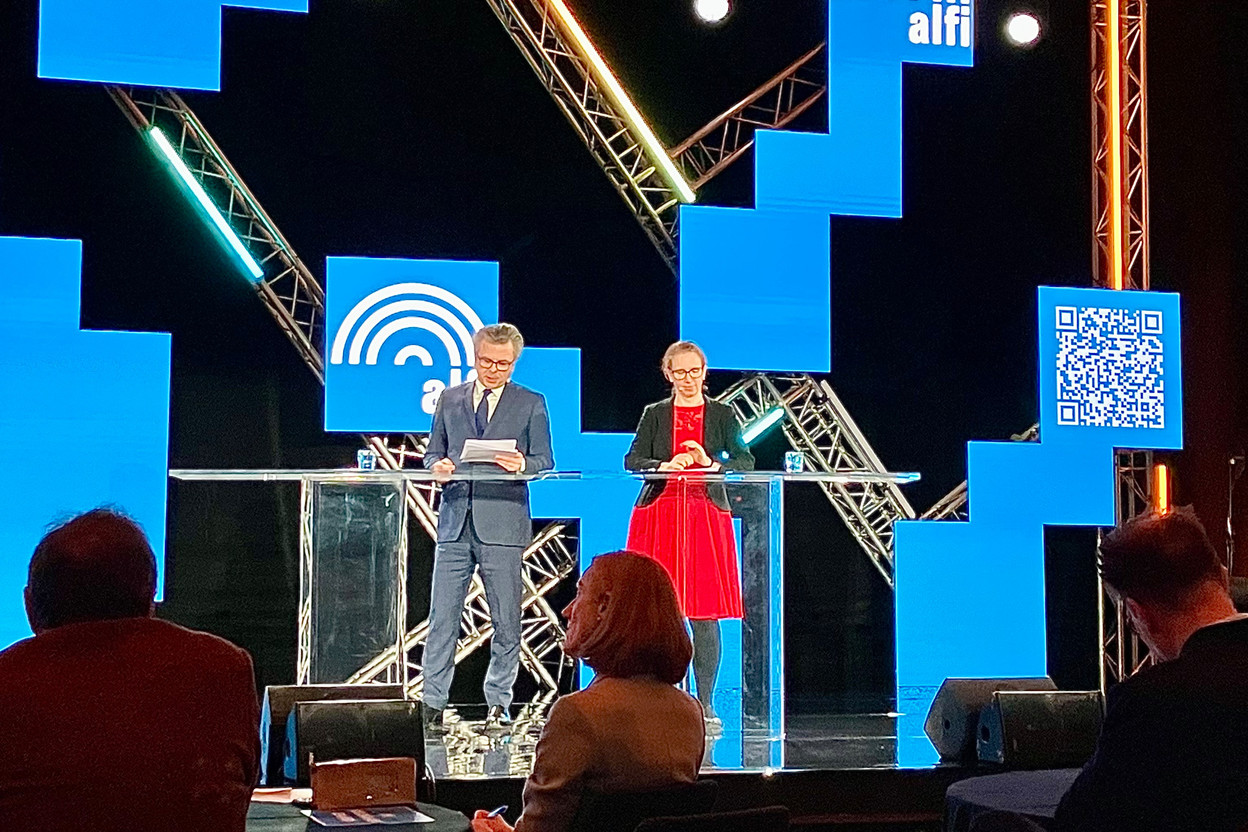
We spoke a few months ago--after the Alfi global asset management conference in March, during which Ireland’s 24hr approval process was discussed--and you mentioned that you understood this to be for non-retail (i.e., professional) funds only. Have you seen increased interest in Ireland as a domicile, or shift away from Luxembourg to Ireland?
I have seen nobody walking away. All of the Irish funds are only for professional investors.
I even have a few clients who are looking into Eltifs and who have their AIFM in Ireland. None of them has said they would go for Irish Eltifs for retail distribution.
During this same Alfi conference in March, you mentioned during a panel that the Luxembourg Financial Sector Supervisory Commission, the CSSF, was “geared up” and ready to go with a new application form. Do you have any insights on if/how this has accelerated the review process of Eltifs in Luxembourg? What else has the CSSF done to facilitate the set-up of Eltifs?
That has been a huge change, and it’s creating a lot of really positive noise.
The CSSF has massively reduced its Eltif review and approval time. So, all of our Eltif files we have submitted--and some very complex Eltifs--they received comments within four or five days in substance, which was never achievable in the past. And we had all our approvals within maximum two months, which is just amazing.
The reduction of the CSSF response and approval time--that is one of the greatest success stories of the Luxembourg regulator in the last years
And that, I understand from my discussions, is thanks to that application form, which is a little more detailed in the past. You have boxes where you can tick, and when you fill in certain boxes, others are greyed out, and so on. So it’s a little bit more of a sophisticated application form.
Was the communiqué from 29 July on requests for authorisations / amendments a big change?
The communiqué just recently was updating it without major changes. But, it has proven to be really a very efficient tool. I am telling everybody that the reduction of the CSSF response and approval time--that is one of the greatest success stories of the Luxembourg regulator in the last years.
They did really well, and on top of that, they have trained teams. They have formed a ‘core team’ and an ‘extendable team’ so they can add people who have received Eltif training whenever they have too many files coming in at the same time to be very reactive and responsive and to be able to deal with it very quickly. We have some of the newer case officers working on Eltifs, and they are super sophisticated; they understand things, and they’re really good to work with.
What do you see as some of the remaining operational challenges related to Eltifs?
I think one of the biggest remaining obstacles is to calculate, very concretely, the required minimum liquidity bucket for various different scenarios. So that is the RTS annexes one and two.
It is a little bit complicated: a few tweaks, certain features, to find exactly the right percentage and decimals and so on. That is currently a question I’m receiving from all sides, which hopefully should be a very temporary question. Within a few weeks, I think everybody will have formed the same understanding. With Alfi, we are working on hopefully publishing some calculation examples so that people can easily understand it, and everybody has the same understanding.
Do you see interest amongst retail investors when it comes to Eltifs?
I’m not so much directly in touch with retail investors, so I don’t know what they say, but I hear from financial intermediaries that there’s a big appetite.
Finally, a crystal ball question: where do you see Eltifs in five years? Or, in a perfect world, where would you hope to see Eltifs in five years?
I think both have the same answer. I see Eltifs as being a core fund product of the future. I think it will take some of the market share from traditional, like, institutional funds. I see already some institutional clients--including some clients like high-net-worth families or ultra-high-net-worth individuals--moving towards Eltifs because it has become a bit of a label and a quality stamp. I see Eltifs continuing to grow quite massively.
What I would also see is a move towards more evergreen structures. In the past, we had more closed-ended Eltifs, and that of course then increases the number. I now see an interesting move towards more evergreen structures, which will decrease the number, but probably increase the volume. So probably in the future, we will need to look at the volume of Eltifs, and not only the number.
This article first appeared in the October 2024 supplement of Paperjam magazine.
The Luxembourg Private Equity & Venture Capital Association (LPEA) Insights conference on 17 October will feature a discussion on operational challenges related to Eltifs.