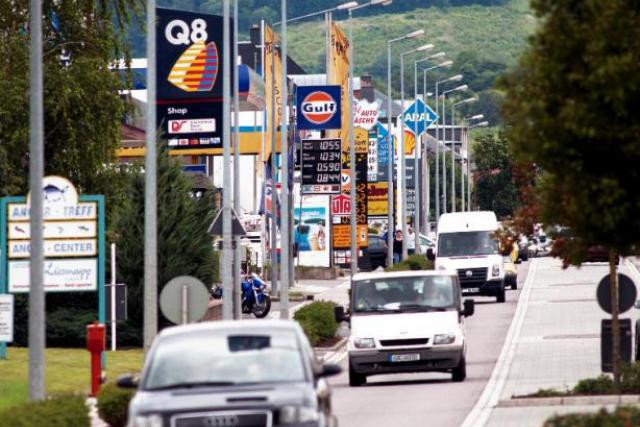
Under EU rules, member countries must maintain emergency stocks of crude oil and/or petroleum products equal to at least 90 days of net imports or 61 days of consumption, whichever is higher.
During the second quarter of 2021, this meant that Luxembourg petrol importers stockpiled 859,142 metric tonnes of petroleum products, with the majority (798,817 metric tonnes) stored outside the country but in the region.
Stocks must be readily available under the EU’s oil stocks directive, so that they can be allocated quickly in case of a crisis.
With the volume of stockpiles calculated based on the previous year’s imports, energy minister Claude Turmes in answer to a parliamentary question said that these would gradually decrease over the coming years.
“Decarbonisation policies and the promotion of electric mobility will result in a reduction in the volume of petroleum products imported,” he said. With less fuel imported, emergency stocks will as a result grow smaller.
Luxembourg this year introduced a CO2 tax on petrol products and in 2019 increased excise tax in a bid to deter fuel tourism and incentivise drivers to switch to more environmentally friendly mobility options. Transport accounts for around two thirds of Luxembourg’s CO2 emissions.
At the same time, the government offers subsidies to switch from oil heating systems to renewable options, such as a geothermal heat pump.
As part of a national climate law, Luxembourg has committed to reducing carbon emissions by 55% by 2030 and becoming carbon neutral by mid-century.
“The government has adopted ambitious energy sector targets for 2020 and 2030,” a 2020 report by the International Energy Agency concluded. “However, it is unclear if existing policies and support schemes adequately address the challenges presented by rapid population growth, an expanding economy and the current dependence on fossil fuels.”