Insurers have traditionally relied on past losses to price future risks. What has changed?
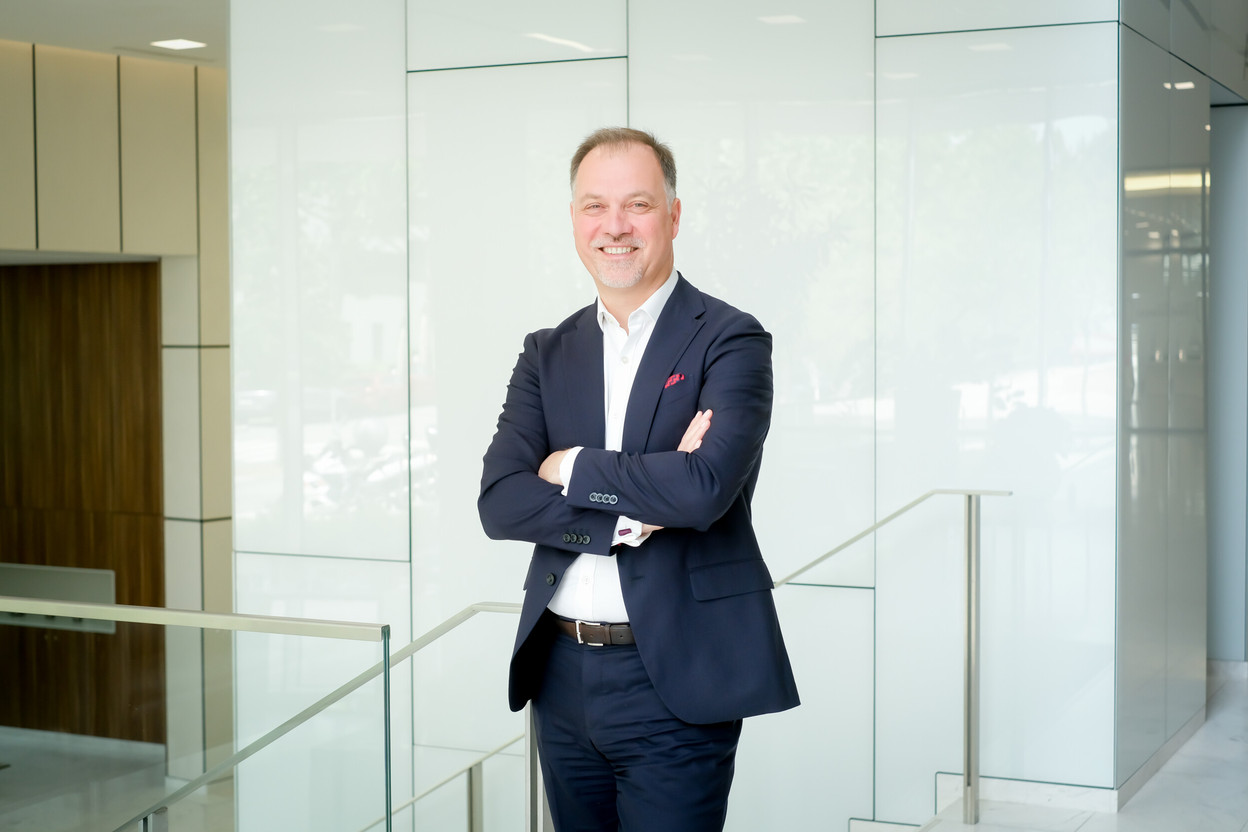
Angelika Werner. – “I often use the analogy of loaded dice: the hazards themselves remain, but the odds are shifting. Some events are becoming more frequent or more severe. Europe is warming rapidly and has currently reached levels around 2°C above pre-industrial temperatures. For every additional degree, the atmosphere can hold roughly 6% to 8% more moisture, which can lead to heavier rainfall events. In addition, we also observe in Europe low- and high-pressure systems being more persistent, allowing rain or heat to remain over one area for longer and cause greater damage.
Historical records are still valuable, but they can no longer describe the future on their own. A flood considered a once-in-a-century event today may not carry the same probability in 20 or 30 years. Insurers therefore need to combine what has happened in the past with projections of how conditions could evolve.
Those projections operate on a broad scale. How do you translate them into the risk facing one factory, warehouse or office?
“Models can indicate whether exposure to floods, windstorms, drought or wildfire is likely to rise, remain stable or decline. But that only gives us the general direction. It does not tell us exactly what will happen to an individual building.
Some hazards are extremely local. Two facilities only 50 metres apart from each other can face very different levels of exposure because of elevation, drainage or the surrounding terrain. A flood map, for example, may not show a wall, a drain or a small change in slope that determines whether water enters a building or flows around it.
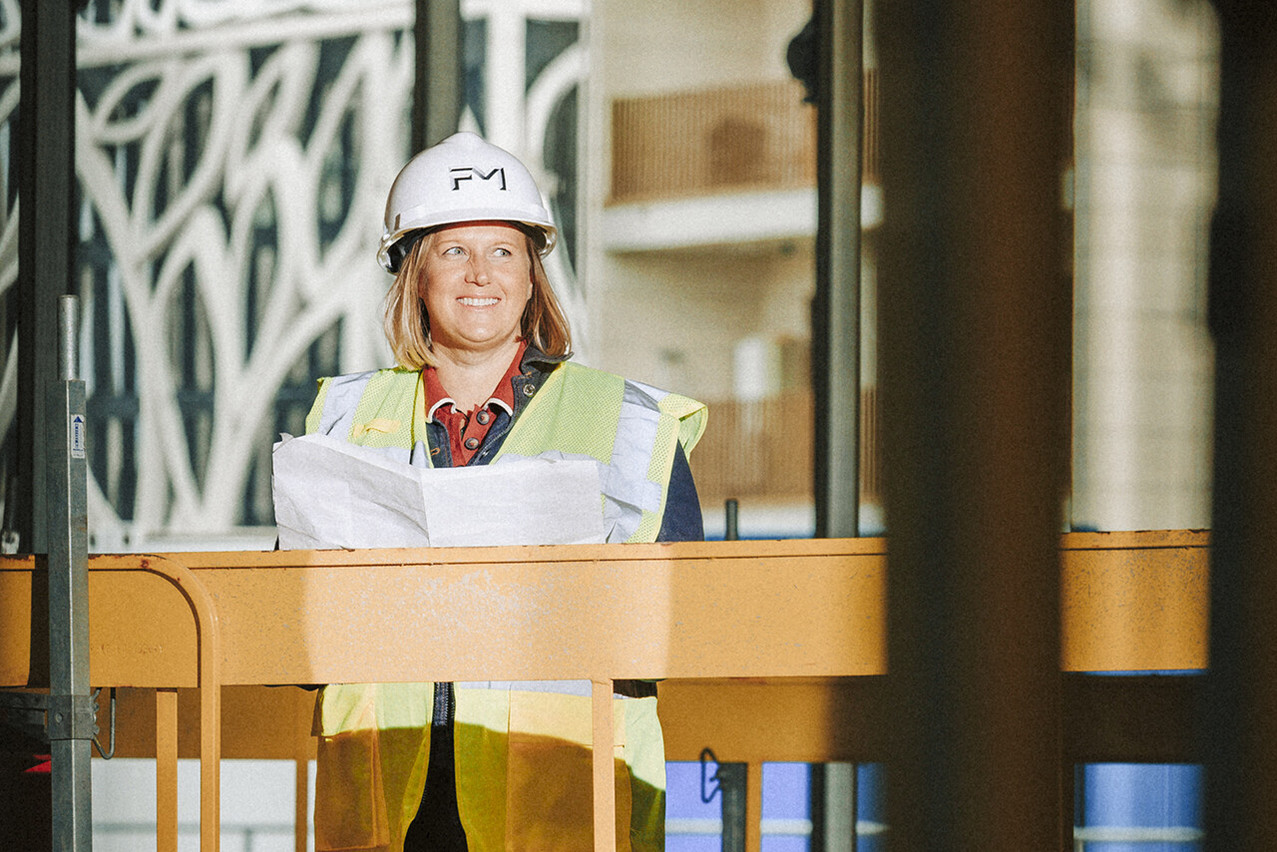
That is why FM’s nearly 2,000 prevention engineers worldwide play such an important role. Our engineers visit client locations, combining model results with detailed insights on the building structure and components of the facility, its vulnerabilities and how an event could affect operations in practice. You need both perspectives to understand the real exposure.
The question is not simply whether protection is needed, but how much is reasonable.

Knowing the exposure is one thing. Deciding how much to spend protecting against it is another. Where do you draw the line?
“That is one of the most difficult decisions for a risk manager of a facility. The question is not simply whether protection is needed, but how much is reasonable when conditions could continue to change over the next 20 or 30 years.
Imagine a facility that currently needs protection against a two-metre flood, while projections suggest higher water levels in the future. Should the company design for two metres, three metres or four? That choice has major consequences. As water rises, pressure on flood barriers increases, so engineering becomes more complex and investment more expensive.
Our FM field engineers help risk managers compare different scenarios and understand the potential costs, benefits and uncertainties of each. There is little value in recommending a major investment based on assumptions that cannot be justified. The goal is to provide enough evidence for a company to decide what level of protection is appropriate for its specific situation.
Could artificial intelligence make those choices more precise?
“It can help us explore uncertainty much faster, but it cannot make it disappear. For example, traditional weather models use physical equations to simulate the atmosphere, which requires enormous computing power. AI works differently: it learns from large volumes of weather data and can produce forecasts much more quickly. For certain tasks, these systems already perform very well.
The challenge is knowing when the results of complex AI models can be trusted. We are currently comparing these tools with physics-based models, including through research with Princeton University using complex historical storms. Before relying on AI models for insurance or prevention decisions, we need to understand where they are robust and where they still have weaknesses.
Once that validation is done, the potential is considerable. AI could generate thousands of plausible storms in a short period of time, allowing us to explore a far wider range of model possibilities than before. The most useful approach will probably be a hybrid one: combining the speed of AI with physical rules so that the results remain scientifically credible.
[Traditional hazard maps] tell us much less about all the infrastructure and services that allow that facility to function.
A company can be forced to stop operating even when its own facilities are undamaged. How do you capture what happens beyond the property line?
“A business never operates in isolation. Production can come to a halt after an event even if the facility itself is undamaged. Employees may be unable to reach work, roads can be flooded, electricity can fail or a critical supplier may no longer be able to deliver.
Traditional hazard maps are good at showing whether a building lies in an exposed area. They tell us much less about all the infrastructure and services that allow that facility to function.
This is the idea behind the digital twin model we are developing with List. It creates a virtual representation of a facility and its surroundings, combining information on natural hazards with data on roads, traffic and other infrastructure. Instead of looking only at the point where the damage occurs, we can study how disruption might spread through the wider network.
The first phase looks at the impact of floods and extreme heat on road access around locations in Luxembourg, Houston, London and Mannheim. We want to understand which connections could be cut, how long a facility might remain difficult to reach and how quickly normal activity could resume. Ultimately, the aim is to give companies a broader view of business interruption, whether they are protecting an existing location or deciding where to invest next.
The important point for companies is not the research itself, but what can be done with it.
You already have research facilities in the United States and Singapore. Why add Luxembourg to that network?
“The idea is to study hazards and prevention measures in a European context. The US facilities have extensive capabilities for large-scale fire testing, while Singapore focuses more heavily on natural hazards affecting the Asia-Pacific region. In Luxembourg, the research work will focus on climate hazards, industrial technologies and cyber risk loss prevention, while supporting emerging research areas, including AI and digital twins.
The important point for companies is not the research itself, but what can be done with it. A flood barrier, roofing system or fire-resistant component only becomes useful once you know how it performs under real conditions. Part of the work will therefore involve testing engineering solutions for loss prevention and translating the results into practical guidance, as well as training.
Being based in Europe should also make it easier to work directly with manufacturers on products suited to local buildings, standards and weather conditions, rather than simply transferring solutions developed for another market.
Teams are expected to begin moving into the building in the fourth quarter of 2027, with the centre opening to clients and other external visitors in 2028.
This approach brings the insurer into the picture well before a claim occurs. Is prevention becoming as important as compensation itself?
“Insurance is only one part of managing a company’s exposure. The broader principle is straightforward: where possible, it is better to prevent a loss than to pay for it afterwards. Our role begins well before a claim. We work with clients to understand where they are exposed, identify practical ways to reduce that exposure and provide insurance for the risk that remains. As natural hazards become less predictable, that preventive role becomes increasingly important.”
This article was written for the supplement Insurance from the November 2026 issue of Paperjam magazine, published on 14 October. The content is produced exclusively for the magazine. It is published on the website to contribute to Paperjam’s comprehensive archive. Click on this link to subscribe to the magazine.
Is your company a member of the Paperjam Club? You can take out a subscription in your own name. Please let us know via club@paperjam.lu.