For cleantech startups, corporate partnerships can open doors to customers, data, and commercial scale. But timing, contractual demands, and corporate bureaucracy can determine whether those relationships accelerate growth or become a burden.
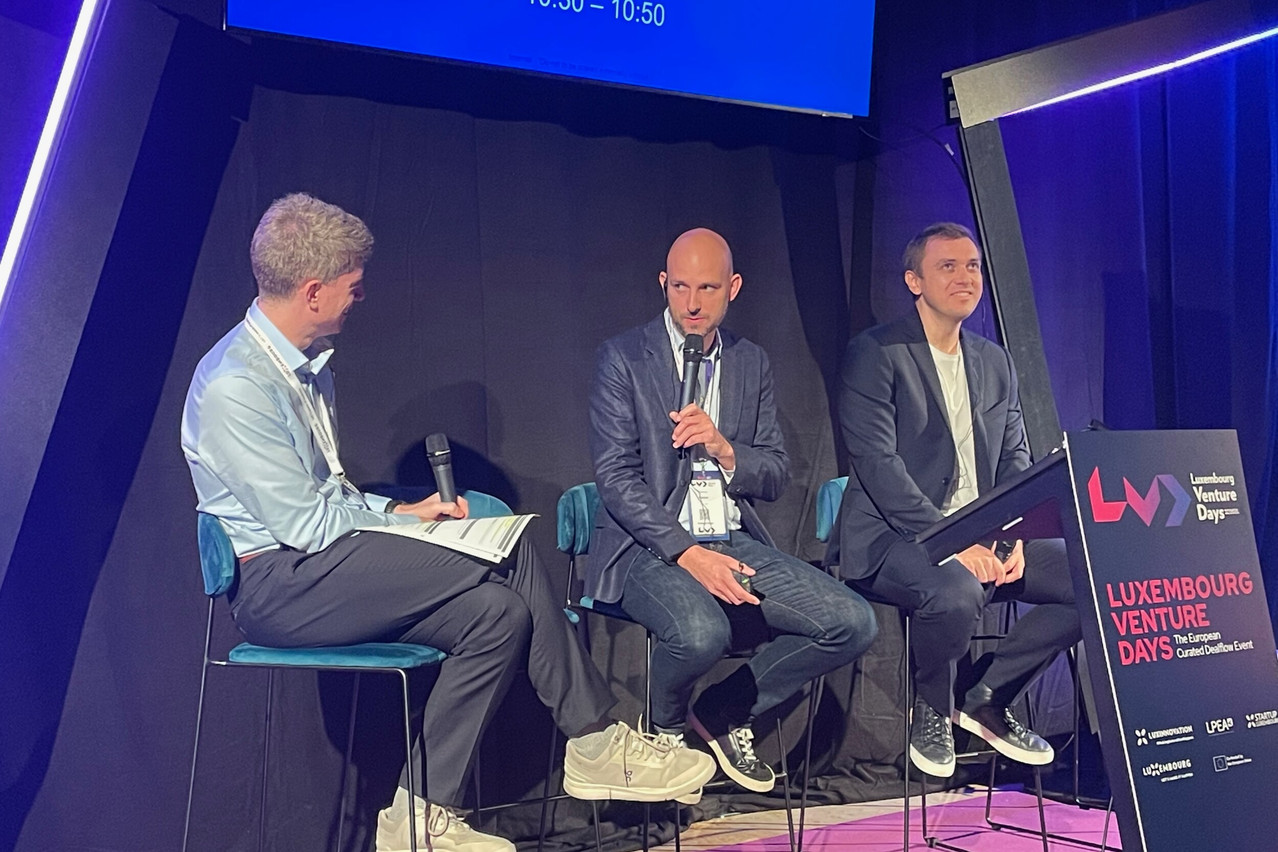
At the Luxembourg Venture Days panel “From funding to collaboration, how corporate partnerships can fuel cleantech innovation,” held on 14 October 2026 and moderated by Santiago Actis Caporale (left), decarbonisation and energy transition manager at Luxinnovation, François Cordier, founder and CEO of Leko Labs, and Vitali Schiopu (right), co-founder and CTO of Climatecamp, discussed how startups and established companies collaborate.
Finding the right moment to partner
For some startups, corporate collaboration “begins on day one,” said Schiopu. Climatecamp, a Luxembourg-Belgium software company measuring supply chain carbon emissions, needed corporate involvement from the outset: accessing real supplier data depended on engaging companies and their supplier networks.
For hardware innovators, the calculation can be different. Founded by Cordier in 2017, Leko Labs has 20 employees and has raised €30m. Its robotic manufacturing process produces building components that can replace up to 75% of the concrete used in high-rise buildings.
Cordier warned that approaching major companies before mastering product quality can have severe consequences. His advice was to establish the technology through smaller private projects before pursuing larger partners.
Leko Labs subsequently approached industry leaders in a relationship he described as “David with Goliath.” A key breakthrough came when the company convinced Belgium’s largest contractor to move beyond pilots to repeat contracts.
Navigating contracts and bureaucracy
Winning a corporate partner is only the beginning. Large companies often impose rigid contracts and payment terms that startups have little room to negotiate, Cordier noted.
Procurement requirements add another hurdle, with startups expected to demonstrate financial stability while still building their businesses.
For Schiopu, overcoming these barriers depends on solving an urgent problem. A startup’s solution must act as a “painkiller” rather than a vitamin. When a corporate partner genuinely needs the product, securing contractual approval becomes easier.
Speaking the corporate language
Successful partnerships also depend on relationships. Small startup teams can find themselves facing delegations of four to six corporate executives, making internal champions essential, Cordier said. These are people within the organisation who believe in the startup’s solution and actively advocate for it.
Staff turnover can disrupt that support, forcing founders to rebuild trust as their contacts change. Startups must also learn to explain their value using their partner’s internal vocabulary, connecting their technology to the company’s priorities.
For cleantech scale-ups, securing a partnership requires more than a promising product. It means demonstrating quality, addressing a pressing need, and finding corporate partners willing to take calculated risks.