The Luxembourg Venture Days opened their 2026 edition with a clear message: building a successful startup ecosystem requires more than promising entrepreneurs. It also depends on access to capital, international networks and investors capable of supporting companies throughout their development.
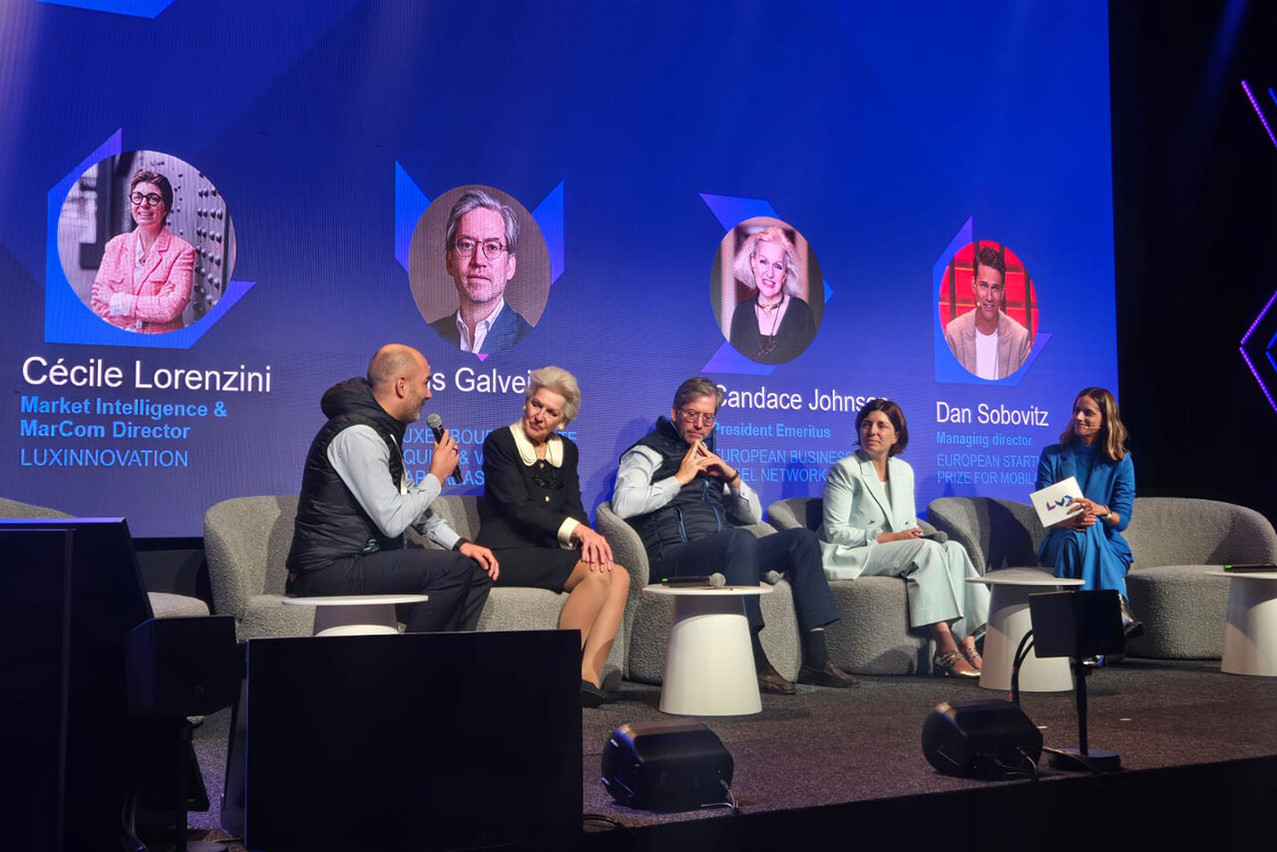
Four representatives of Luxembourg’s and Europe’s investment communities took the stage to discuss the evolution of the event and the role of private capital in supporting innovation.
From a local initiative to an international platform

The event has grown considerably since its launch. According to Lorenzini, attendance increased from approximately 450 participants at the first edition to more than 3,400 in 2025. Around 4,000 participants are expected this year, with approximately half coming from outside Luxembourg.
Three additional international events have joined the programme, while ten side events are taking place across Luxembourg City. Despite this expansion, Lorenzini insisted that the objective was not simply to increase attendance. The priority remains the quality of the projects presented and the connections established between startups, scaleups and investors.
Private capital beyond venture funding
For 
Companies require different sources of capital as they mature, from early-stage venture funding to growth capital, buyout investments and eventually an acquisition or an initial public offering. A startup today could become a growth company within five years and potentially reach the stock market or be acquired several years later, he explained.
This is why Luxembourg needs an ecosystem bringing together different categories of investors rather than focusing exclusively on venture capital. He also highlighted the international dimension of the event, noting that the private capital gathering associated with the Luxembourg Venture Days attracts more than 1,700 participants.
SES, an early example of Luxembourg’s investment ecosystem
Candace Johnson, president emeritus of the European Business Angels Network (Eban), illustrated the importance of early-stage investors by revisiting the creation of SES, the Luxembourg-based satellite operator she helped establish. When the project emerged in 1983, the European venture capital ecosystem was still largely undeveloped. The company initially relied on an individual investor who contributed approximately $1m.
Luxembourg’s banking sector subsequently played a decisive role in financing the project, at a time when private satellite broadcasting faced considerable technological, commercial and political obstacles.
Candace Johnson recalled how the company eventually developed a profitable business model and reached the stock market. For her, SES demonstrates how early entrepreneurial backing, institutional financing and access to public markets can combine to create a successful European company.
Her intervention also served as a reminder that Luxembourg’s involvement in financing innovation predates the current expansion of venture capital.
Connecting Europe’s mobility startups
The European Startup Prize for Mobility is among the international initiatives joining this year’s event. Its co-founder, Nic Knapp, explained that the competition, now in its seventh edition, receives between 500 and 700 applications annually from European startups. The initiative aims to identify promising mobility companies and connect them with investors and industry partners.
Luxembourg’s central European location and its established financial ecosystem were important factors behind the decision to participate.Beyond the formal programme, he emphasised the importance of unexpected encounters between entrepreneurs and investors, which can generate new partnerships and business opportunities.
By combining its financial expertise with international entrepreneurial networks, Luxembourg is seeking to establish itself not only as a place where investment vehicles are structured, but also as a meeting point where European companies can find the capital and partnerships needed to grow.