The AI boom is creating opportunities across private credit, but power constraints, technological obsolescence and borrower disruption are testing lenders’ underwriting, speakers said during a Nuveen-sponsored IPE webcast on 30 September 2026.
The discussion, “AI and Alternative Credit — Opportunity or Disruptive Force?”, hosted on BrightTALK, examined how private fixed income, infrastructure credit, and corporate direct lending managers are assessing the opportunities and risks associated with AI investment.
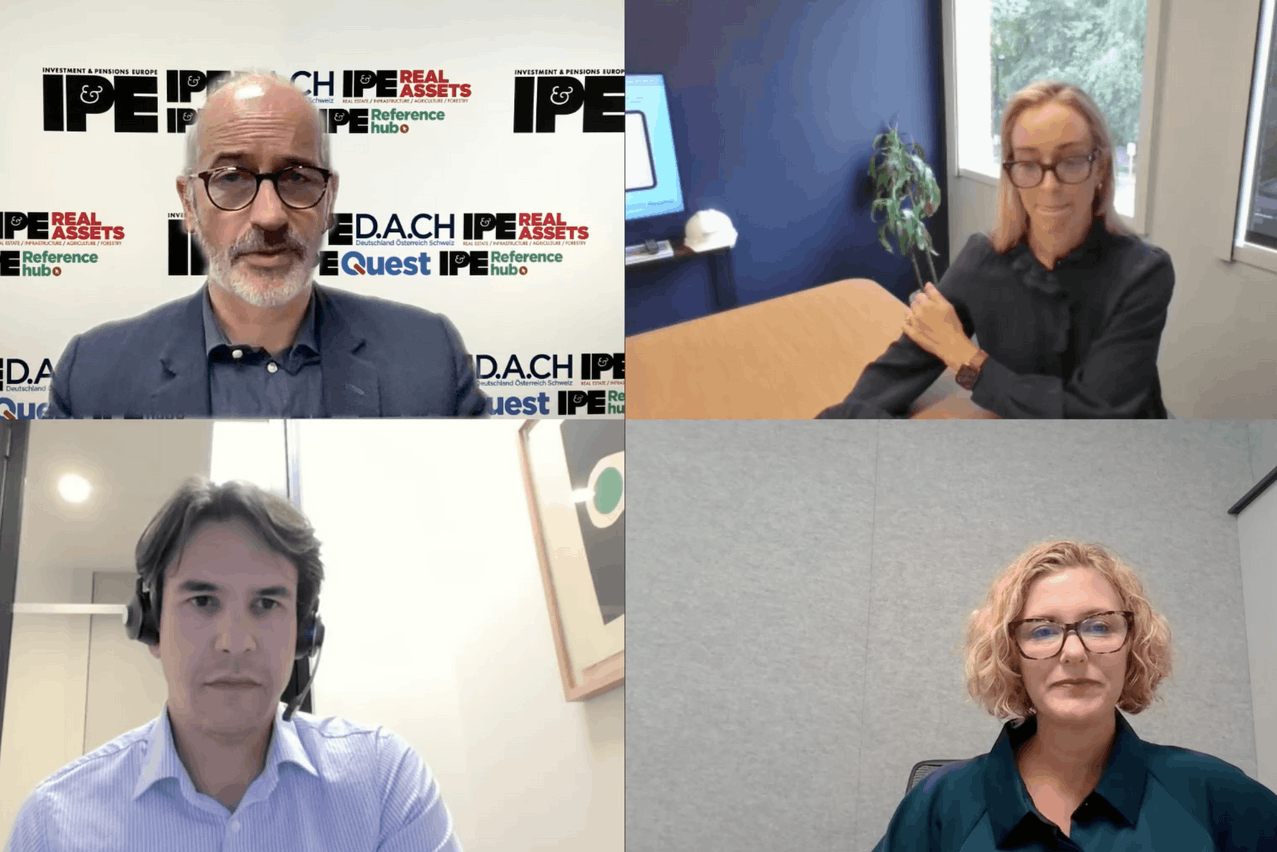
Jessica Bailey (top right), global head of infrastructure at Nuveen, said the scale of the $19trn buildout presents substantial investment opportunities. For lenders, however, financing that expansion requires careful assessment of electricity supply, asset longevity and the resilience of borrowers’ cash flows.
Financing the infrastructure behind AI
While early attention focused on financing data centres, Bailey highlighted opportunities in the infrastructure needed to keep them operational, including grid upgrades, fibre connectivity, cooling and power generation.
The International Energy Agency’s April 2026 update projects global electricity consumption from data centres to rise from 485 TWh in 2025 to around 950 TWh by 2030. AI-focused facilities are expected to account for particularly rapid growth.
Bailey said competition to finance single-tenant data centres was compressing yields and encouraging investors to consider the “picks and shovels” infrastructure supporting the sector.
To address delays in securing utility connections, lenders are financing behind-the-meter gas turbines and battery storage at hyperscale sites, she said. Such projects provide opportunities for investors, although their delivery still depends on equipment availability and project execution.
Bailey also highlighted Nuveen’s clean energy equity platform, which invests in greenfield and brownfield renewable energy infrastructure supplying hyperscalers and other customers.
“This offers a complementary, potentially less volatile way to benefit from the surge in electricity demand driving data infrastructure growth, without taking on data centre-specific risks,” she said.
Managing concentration through securitisation
Laura Parrott (bottom right), head of private fixed income at Nuveen, highlighted private asset-backed securities (ABS) as a way to manage exposure to individual facilities and tenants.
Rather than financing a single large facility, securitisation can pool cash flows from multiple data centre leases. Parrott presented these structures as a way to diversify exposure across leases and facilities, although the degree of diversification depends on the underlying tenant base.
She said lease financing could offer fixed-rate income and a shorter duration than long-term project finance debt. Assessing the underlying leases and counterparties remains essential to determining the credit quality of these transactions.
Assessing AI disruption in software borrowers
Beyond physical infrastructure, corporate direct lenders are examining how AI could affect middle-market borrowers. Marcus Maier-Krug, partner and co-head of portfolio management at Arcmont Asset Management, said assumptions that software businesses face immediate extinction were overly simplistic.
Arcmont distinguishes between mission-critical enterprise software and more vulnerable point solutions. Enterprise resource planning systems benefit from deep workflow integration, high switching costs, and lengthy implementation processes, Maier-Krug said. By contrast, knowledge-based products, such as compliance training platforms, may face greater substitution risk.
“There is no single KPI for each industry to identify risks,” he said.
Things never go according to plans.
Arcmont’s underwriting assesses factors including exposure to task automation, labour cost intensity, and regulatory barriers. Lenders also examine whether unexpected technology-related capital expenditure could absorb cash flow and increase borrowers’ financing needs.
Strengthening protections against overbuild risks
The pace of investment prompted comparisons during the discussion with the telecommunications fibre overbuild of the late 1990s. Bailey said credit providers were strengthening loan protections to address the risk that demand falls short of forecasts or technology requirements change.
Safeguards include milestone-based disbursements, stringent covenants, and an assessment of whether facilities could be repurposed from AI workloads to other cloud computing uses. “Things never go according to plans” said Bailey.
In middle-market direct lending, Maier-Krug emphasised the importance of senior secured first-lien positioning. Across the financing strategies discussed, the speakers stressed selective underwriting and strong loan protections as lenders seek to fund AI expansion while managing risks across technology cycles.