Do we have a governance problem at the highest level in Luxembourg?

Bernhard Dedenbach (B. D.) – Many companies have functioned well for years. Luxembourg has been a success story. But there are a lot of fair-weather captains: when the weather's good, they're on deck, but when it's more complicated, they're no longer there... That's not unique to Luxembourg. No one wants to take responsibility for what goes wrong, when that's precisely what's needed if a company is to make a difference. Companies with good governance do extremely well, while others lose ground.
What are the red lines, generally speaking, in the composition of a board of directors? Wife or husband? His or her best friend?
A. Z. – There's a saying: 'Good accounts make good friends.' It's the same logic. Just because I like someone or like someone well doesn't necessarily mean they're the best person to sit on the board and help me with complicated situations.
B. D. – When you know someone very well, they're not necessarily going to tell you things that are going wrong or not in the transparent and direct way that an outsider would. At some point, concerns or taboos are not raised because it upsets good friends. Risks are not raised enough so as not to damage the circle of these personalities who know each other well, who support each other, who party together...
How do you define good governance?
B. D. – The first objective must be to ensure the proper long-term operation of a company, whether it's an existing company or one that's being set up. In an ideal world, we would found a company directly with good governance. Unfortunately, that's not how things work. We have all learned from history that many companies do not reinvent themselves regularly, in a systematic and structured way, and will lose out in the long term or disappear.
A. Z. – The problem we regularly encounter - and we conducted a survey with Insead and others two years ago on this subject - is that boards of directors are very financial, compliance and audit oriented. Somehow, systemic risk is not brought to the table in the same way.
People are leaving the civil service, which was not the case before.

What about boards of directors on which state representatives sit?
A. Z. – It would be very important to think about the selection of directors who represent the interests of the State. We should have a kind of checklist for each director who comes from the administration. Once again, this is very idealistic, but it could make it possible to professionalise a huge number of decisions concerning those who manage taxpayers' money. What exactly is the mission of administrators, what do we expect of them, what power do they have? What can they bring to the table? It's not clear. And even if we push the envelope a little further, it wouldn't bother us if they were subject to annual appraisals in their role as directors. We could even imagine turnover if the person who has been asked to take on a mandate doesn't see the value they can bring to it themselves.
B. D. – Sometimes you get the impression that appointments to a Board are not guided at all by the desire to have the best candidate, but by other criteria more in the political agenda, which is not the company's agenda.
When a board is not followed by the company's management, what happens?
B. D. – It depends on the circumstances. You need to create a clear and efficient schedule. Listed companies already have all that, but in medium-sized or family-run companies, the logic isn't the same. In any case, if the objectives are not being achieved, you have to ask yourself whether you are surrounded by the right people.
What doesn't necessarily happen in SMEs....
B. D. – No, SMEs don't have the framework they need. Nor do they have the means to tell themselves that they are going to replace one person with another. The talent to replace someone is not always immediately available. It's also often a question of kinship: some family members are on the board, others on the executive committee... I can't see myself sacking my brother or questioning my grandfather's work. It's complicated from a human point of view.
A. Z. - "There's the question of board composition. We are very much in favour of the idea of also having skills in human resources and technology, cybersecurity and artificial intelligence on the board. In today's world, this is the key to transformation. There also needs to be a good balance between the Chairman of the Board and the CEO. There are a lot of places where the BoD steps on the CEO's toes, and the CEO has boardroom thoughts... In the end, nobody makes any decisions!
Technology experts say they're not taken into account enough by boards, where, often, they're not even on. Is that changing?
B. D. – We don't have the impression that awareness is really there yet. There's a lot more talk today about the opportunities linked to artificial intelligence, but in reality, the risks associated with it or good management are not in the heads of many administrators. This is why we are pushing for boards to include at least one expert on these subjects.
A. Z. – Even an independent director with cyber skills. Two or three board chairmen have told us that there are no such skills on the market. But there are some who want to help participate in the creation of these new worlds. And we're not creating those positions.
Climate risk is still underestimated despite its long-term consequences, which will persist.

Isn't there an element of fashion? Every couple of days there's a new thing we should be rushing to adopt...
B. D. – Cybersecurity is a reality that everyone is confronted with every day. Attacks on Luxembourg companies have multiplied over the past year, with major damage, huge losses and enormous risks. They affect every area of daily life, including hospitals, which could one day cease to function. You have to imagine the scale of the problem and prepare for the worst-case scenario to try and avoid it. In this case, we haven't gone far enough. It's a mistake we're going to pay dearly for! We also need to assess the pros and cons of adopting AI.
Is the risk itself, whether general or generic, given enough consideration?
B. D. – Risk is not the biggest problem when it can be calculated. The problem starts when I no longer know what to expect, as with climate change or customs duties in the United States... Climate risk is still underestimated, despite its long-term consequences, which will last. If we continue not to take it seriously and not to take the necessary measures to control this risk, it will multiply and the problems will be very, very difficult to resolve.
A. Z. – It's crucial to bring in more diversity and skills. We are working hard on raising awareness of the crucial role of remuneration or nomination committees which, ideally, should prepare the entire life cycle of directors and executive committee members, from onboarding, through talent and skills development, bonus management, preparation of succession plans and finally departure.
And when is the right time?
A. Z. – A CEO succession plan takes a year and a half. Changing CEOs is not a cut-and-paste job! Do we find the person here or do we have to find him elsewhere? How do you support the Board of Directors in its deliberations on the ideal profile of the person who will be able to integrate into the composition of the Executive Committee and the company's culture, while retaining the legacy and working on the future in an intelligent way? How can we prepare for the transition of the current CEO and the integration of the new one, while maintaining the serenity of the organisation? All these questions are crucial if the succession is to be sustainable, and the impact on the organisation positive.
How to professionalise the process?
B. D. – The first thing to analyse is whether we have the right people on board, who represent both the diversity I need and the skills I need to prepare a company for the future. And if there's a problem somewhere, to be able to rectify it as quickly as possible. The board is not a Rotary club, where you come to spend an hour with friends...
And in the specific case of government representatives on boards?
B. D. – Is it true that, internally, State administrators receive orders or instructions from their supervisory minister? I don't know. If the mandate isn't clear, I can't blame people for not doing their job. Some government representatives are certainly doing a very good job on the boards, and others are not. Is it because they've been briefed better? Have they been given a clear mandate? Ultimately, it's also a political question: what do I expect these people to contribute?
Is it reasonable to expect the politician to give a detailed mission statement?
A. Z. – The administrator should check with his minister what his expectations are.
B. D. – The Minister has been mandated by the electorate to represent the interests of a government and of the whole population of Luxembourg, which has an interest in seeing that a particular company is well managed, that it can grow and create jobs. It is not in the interests of Luxembourg society for a company to languish, gradually losing importance and market share. Here again, if the politician has a problem, he can also call in the experts. It's also a way for us to make our contribution for the benefit of the country. Pro bono, very often.
Could we move from a model where the State delegates administrators who represent the State to a model where administrators have good skills to represent the State overnight?
B. D. – It wouldn't be fair to say there's no will. It's starting to become clear to everyone. I think the government is thinking about offering its administrators professional training to make them aware that the mandate is a job and a responsibility to be taken seriously. It doesn't go fast enough, far enough or even deep enough."
Who are they?
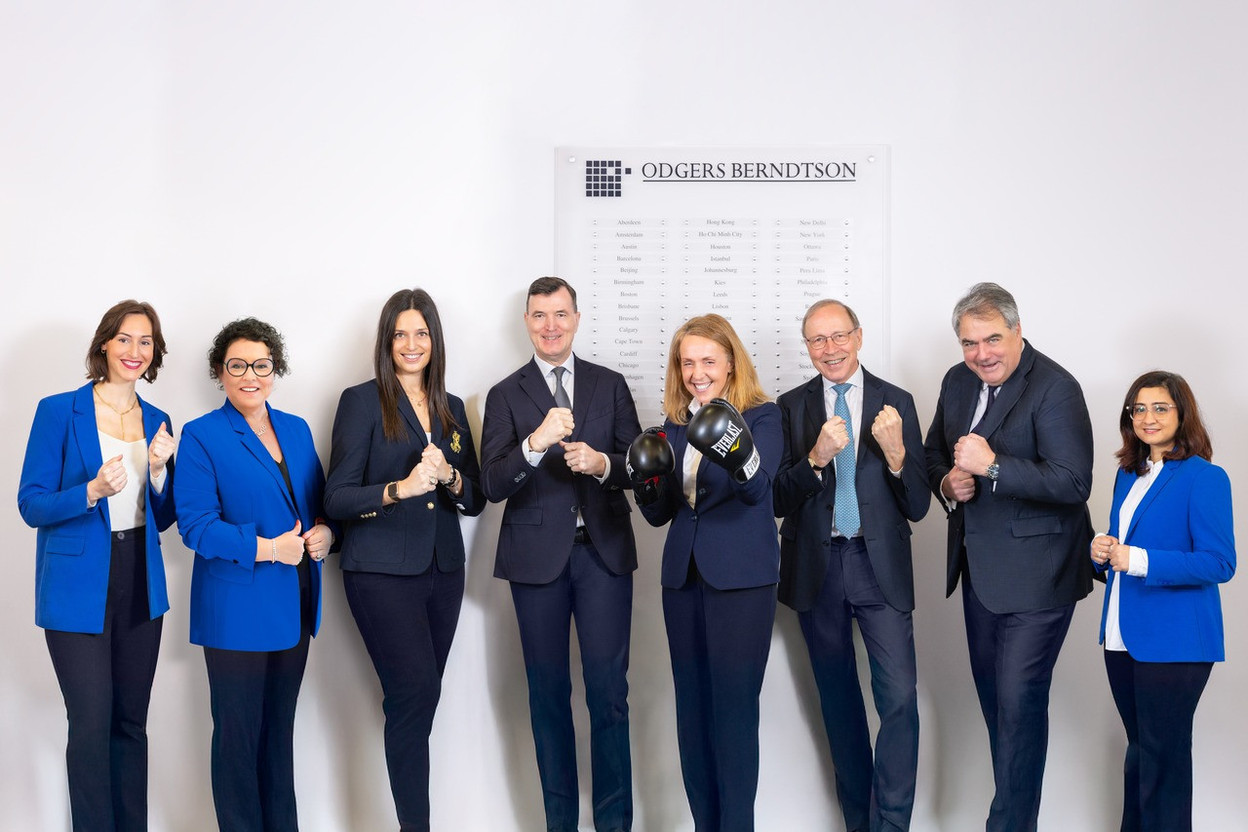
Odgers Berndtson is an international executive search and consulting firm based in Luxembourg since 2018. The group was founded 50 years ago and currently employs 1,250 people in 33 countries via 65 offices. The group's headquarters are based in London.
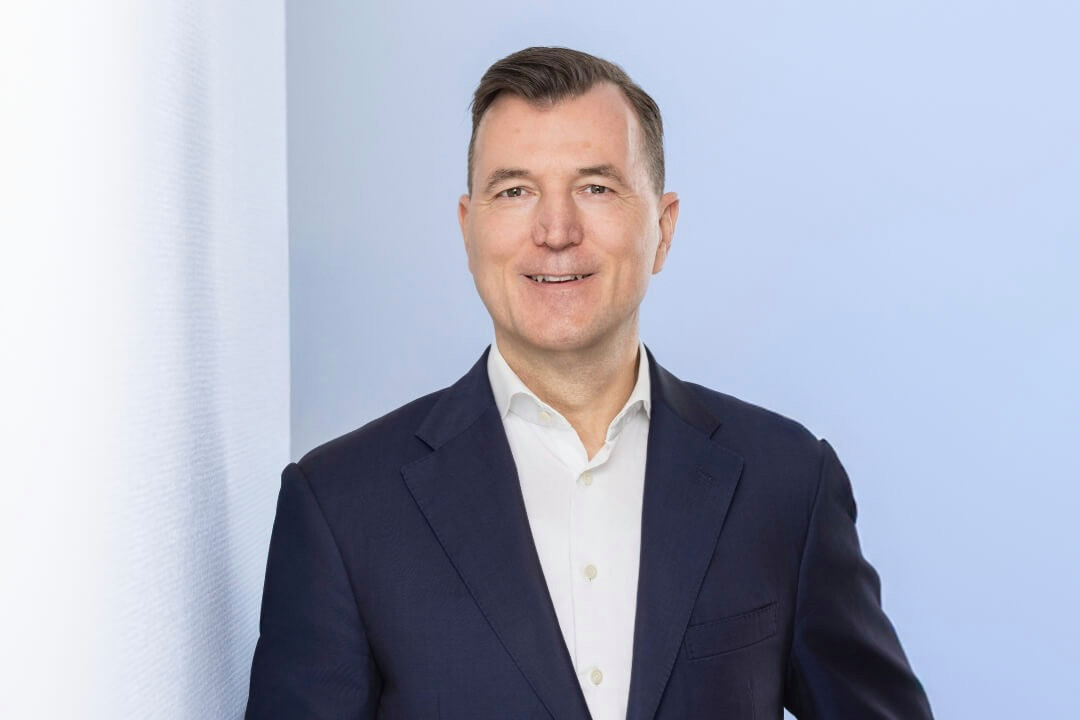
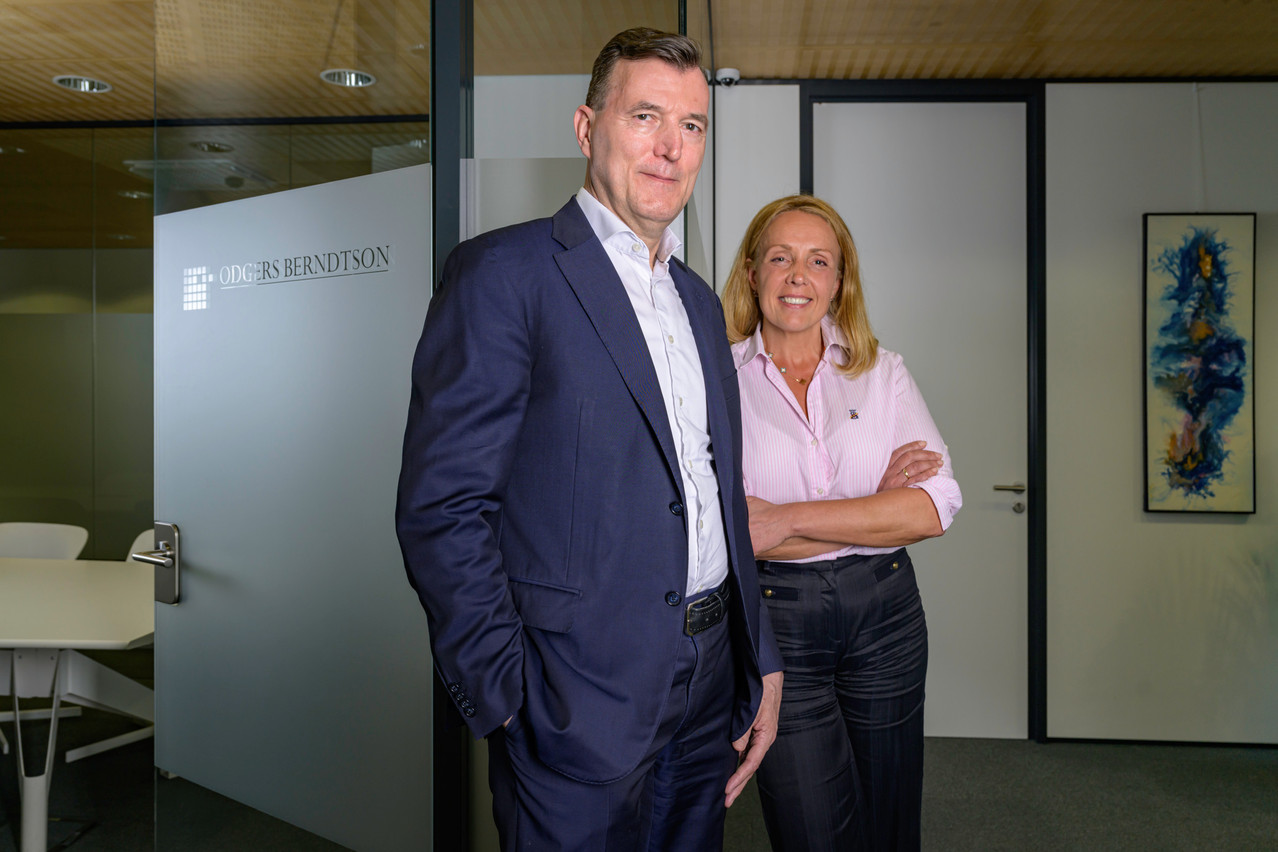
Agnieszka Zajac is the managing partner of Odgers Berndtson's Luxembourg office, with over 20 years' experience in executive search and consulting. She works on exclusive mandates to search for executives and board members in the public sector, finance, industry and services.
Bernhard Dedenbach, partner financial services, has more than twenty-five years' experience in executive search, including fund administration, payment services, wealth and asset management, neobanks and cryptocurrencies. The former head of Korn Ferry's Luxembourg office, where he stayed for more than ten years, is a founding member of the Luxembourg Institute of Directors (ILA).
The ideal board today is...
I am an admirer of Yves Elsen's work at the University of Luxembourg. In terms of composition, I congratulate the composition of the Liser board, with its diversity of skills, ages, experience and, I believe, its gender balance. I think it's a very successful and happy-looking board!
A civilised and correct divorce
What about choosing a "bad administrator"? "You can't mix Lego and puzzle pieces, it doesn't work. If the director has not integrated well, it's the role of the chairman of the board to lead a discussion with that person to make them understand and adapt," explains Bernhard Debenbach. Fortunately, we have something that is accepted in our society: divorce. It has to be done in a civilised and correct manner. Here again, adds Zajac, “if we've done things properly and carried out annual evaluations and worked on a robust selection process, we can see what's going well and what's not. After two years, we know very well that things aren't going well.”
Appointing an administrator every year, easier to fix the problem, they say.
This article was written for the May 2025 Paperjam magazine edition, published on 24 April. The magazine's content is produced exclusively for the magazine. It is published on the site to contribute to the full Paperjam archive.
Click this link to subscribe to the magazine.
Is your company a member of Paperjam Club? You can request a subscription in your name. Let us know via club@paperjam.lu
This article was originally published in French.