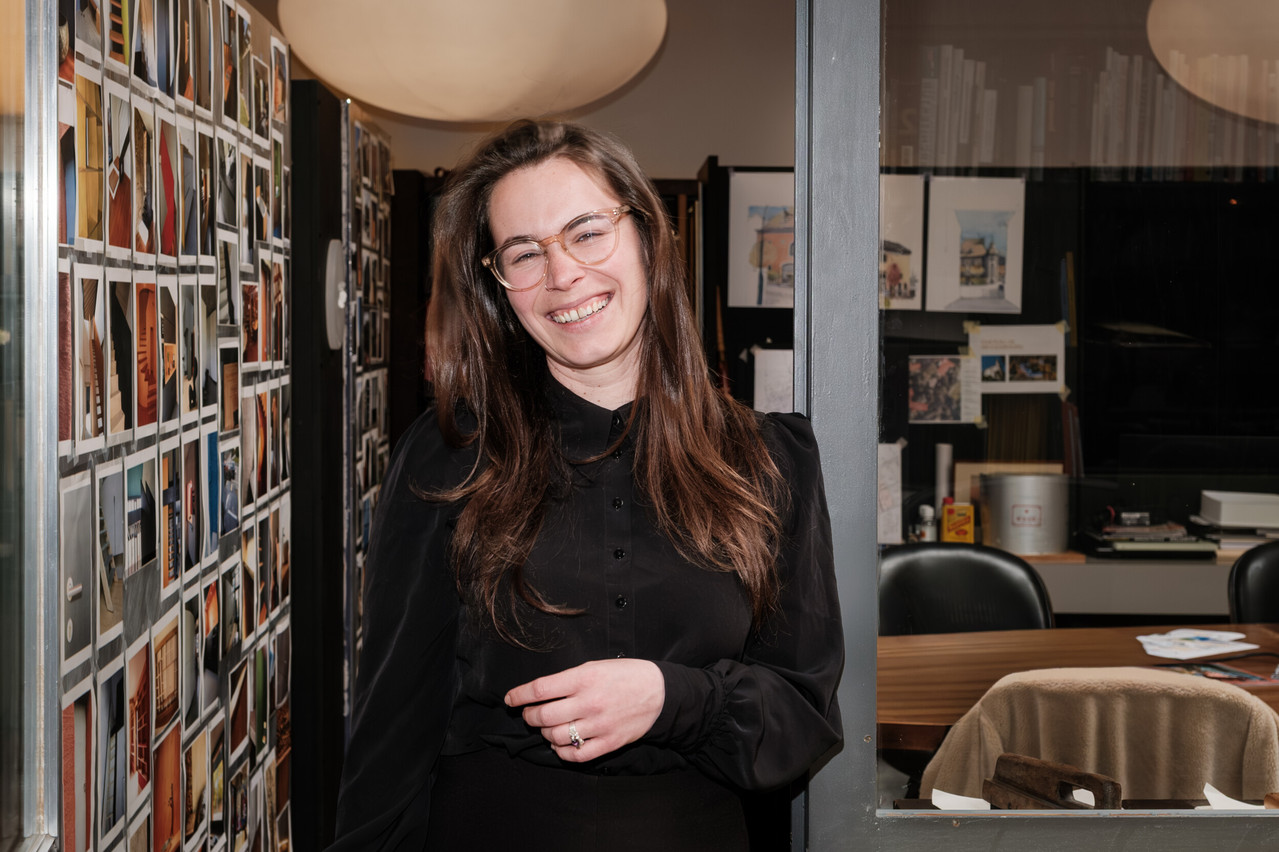
How does it feel to find out you’ve been selected for such a prestigious event as the Venice Architecture Biennale?

How did you, at the age of 31, come to take an interest in the issue of housing of the future?
“When I started my PhD, I was convinced that I could find architectural solutions and building types to promote community living. But it didn’t take me long to realise that, at my level, I had no way of alleviating the crisis at that point. We’re touching on disciplines and themes that lie outside my remit. Nevertheless, as my journey progressed, one thing became very clear to me: if we want to make a difference, the answers to the crisis aren’t to be found solely in plans and volumes. We need to look at funding, regulations and politics. In other words, to transform the way we live, we must also transform the frameworks, beliefs and dogmas that shape housing. And the sooner, the better!
In my view, architecture should not merely be a backdrop, but a profound commitment.

Why are housing cooperatives an attractive option?
“This model offers a practical, credible and sustainable way out of a system dominated by speculation. It is worth noting, incidentally, that there was an attempt to introduce this type of housing in Luxembourg, but it did not take off due to a lack of follow-through on funding and subsidies. The model works as follows: in a cooperative, housing belongs to a collective, non-profit organisation of which the residents themselves are members. Everyone has one vote, regardless of their financial contribution. The principle is simple: providing housing, not making a profit. In Switzerland and Germany in particular, this model is a powerful tool for keeping properties permanently out of the speculative market. When a resident leaves, the property remains within the cooperative system. And when the organisation generates funds, it reinvests in new projects. A virtuous circle explored during the exhibition at Luca, which I curated.


That exhibition was a turning point, but are these cooperatives a reality?
“That’s right. By bringing housing cooperatives to the forefront, we’ve reached the general public—aided in this by the press, which has done a good job of spreading the word—and this has helped bring the issue to the fore in public and political debate: projects have been launched and taken shape, local authorities are taking an interest in the model, and groups are forming on both sides. One of the most concrete examples already brings together 18 households on a site in Belval Sud. This gives me great satisfaction, because we’re talking here about very real life trajectories. It’s demanding, sometimes a heavy burden to bear, but deeply coherent. And it takes us back to the fundamentals of society before the rise of unbridled capitalism. For me, architecture is not merely a backdrop, but rather a commitment.
In short, what do you envisage for the housing of the future?
“It will undoubtedly be a model that focuses less on architecture alone and more on political, financial and social aspects. Solutions will involve non-speculative approaches, such as housing cooperatives, where housing serves first and foremost to meet people’s housing needs. I believe in a more collective system with a governance structure that gives residents a greater say, promotes social diversity and supports projects tailored to different profiles and income levels. I believe these alternatives are now essential to providing a practical response to the housing crisis.”
This article was written for the May 2026 issue of Paperjam magazine, published on 29 April. The content is produced exclusively for the magazine. It is published on the site to contribute to Paperjam’s comprehensive archive. Click on this link to subscribe to the magazine.
Is your company a member of the Paperjam Club? You can apply for a subscription in your name. Please let us know via club@paperjam.lu.


