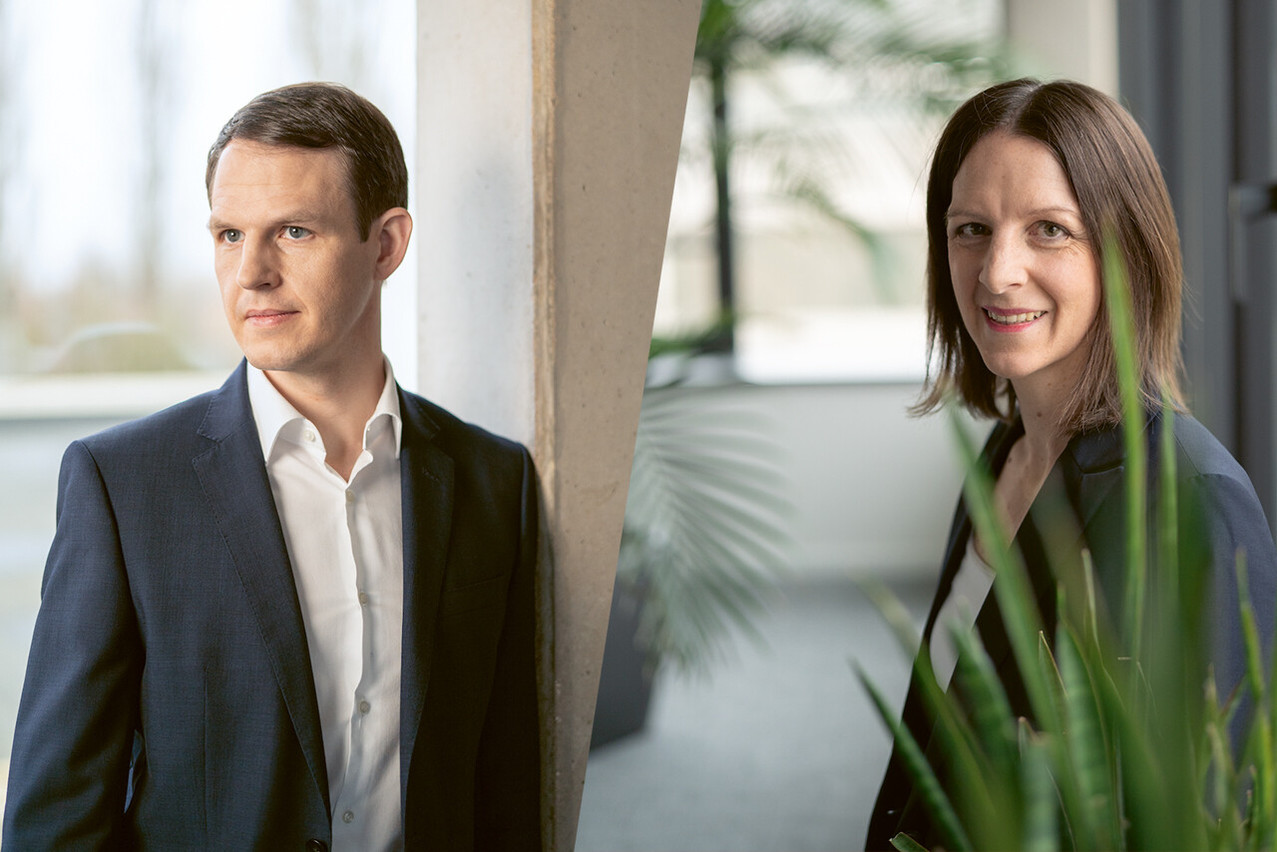
Founded in Luxembourg in 1976, Cebi has established itself as a leading industrial player in electromechanical solutions for the automotive, household appliances and ventilation sectors. Initially specialising in bimetallic thermostats, the group has gradually expanded its product portfolio to include temperature sensors, micromotors, actuators, gear motors, locks and car wash systems. Now operating in 13 countries, with 3,500 employees and seven research and development centres, Cebi combines its Luxembourg roots with an international presence. The group, headquartered in Luxembourg, has structured its growth around an integrated industrial approach, product innovation and closer ties with its global customers. After several decades driven by 

In your view, what is the main lesson you have learnt from your experience (or your ongoing reflections) regarding succession and the engagement of the next generation within your company?

How do you manage to balance family expectations with the company’s economic and strategic imperatives, and which trade-offs have been the most decisive?
“In our case, this balance was facilitated by a concentrated shareholding structure: a single family shareholder, committed to managing the business ‘with due care and diligence’. The priority has always been the company’s financial stability and long-term viability. For example, in a year of strong results, the decision was taken to reinvest rather than increase family dividends.
Which decisions or developments relating to governance or the professionalisation of management have had the most far-reaching impact on your company?
“A turning point was the management buy-out (MBO) in 2011, with the creation of Cebi International as the parent company and the establishment of an operational headquarters. Following the restructuring that accompanied the MBO, a group executive committee was set up to support the steering of strategic decisions. More recently, the departure of the first-generation CEO from his executive role led to the board of directors being further structured and the establishment of a regular family council, whilst he remains a member of the board of directors and the sole shareholder.
How does your company manage the tension between honouring its heritage and the need to innovate or transform itself in order to remain competitive?
“The company’s legacy was closely linked to the personalities of the first generation, particularly René Elvinger. His departure as CEO of the Cebi Group, combined with less favourable sector-specific and economic conditions, prompted the group to take a more in-depth look at itself. We have strengthened our capacity for innovation and focused more on our long-term strategy. The limit does not lie in the transformation itself, but in upholding the company’s values: as long as these are preserved, evolving is not a betrayal, but a means of ensuring the company’s long-term survival.
What were the most decisive choices made in terms of financing growth, and how did they influence the company’s governance and trajectory?
“The most decisive choice was to prioritise self-financing and to forego bank or external financing. This policy, set by the shareholder, enabled the company to retain full control of its capital, but also limited the pace of growth. For example, the construction of new sites in China and Mexico, as well as the development of new products, were financed from equity. The trade-off clearly favoured independence over accelerated growth.
Which strategies have been most effective in developing your range of products or services whilst remaining true to the company’s DNA?
“One of the most effective strategies has been organising the group into centres of expertise, each developing different components and products, which promotes a diverse product range and the emergence of new opportunities. We have thus moved from electromechanical components towards more comprehensive, high value-added solutions. For example, by combining the expertise of our centres of excellence in Italy, Switzerland and Brazil (actuators, motors and plastics processing), we have developed a complete charging port module for electric vehicles, integrating mechanical, electronic and software components.
At what point did you feel it was necessary to accelerate the company’s growth, and what lessons have you learnt from this phase of scaling up?
“We realised we needed to step up the pace when regulatory constraints, as well as customer requirements, began to have a greater impact on our overheads. As a large company, we are subject to onerous obligations that require a substantial revenue base to be absorbed. Similarly, investments in digitalisation and AI become all the more profitable as the company reaches a critical mass, enabling us to reap the full benefits and recoup the costs more quickly. Remaining at the same size would have increased the risk of losing our competitive edge.
What were the main drivers – and the main challenges – of your internationalisation strategy?
“In our context, we view internationalisation primarily as expansion starting from Europe, where we have historically had several sites. Since 1999, we have gradually established a presence in Brazil, followed by China and Mexico. The main challenges have been cultural and organisational: working with local staff and authorities, in different political contexts, requires a great deal of adaptability. Experience shows that operating methods cannot be directly transferred from one country to another.
In your experience, how can a family business attract and retain key talent in an increasingly competitive environment?
“Our experience shows that a family-run business attracts people because of the close rapport and accessibility of the management. Short decision-making processes and a lean structure enable us to act quickly, which is often appreciated by key talent. This way of organising also offers a wide variety of tasks and responsibilities: rather than confining staff to highly compartmentalised roles, we seek to build roles around each individual’s skills and potential. The difference compared to large corporations therefore lies in a more people-centred culture, strong values and direct contact with decision-makers, which foster commitment and a sense of belonging.
How has increased international competition in your domestic market changed your positioning, organisation or strategy?
“In the European market, intensifying international competition, particularly from Asia, has significantly increased the pressure. At the same time, European regulations and restrictions on access to certain raw materials, such as rare earths, create a competitive disadvantage, compounded by higher raw material and labour costs. To remain competitive, we have had to adapt our organisation, notably by relocating certain production operations. We have also strengthened our innovation and development capabilities on other continents in order to mitigate risks and maintain the Group’s competitiveness.”


