With 47,161 new cars registered in 2025, an increase of 1.1% compared to 2024, the Luxembourg car market ends the year on a moderate rise. In detail, the start of the year was more buoyant, with 12,671 registrations in the first quarter and 12,591 in the second, before a gradual slowdown in the second half of the year (11,232 in the third quarter and 10.667 in the fourth), illustrating a loss of steam in the market as the year progressed.
A weaker fourth quarter
In Luxembourg, the fourth quarter of 2025 confirms the slowdown seen at the end of the year. With 10,667 cars registered, the market was down 5.0% compared with the third quarter (11,232 units), reflecting a weakening in momentum after the summer. In year-on-year comparison, Q4 2025 was also slightly below Q4 2024 (10,745 registrations), down marginally by 0.7%, illustrating a generally stable end to the financial year, but with no real rebound.
In Q4 2025, the Luxembourg market remained very largely dominated by German manufacturers, who concentrated the bulk of the best sales. Volkswagen regains its number one position, ahead of BMW and Audi, confirming the historical roots of German premium and generalist brands among Luxembourg buyers.
German brands alone account for a majority share of registrations in the top 10, along with Mercedes-Benz and Opel (which re-enters the top 10 by pushing Hyundai out). The Czech Skoda further strengthens the influence of the Volkswagen group. French manufacturers Renault and Peugeot are holding their own in the rankings but are not rivalling the leaders, while Ford and Kia illustrate the ability of non-European brands to capture loyal customers.
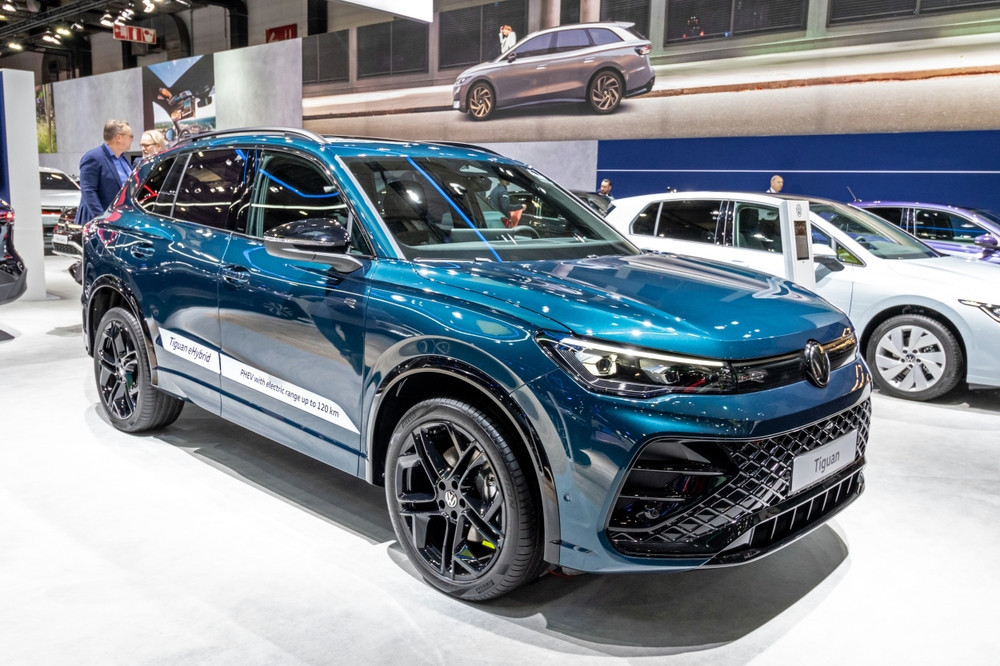
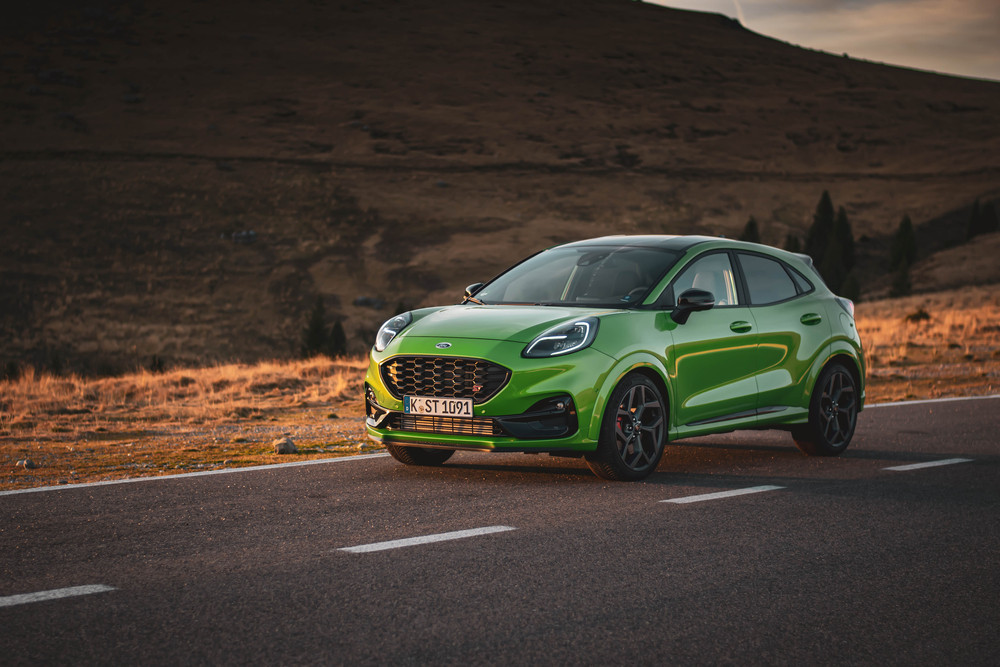
Ford places two vehicles at the top of the best-selling models ranking, the Puma and the Explorer, confirming its positioning in the most buoyant segments of the market. The Volkswagen group is the central player in the top 10, with no fewer than four models (Polo, Golf, Tiguan and Touareg), covering a spectrum from city car to top-of-the-range SUV. Germany's premium brands are also well represented, with the Audi A3 Sportback and the BMW iX1 eDrive20, the latter underlining the growing importance of electrified models among the best-selling models. Finally, the presence of the Kia EV3 and the Tesla Model Y confirms the gradual entrenchment of 100% electric vehicles in the Luxembourg automotive landscape, even if combustion and hybrid models remain the majority in terms of volume over the quarter.
The breakdown of powertrains in the fourth quarter of 2025 confirms a market largely committed to electrification. 100% electric cars lead the way with 30.6% of registrations, ahead of hybrids (all technologies combined) which account for 27.3% of the market. Petrol engines continue to play a significant role (26.0%), while diesel continues to decline, accounting for just 9.3% of sales over the quarter. Plug-in hybrids (PHEV) accounted for 6.7% of registrations, confirming their role as an intermediate solution. Overall, almost two out of every three cars registered are electrified.
And in border countries?
In France, new car sales are down by 5.0% in 2025 compared to 2024, with 1.63 million registrations compared to 1.75 million the previous year, in a market notably marked by the fall in Tesla sales.
In Belgium, the car market also contracted over the year as a whole, with registrations down 7.5% from 448,277 to 414,770 vehicles despite a rebound seen in December.
In Germany, the car market grew slightly in 2025, buoyed by a particularly buoyant December: with 2.9 million new cars registered, sales rose by 1.4% year-on-year, against a backdrop of a sharp increase in electric and hybrid vehicles.
Luxembourg's car fleet is growing and electrifying (slowly)
On 1er January 2026, Luxembourg's car fleet is still predominantly combustion-powered. Petrol and diesel vehicles still account for almost 76% of cars on the road, illustrating the structural inertia of the fleet despite the rapid growth in sales. Electrified powertrains are gaining ground, but remain in the minority: hybrids, whether rechargeable or not, account for 15.5% of the fleet, while 100% electric cars account for 8.7%. Alternative powertrains remain marginal. This picture confirms the gap between a registration market that is now highly electrified and a vehicle fleet that is changing at a slower pace. Despite all this, Luxembourg is not going back on the Pnec targets.