
A year ago, equity markets celebrated Federal Reserve rate cuts as a catalyst for asset price expansion. Today, the macroeconomic paradigm has shifted back toward monetary tightening, with 10-year US Treasury yields breaching 5% and touching 5.30%, said Nicolas Gazin (centre), head of quantamental equity at Degroof Petercam in a panel discussion at the Luxembourg Investment Forum on 7 October 2026.
In previous market cycles, yield surges triggered valuation compression and volatility. Yet, equity markets demonstrate remarkable resilience. Corporate earnings have delivered an extraordinary positive surprise, underpinned by infrastructure spending, artificial intelligence integration, and structural reindustrialisation.
Navigating higher yields and valuation pressure
When long-term Treasury yields enter the 5%–6% range, historical relationships suggest that equity valuation multiples come under downward pressure (see Chart 1). That compression can occur through falling share prices, rising earnings or a combination of the two.
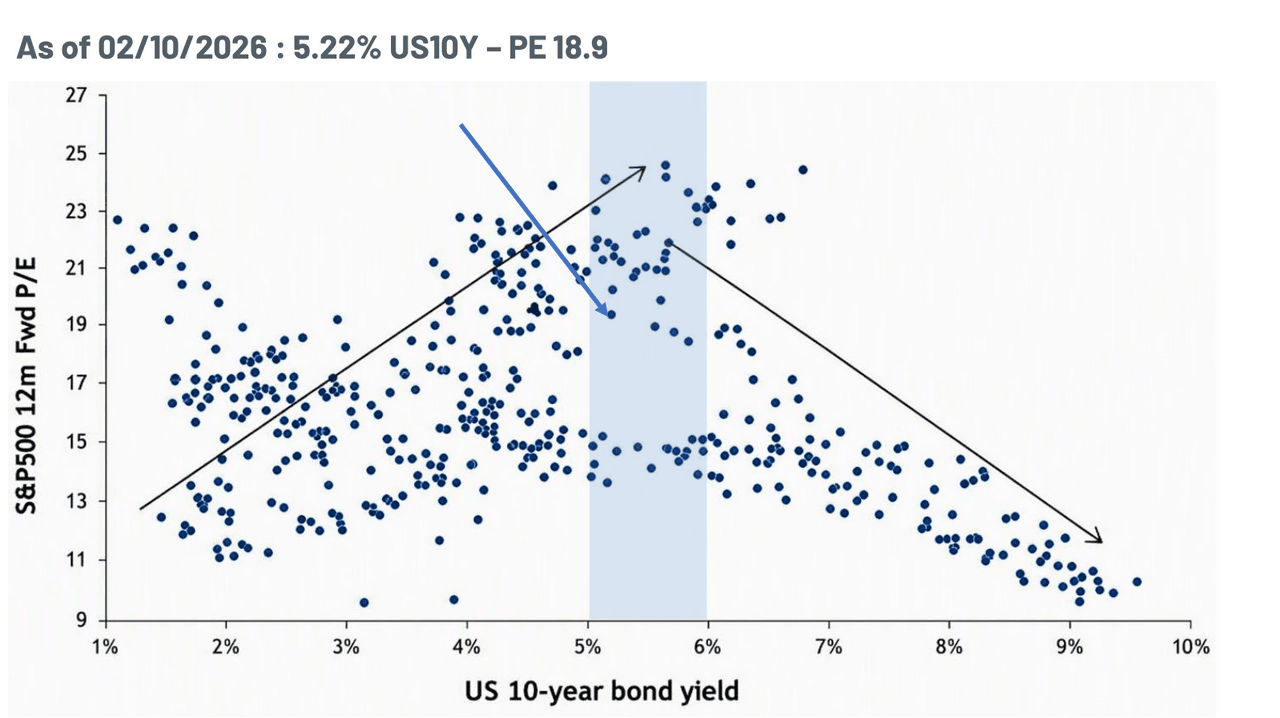
Chart 1: S&P 500 12-month forward price-earnings ratio versus US 10Y yields Source : JP Morgan
The defining surprise of 2026 has been the strength of corporate profits, according to Michel Bourgon, senior equity portfolio manager at Degroof Petercam. He said profit growth had exceeded 30% in the US and reached 18% in Europe (see Chart 2).
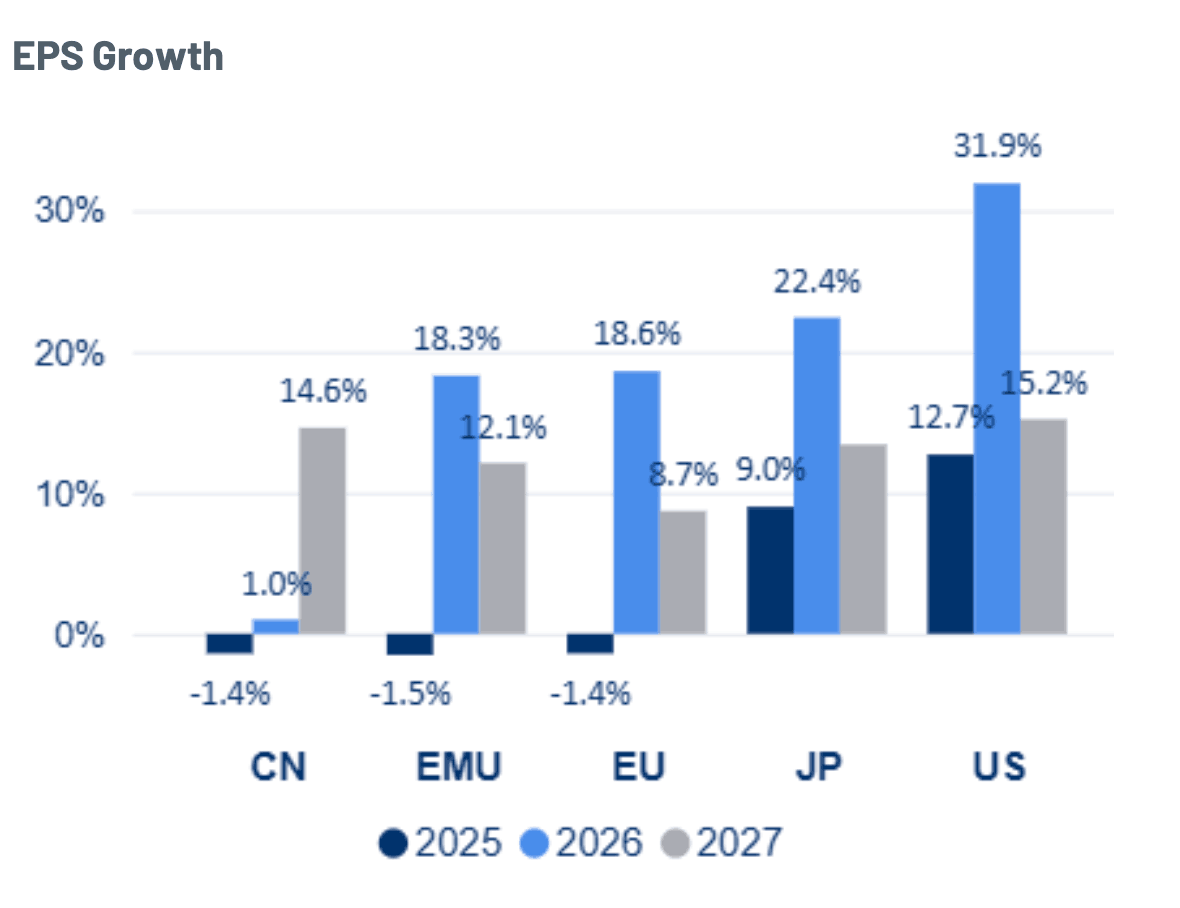
Chart 2: Expected earnings growth Source Factset, DPAM
Net profit margins among S&P 500 companies reached a record 16%, compared with the 12% forecast six months earlier, Bourgon added. Margins in nine of the index’s 11 sectors were close to historical peaks, while earnings upgrades continued to outnumber downgrades in both the US and Europe (see Chart 3).
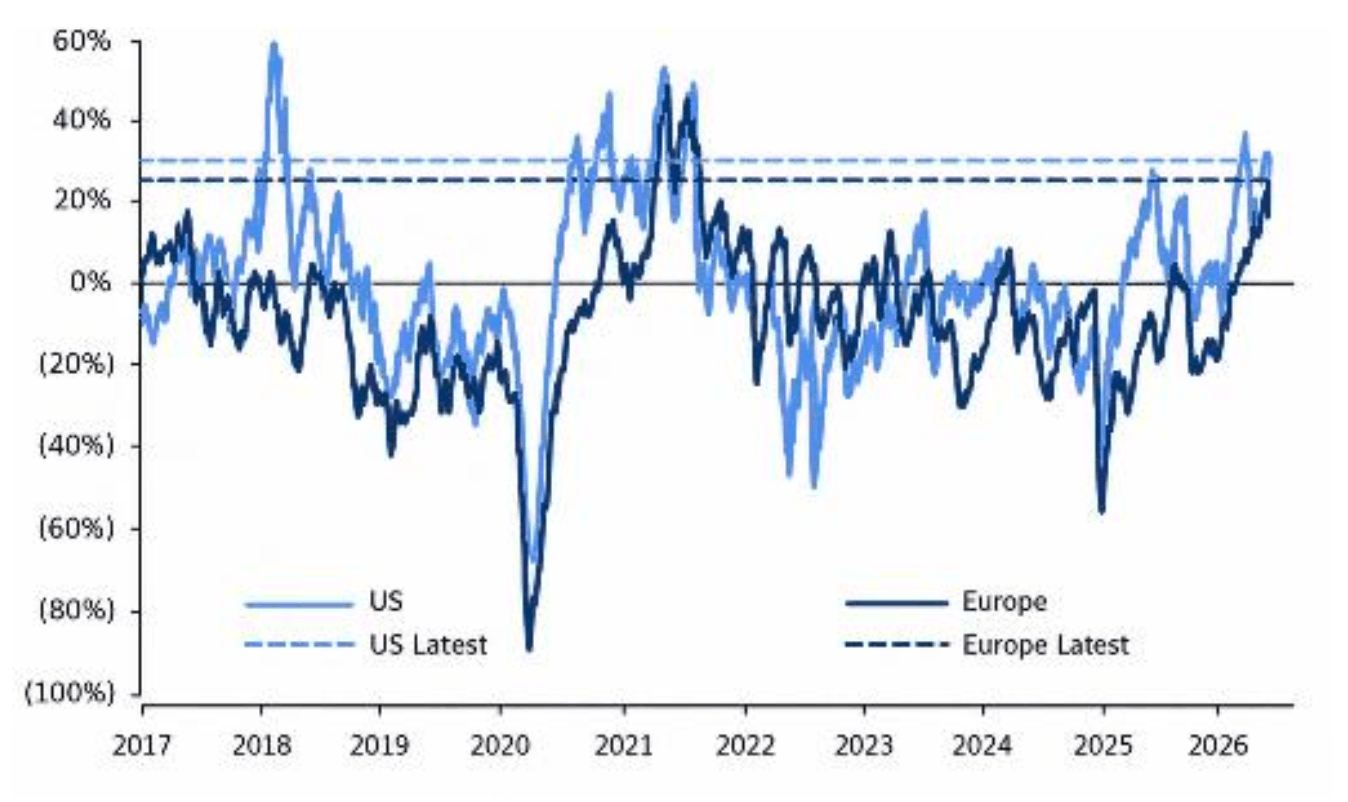
Chart 3: Percentage of stocks seeing EPS upgrades - downgrades Source: Exane, Indosuez
Addressing concerns about an equity-market bubble, Bourgon argued that earnings in the technology sector were accelerating faster than share prices. Following the recent market decline, he said, valuations had also become less stretched.
Artificial intelligence fuels productivity gains
Bourgon argued that the earnings expansion reflected operational productivity gains rather than speculation alone. He cited enterprise-software provider ServiceNow, where internal AI deployment was reported to save employees between 1.5 and two hours a day and reduce project-delivery times by 30%.
Organisations are also moving beyond basic prompting tools towards autonomous internal agents, requiring employees to develop customised automated workflows, he said.
Bourgon pointed to Moderna’s decision to bring its human resources and technology functions under common leadership. According to him, the biotechnology company now assesses the cost of human labour alongside that of AI-based processes when considering additional hires.
“These gains demonstrate that AI adoption is a true game changer for corporate operating models,” Bourgon said.
Small caps and active stock selection
Capital expenditure on AI infrastructure, cooling systems and optical components is generating orders for small-cap suppliers, Bourgon said. Over the past year, the Russell 2000 gained more than 13%, outperforming both the S&P 500 and mega-cap technology benchmarks (see Chart 4).
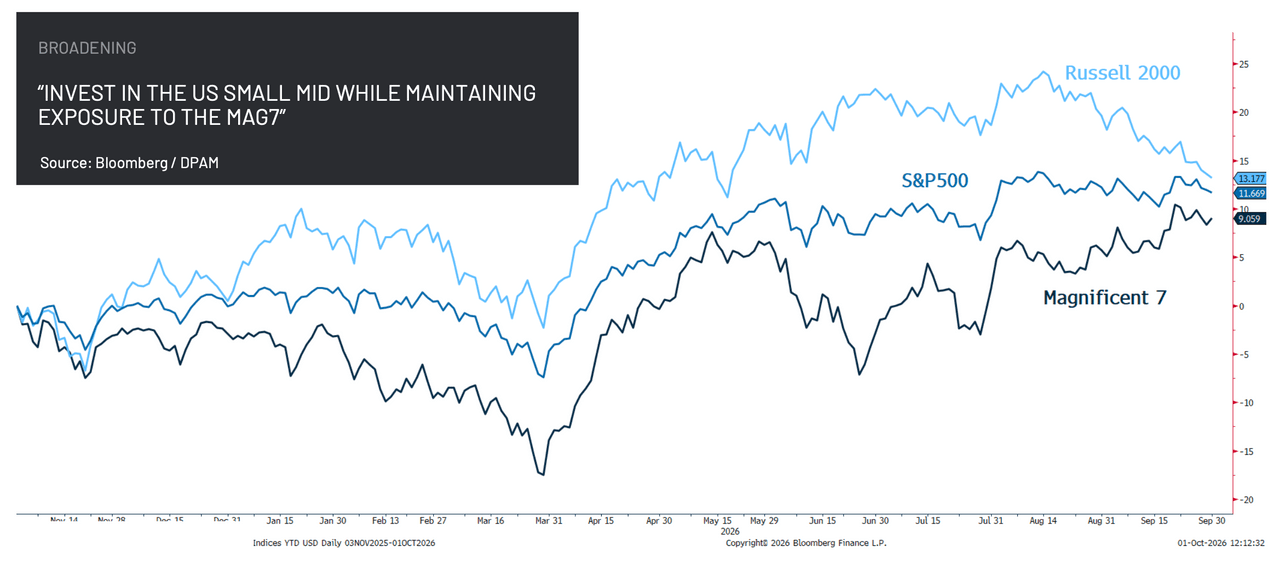
Chart 4: Russell 200 outperformed other major US indicators Source: Bloomberg, DPAM
Consensus forecasts for 2027 indicate that US small-cap earnings could grow by more than 40%. “It’s absolutely massive,” Bourgon said.
Higher long-term interest rates nevertheless create refinancing challenges for heavily indebted businesses. “With approximately 30% of Russell 2000 companies unprofitable, active stock selection is critical to avoiding financially fragile companies,” he added.
European sovereignty drives long-term growth
In Europe, industrial sovereignty has developed from a political concept into a major investment theme, Gazin said.
Defence equities gained 230% between 2022 and mid-2026 before consolidating. Meanwhile, a broader European sovereignty index, with a 25% allocation to defence, consistently outperformed conventional European benchmarks, he added (see Chart 5).
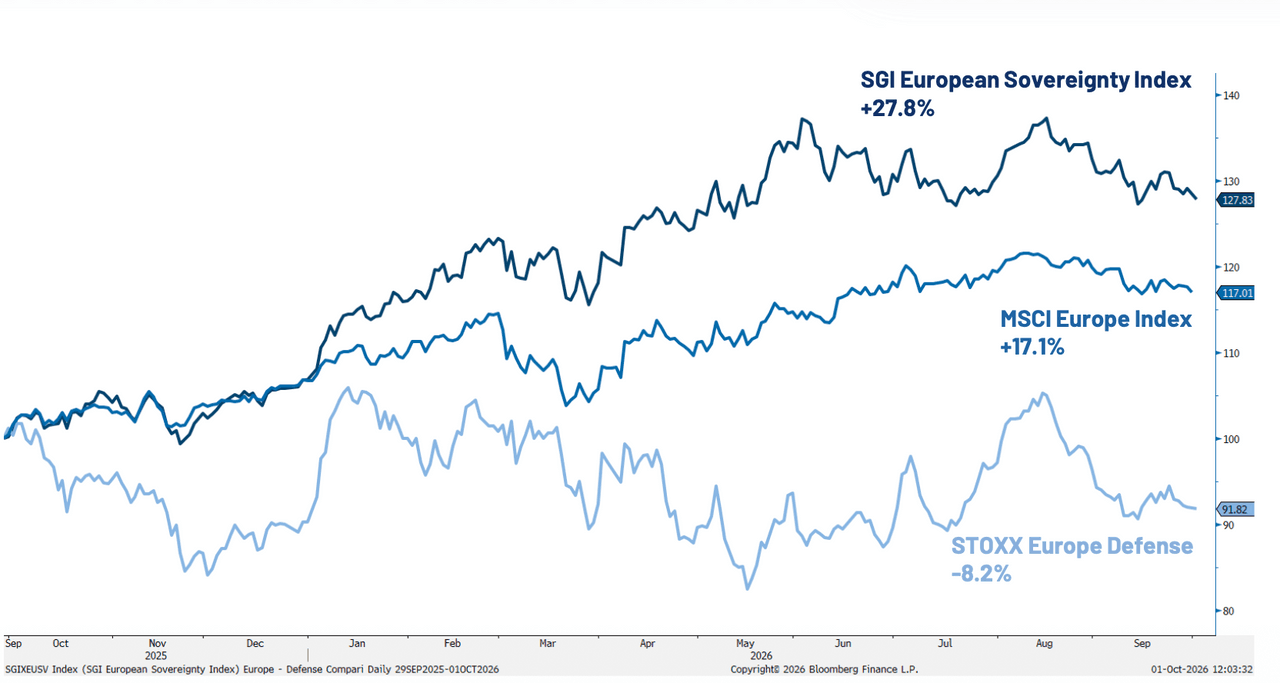
Chart 5: European sovereignty is not solely limited to defence Source: Bloomberg, DPAM
Investment is being supported by energy-independence objectives. An estimated €584bn will be required for European electricity grids through 2030. Technological-sovereignty initiatives are also directing capital towards semiconductors and AI infrastructure.
European Union frameworks, including the proposed “Chips Act 2.0” and a €200bn AI infrastructure roadmap featuring €30bn for up to seven AI gigafactories, are also mobilising capital. Concurrently, protective carbon border adjustments on steel imports restore competitive balance for domestic European industries.
Private markets turn to debt and secondaries
Private markets are adapting to the end of the cheap-debt era. The traditional strategy of acquiring a company at 10 times earnings before interest, tax, depreciation and amortisation, using substantial leverage, and later selling it at 12 times Ebitda does not suffice anymore to support performance, said Nicholas Renauld (left), global head of private markets and head of asset management at Indosuez Suisse.
Entry multiples have declined by one to two turns of Ebitda, shifting the focus towards operational improvements and lower leverage, he said.
“We are looking for companies with the potential to double in value within four or five years.,” Renauld added.
Private debt has expanded as commercial banks have reduced lending in some areas. However, because much of this debt carries floating interest rates, lenders must assess borrowers’ credit profile carefully as financing costs rise, he warned.
Governments can no longer finance all the critical and technological infrastructure required for the coming decades, Renauld said. He therefore expects private capital to play a larger role, supported by investor demand and a substantial pipeline of projects.
The secondary market has also become an important source of liquidity for investors seeking to rebalance private-market portfolios. Deal volume could approach $300bn in 2026, according to industry forecasts, creating potential entry opportunities for secondary-market strategies.