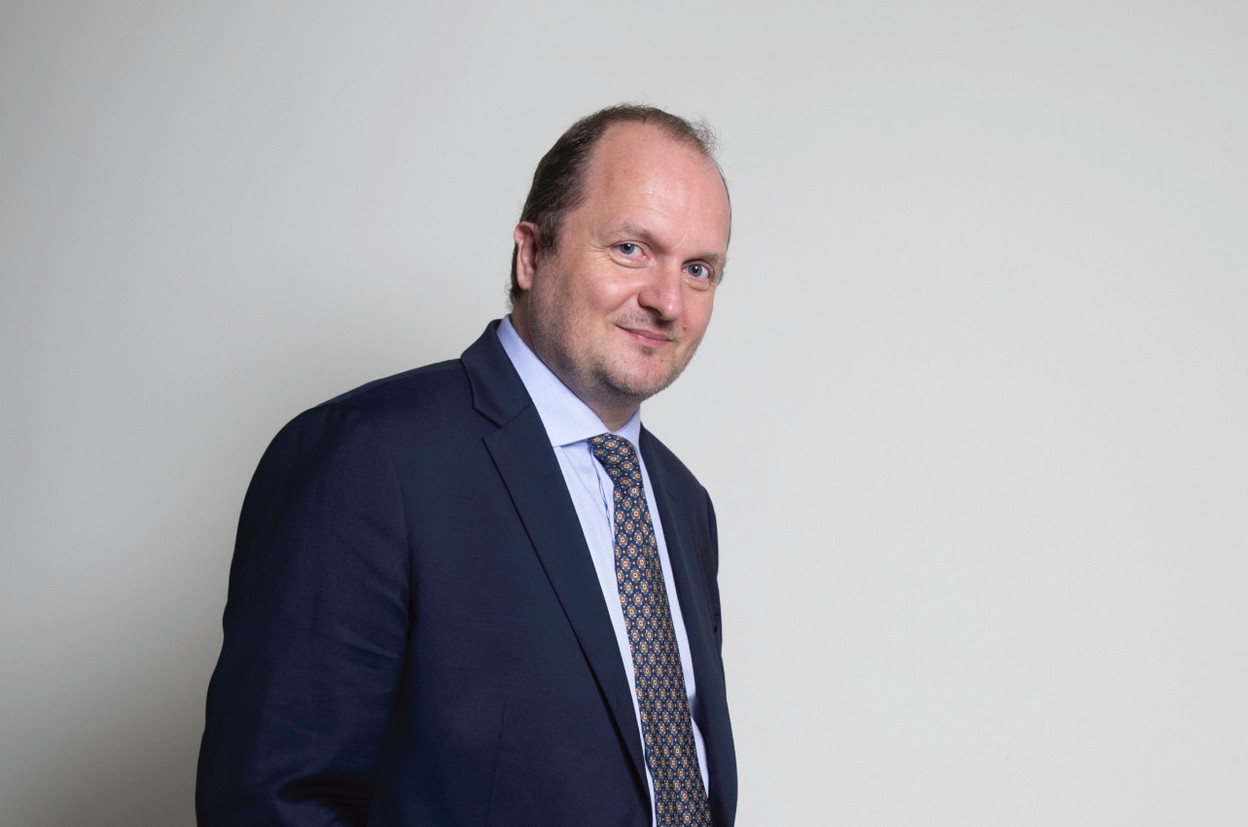
We haven’t heard the last of AI, such is the extent to which the technology is shaking up our societies. “We are witnessing a revolution whose speed surprises us every day,” says 
Major interests at stake
In this frantic race, the massive investments announced in the United States and China underline the importance of what is at stake. For the head of List, beyond the major economic interests linked to the development of AI, we must also consider the societal, geopolitical or even defence issues linked to the technology, “which can have a major impact on all components of power.”
Faced with these transformations, Europe cannot be content with a role of observer and must in particular ensure its strategic independence. “At present, the technology is in the hands of a small number of private players, who have privileged access to the resources needed to develop AI, whether in terms of computing power, energy, talent or data,” Ferrero continues, pointing to the limits associated with energy requirements and an environmental footprint that is incompatible with climate issues. “What’s more, we have no guarantees that the objectives of these private players are aligned with the interests of humanity or with our European values.”
Guaranteeing our strategic independence
Artificial intelligence, like the internet, satellites or electricity, is a technology that will support a multitude of operations. “Technology has a strategic dimension. It is therefore important to guarantee our independence in its use. It is essential that we develop our own solutions,” says the researcher. However, in this area, the European Union has fallen well behind the other major powers. “It is up to us, starting now, to do everything we can to close the gaps, but also to defend our values and the interests of Europeans against the giants,” says Ferrero.
Bigger is not always better
In recent months, various initiatives have emerged in Europe to support the development of AI.
These include the creation of 13 AI Factories, dynamic ecosystems that promote innovation, collaboration and development in the field of artificial intelligence, including one in Luxembourg. In fact, the List is one of the founding partners of the Luxembourg AI Factory, alongside LuxProvide, Luxinnovation, the University of Luxembourg, the LNDS and seven other associated partners.
“The European Union is therefore equipping itself with the capacity to compete with other large data centres,” says Ferrero. “What’s more, nowhere does it say that you need the largest computing capacity to dominate AI. It’s better to rely on more frugal and specialised models, often open source, that consume less energy and are better adapted to local needs. Bigger is not always better. We can innovate other than in the race for raw power.”
In this context, the Luxembourg AI Factory aims to support Luxembourg companies by offering them a full range of services related to artificial intelligence. “The ambition is to guide companies from the ideation stage right through to putting artificial intelligence solutions into production, offering them comprehensive support including access to experts, training and apprenticeship programmes.”
A differentiating framework
With regard to technology, Europe has taken a clear stance, regulating the use of AI and advocating transparency, while the United States and China have opted for different approaches. The former are taking a deregulatory approach, while the Chinese government is particularly interventionist.
Within the EU, Luxembourg intends to play a leading role by adopting a pragmatic and differentiating strategy. “Our ambition is not to compete with the AI giants, but to become a leading European player in responsible and sovereign AI,” continues the head of List. “The country has the potential to be recognised as a trusted hub, rather than as a massive producer of AI technologies. It’s about promoting ethical, transparent, responsible and human-centred AI, aligned with European issues.”
A tool to test and validate models
At its level, the List is leading several initiatives in favour of responsible and ethical AI. “Through the List AI Sandbox, for example, we provide a unique environment for testing and validating AI models in a safe manner, before any real deployment,” says Ferrero. “This environment enables us to assess the technical robustness of the models as well as their regulatory and ethical compliance, for example by detecting social biases such as racism, sexism or political orientation. It can also be used to assess the limitations of large models, particularly at the linguistic level.”
By capitalising on our strengths, with the initiatives taken and the wealth of European industrial data, Europe can still get on board the AI train and, in this way, continue to play a key role on a global scale.
This article was originally published in French.