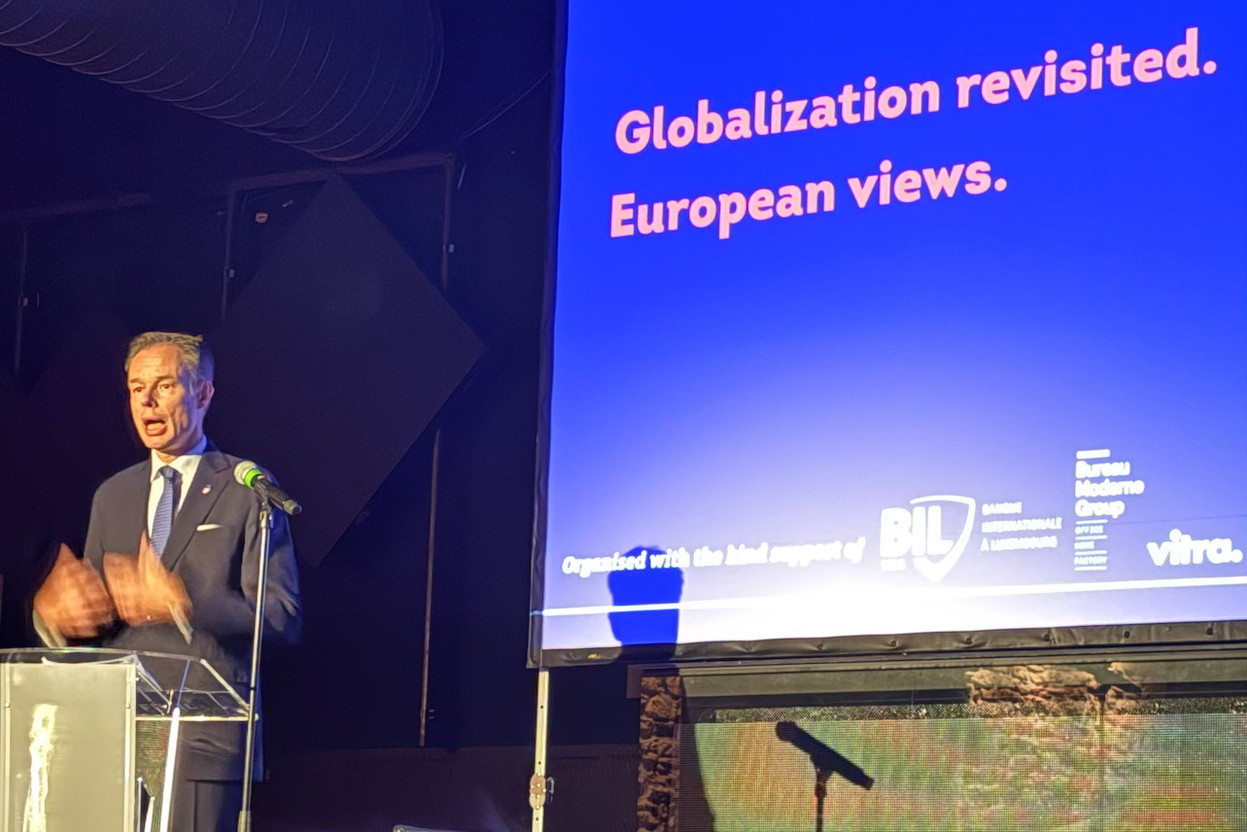
Tariffs, excessive debt, wars and geopolitical realignments, global warming, populism, misinformation, slowing growth, rising interest rates: if Philippe Schaus on Wednesday afternoon chose to list the threats that are shaking up the global economy, he chose to look beyond the immediate risks. “Artificial intelligence, if viewed with a constructive mindset, should be seen above all as a formidable source of gains in productivity and efficiency. It’s not just a cost-cutting tool: used correctly, this tool allows us to reinvest in innovation and marketing.”
At the heart of his speech, the former executive recalled the importance of the major emerging markets. “When I lived in China, the country was the locomotive of luxury. Today, Chinese consumers are cutting back after losing their savings in the property crisis. But despite this context, China remains an essential market. It will continue to grow, perhaps at a slower pace than before, but faster than any European country. Above all, the entrepreneurial agility and innovation there far exceeds what we see in Europe.”
On Africa, Schaus emphasised the long-term potential. “Few leaders talk about it, but the continent is making giant strides. It is leapfrogging technological stages by going straight to mobile solutions, a dynamic that is fuelling growth in a market of 1.3bn people. Africa’s major cities are teeming with entrepreneurs, and more and more American funds are coming to New York to pick up the projects that emerge.”
AI, a tool for concrete transformation
To illustrate his point, Philippe Schaus described some practical cases. In retail, Verneek, an AI solution deployed by an American chain, has cut the cost of registering an item in shop by a factor of 30: “Each product used to have to be entered at a cost of around $25, a task carried out by 300 people. With AI, the cost has fallen to $0.75 and the number of staff involved has been reduced to around 50. The system looks for information in invoices, on the internet and in databases, then automatically constructs the product sheet with greater precision.” In the world of wine and spirits, AI is now being used to optically sort grapes, monitor soil health or optimise delivery logistics.
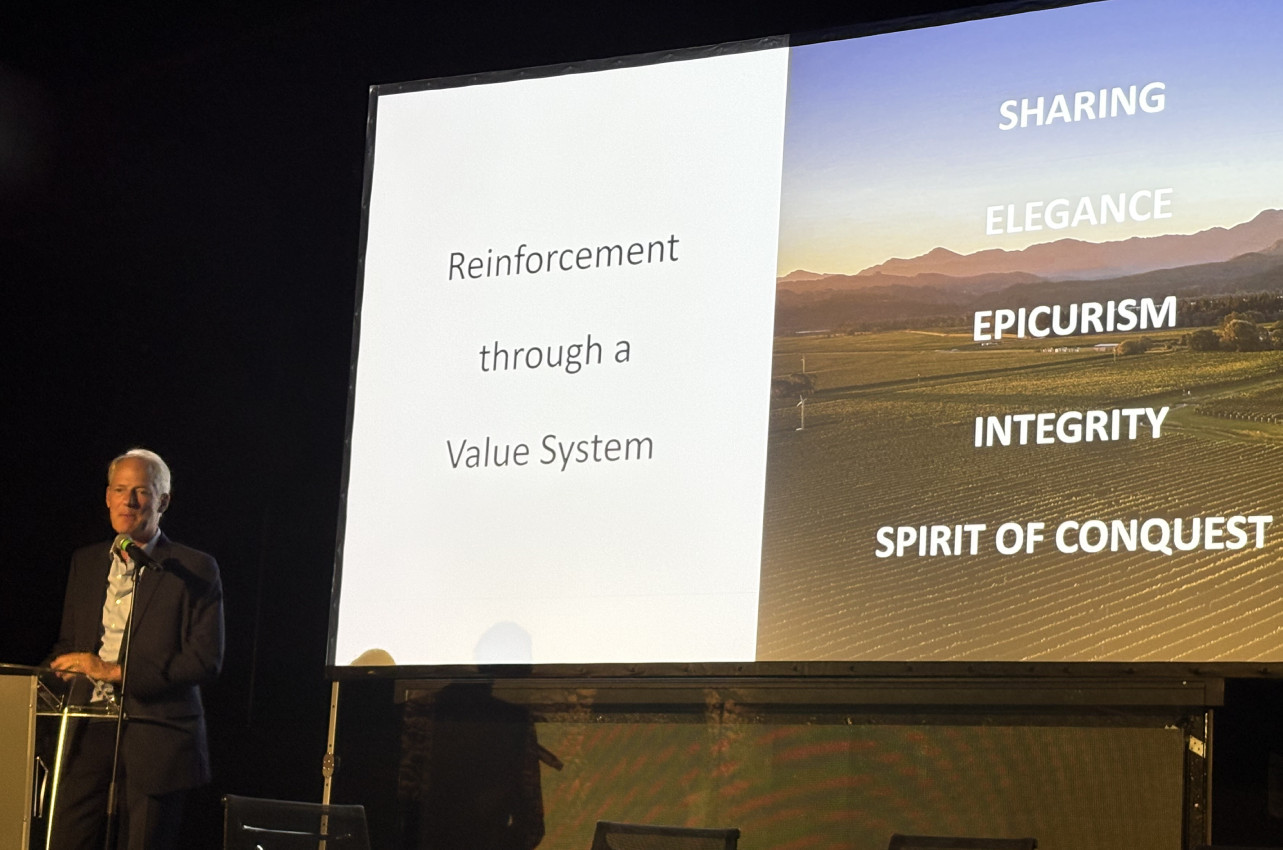
Schaus has placed the notion of leadership at the heart of his thinking. “Overly hierarchical organisations produce catastrophic results. A leader must behave as a member of the team, not as a boss who decides everything. The company’s mission, vision and values must be clear, shared and embodied in order to give employees the freedom to innovate.”
He also insisted on diversity: “Diversity is not just a question of quotas or social justice. Above all, it is a lever for creativity. Teams made up of men and women of the same generation, trained at the same schools, end up repeating themselves. Conversely, a team combining a French executive, a Japanese entrepreneur and an African expert will provide an incomparable wealth of viewpoints. But inclusion must still be successful: a Japanese employee must not melt into French codes, they must remain true to their culture and be valued for it.”
Between desirability and responsibility
The former executive recalled that the luxury industry is based on “desirability”: symbolic capital built up through spectacular actions. Fendi’s catwalk show on the Great Wall of China, Hennessy’s collaboration with LeBron James to win back the African-American public: in his view, these operations demonstrate the importance of associating brands with the collective imagination. But Schaus also expanded on this point: “Just as companies must contribute to decarbonising the planet, European companies have a moral obligation to help defend our values. The defence sector is not just about weapons: it also includes medicine, logistics and transport. Every company can play a part in this.”
In conclusion, Schaus summed up his philosophy with a formula: “We need to drive boldness and innovation through shared intelligence. This means understanding markets, sharing knowledge internally and banishing the culture of ‘this is why we can’t do it.’” For him, the path to growth will not be through control or hierarchy, but through inspired leadership capable of turning uncertainty into opportunity.
This article was originally published in French.