As persistent conflict, fiscal expansion, and technological disruption reshape the global economy, navigating markets requires a clear understanding of the structural forces behind the headlines.
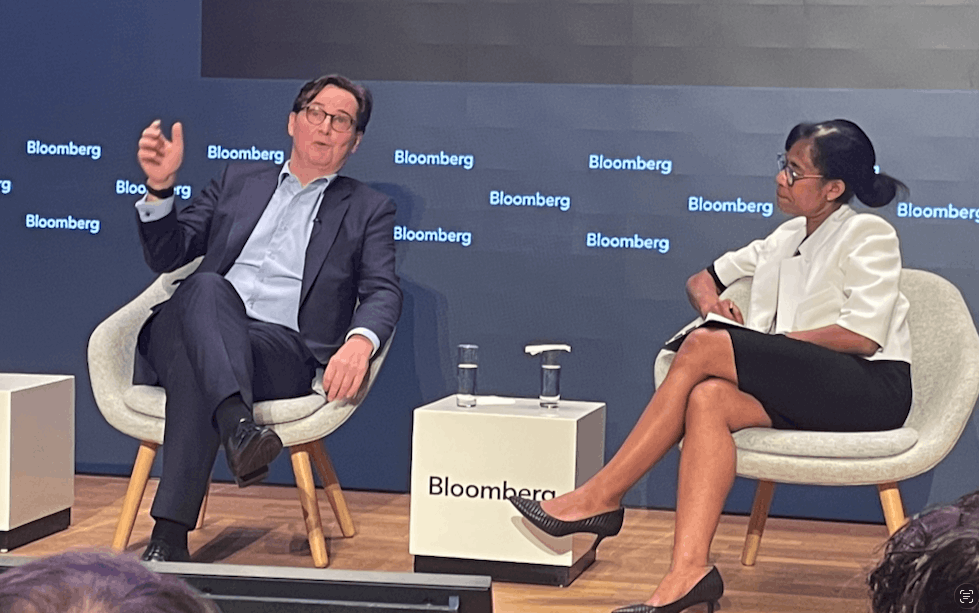
In this conversation, held on 7 October 2026, Amundi Investment Institute experts Anna Rosenberg, head of geopolitics, and Valentine Ainouz, head of global fixed income strategy, explore the wider implications of geopolitical tensions across the US, Europe, the Middle East, and Asia.
From supply-driven inflation and elevated public debt to AI’s transformative role in market resilience, they examine why the global economy is shifting from a focus on efficiency towards strategic resilience.
Sylvain Barrette: Will the war in Ukraine persist until President Putin's death or removal from power?
Anna Rosenberg: While abrupt leadership transitions have occurred throughout Russian history, an immediate end to the war is not in sight. Neither side faces compelling incentives or pressure to settle through at least the first half of next year.
Drone warfare has fundamentally altered combat into a continuous cycle of technological innovation and destruction, creating a form of "forever war." Provided Putin faces no binding domestic constraints, sustained high oil revenues allow Russia to maintain military operations, while ongoing Western support enables Ukraine to avoid painful territorial concessions.
Will the status quo in the Middle East endure, or will escalation risks intensify?
A.R.: The risk of military and geopolitical escalation in the Middle East has increased significantly. Diplomatic off-ramps have narrowed further as US efforts to secure oil transit through the Strait of Hormuz reduce Iranian leverage, prompting Iran to re-establish influence through maritime attacks and military base disruptions.
Furthermore, Washington's capacity to negotiate a stable agreement is hindered by internal Iranian political divisions, where hardline factions consistently undermine pragmatic compromises.
Is a Chinese invasion of Taiwan increasingly probable by 2027?
A.R.: Recent military purges within Beijing's armed forces suggest internal friction, but military readiness alone is not the sole signpost to monitor. A full-scale amphibious invasion is not the only option available; naval blockades or drone-based pressure operations are equally viable strategies dictated by Xi Jinping's individual decisions.
A perceived reduction in US military deterrence, coupled with observations of Western capabilities in Ukraine and the Middle East, has widened Beijing's window of opportunity in the East and South China Seas. Although Xi seeks to protect China's export-led growth engine, global geopolitical risks across the region have visibly risen.
How would a divided US Congress impact Washington's foreign policy stance?
A.R.: A divided US government will constrain domestic legislative ambitions, historically prompting administrations to direct greater focus towards foreign interventionism.
Rather than retreating, the US is likely to become more interventionist globally, as evidenced by major naval deployments to the Middle East and heightened focus on hotspots such as Cuba.
How do these developments impact the risk premium on global fixed income markets?
Valentine Ainouz: The fixed income sell-off is primarily driven by a sharp shift in the energy backdrop, with oil prices remaining higher for longer rather than normalising around $70 per barrel.
Concurrently, economic resilience across Europe and the US has surprised investors, leading markets to re-evaluate central bank rate paths. Financial markets now price in up to three additional rate hikes from both the Federal Reserve and the European Central Bank (ECB).
Furthermore, investors are demanding higher yields (term premiums) to hold long-dated sovereign debt due to persistent supply shocks across energy, supply chains, and US trade policy.
Why are public funding needs expanding even during periods of full employment?
V.A.: Public debt levels across the US, Europe, and Japan have surged over the past decade. Unlike traditional economic cycles where government spending rises during recessions, current expenditure is driven by strategic sovereignty requirements—including national defence, artificial intelligence, and major German infrastructure projects.
Because spending on AI and defence is viewed as a matter of national sovereignty, government funding requirements will remain structurally elevated regardless of the business cycle.
What is the medium-term outlook for sovereign bond yields and inflation expectations?
V.A.: While term premiums on 30-year sovereign bonds have expanded significantly, 10-year yields show a gradual and ongoing upward trend. Short-term rate movements remain dominated by energy prices and monetary policy adjustments.
Investors retain confidence in central banks’ credibility, expecting inflation to eventually return to the 2% target. Central bank dovishness beyond current market expectations would require softer inflation metrics and an absence of economic re-acceleration in the US.
A fundamental divergence exists between US inflation—driven by both supply and demand dynamics—and Eurozone inflation, which is overwhelmingly supply-driven.
Cooling Eurozone wage growth and labour market support a return towards the 2% inflation target, alongside potential disinflationary pressures from Chinese industrial exports.
How will advances in AI technologies elevate risks to critical national infrastructure?
A.R.: AI advances intensify both cyber threats and defensive necessity, embodying a classic foreign policy "security dilemma" where protective measures are perceived as offensive preparations by rivals.
Beyond abstract existential concerns, the immediate threat centres on AI-enabled cyber operations against critical infrastructure, including banking networks and water supply systems. Consequently, states and corporations are trapped in a continuous race to fund and deploy protective technologies.
How is the global trading system adapting to maritime chokepoint weaponisation?
A.R.: Recent disruptions in the Red Sea and the Strait of Hormuz demonstrate that strategic trade chokepoints can be weaponised effectively, undermining traditional freedom of navigation.
Combined with the growth of a massive shadow tanker fleet following sanctions on Russia and intensifying competition for energy and rare earth elements, global commerce faces persistent supply shocks.
As a result, multinational corporations are shifting priorities from cost efficiency to operational resilience, incurring higher structural costs to secure supply chains.
How are European nations addressing security concerns amidst shifting transatlantic ties?
A.R: European states are gradually expanding defence budgets and introducing economic security tools, such as trade measures against subsidised Chinese imports.
However, comprehensive defence integration remains constrained by ongoing reliance on US troop commitments and nuclear umbrellas.
Consumption in the US does not rely on disposable income but rather on the wealth effects from asset appreciation
Should Washington reassess its European force posture or should political movements towards nationalism gain momentum, Europe could be forced into rapid defence integration and structural policy shifts.
Can political interventions resolve key international conflicts heading into 2027?
A.R.: Conflict resolutions in Ukraine and the Middle East would constitute major surprises, as geopolitical fragmentation reflects systemic global trends rather than the impact of individual political figures.
The US capacity to act as a decisive global mediator has diminished, while the proliferation of regional actors across conflicts in Ukraine and the Middle East significantly complicates diplomatic resolutions.
Where are the primary engines of economic growth and investment potential located?
V.A. Despite geopolitical and fiscal tailwinds driving uncertainty, corporate balance sheets and broader economic activity demonstrate remarkable resilience.
In the US, economic momentum is heavily anchored by AI capital expenditure even as the housing market struggles under mortgage rates floating around 7%, while the volume of housing sold in the US is now at the same level as during the subprime crises. The US real estate market is in the doldrum. Amazingly, consumption in the US does not rely on disposable income but rather on the wealth effects from asset appreciation.
A.R. European growth is supported by public spending in defence and infrastructure alongside solid export demand, while Asian technology hubs benefit from semiconductor demand and supply chain rerouting.
Ultimately, global markets in 2027 present a complex dichotomy of heightened geopolitical risk alongside distinct growth opportunities.