An electric car capable of travelling 1,000 kilometres and recharging most of its range in ten minutes: that promise is enough to give anyone about to sign a purchase order pause for thought. Should you buy now or wait another two or three years? At this stage, none of the models announced really makes the choice any easier.
Behind this new generation lies the solid-state battery. It replaces the flammable liquid electrolyte in a lithium-ion battery with a solid material. It can therefore accommodate a lithium-metal or silicon-rich anode and store more energy in a smaller space. For the driver, the expected result is a lighter, safer and more spacious car, or greater range without having to increase the size of the battery.
Toyota is making the most comprehensive promise. The Japanese manufacturer is aiming for an initial launch in 2027 or 2028, with a range of around 1,000 kilometres and a charge from 10% to 80% in ten minutes or less. However, it anticipates an initial production capacity limited to a few tens of thousands of vehicles per year. Details of the model, its price and the range certification process have not been disclosed. Toyota also points out that the final result will depend on the vehicle’s aerodynamics and weight reduction, not solely on the battery.
Mercedes is making its mark
BYD is now promising that its first model will be ready in 2027. The announcement does not necessarily mean that members of the public will be able to buy it in that year. The roadmap previously presented by Sun Huajun, technical director of BYD’s battery division, envisaged a demonstration phase starting in 2027, involving around 1,000 vehicles, followed by large-scale roll-out around 2030. The first applications are expected to be for the premium brands Denza and Yangwang, which are able to absorb the additional cost of the technology.
Nissan aims to launch a car fitted with its own all-solid-state battery during its 2028 financial year. Its pilot production line has been operational since January 2025, but the manufacturer has not yet specified the model, the battery pack’s capacity, the range or the charging time. Honda is aiming to launch vehicles in the second half of the 2020s, although no more specific timetable or model has been announced.
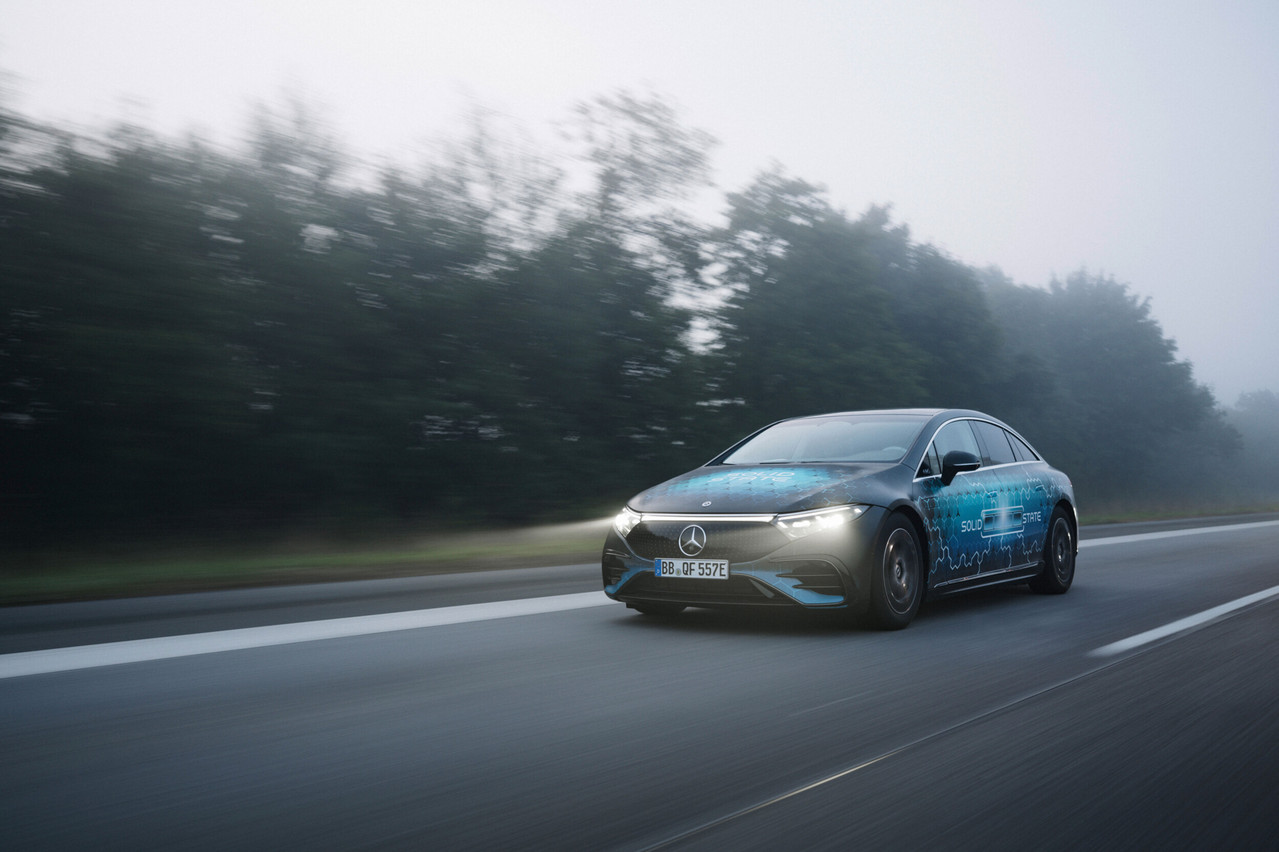
Fitted with solid-state cells from Factorial Energy, this modified Mercedes-Benz EQS travelled 1,205 kilometres from Stuttgart to Malmö without recharging, with 137 kilometres of range still shown on the display upon arrival. (Photo: Mercedes-Benz)
The most convincing evidence currently comes from cars that are not yet on sale. Mercedes-Benz put a modified EQS, fitted with Factorial’s solid-state cells, through its paces on a 1,205-kilometre journey from Stuttgart to Malmö. The car still had 137 kilometres of range remaining on the display upon arrival. However, Mercedes has not disclosed the exact battery capacity, its weight, its charging time or a launch date.
BMW is testing Solid Power’s all-solid-state battery cells in an i7. Stellantis is conducting road tests with a Dodge Charger Daytona fitted with Factorial’s technology. In both cases, these are development vehicles designed to verify safety, service life and the reproducibility of performance. They do not yet represent a version that customers will be able to order.
Battery life figures: what you need to know
Spectacular figures also require us to check what they actually measure. A Chinese range calculated using the CLTC cycle cannot be directly compared with a European WLTP range – which is generally more demanding – nor with an actual journey. Similarly, ‘ten minutes of charging’ means nothing without knowing the specific charge range being measured — from 10 to 80%, from 20 to 80% or from 10 to 70% — as well as the battery temperature and the charging point’s power output.
A distinction must also be made between all-solid-state, semi-solid-state and conventional ultra-fast-charging lithium-ion batteries. The Nio ET7 is available in China with a 150kWh semi-solid-state battery pack, with which the brand achieved a range of over 1,000 kilometres during a test drive. MG plans to introduce its SolidCore semi-solid technology in Europe from the end of 2026. These solutions retain a fraction of liquid or gel-like electrolyte: they represent an intermediate step, which is easier to produce, but do not correspond to the all-solid-state breakthrough announced by Toyota.
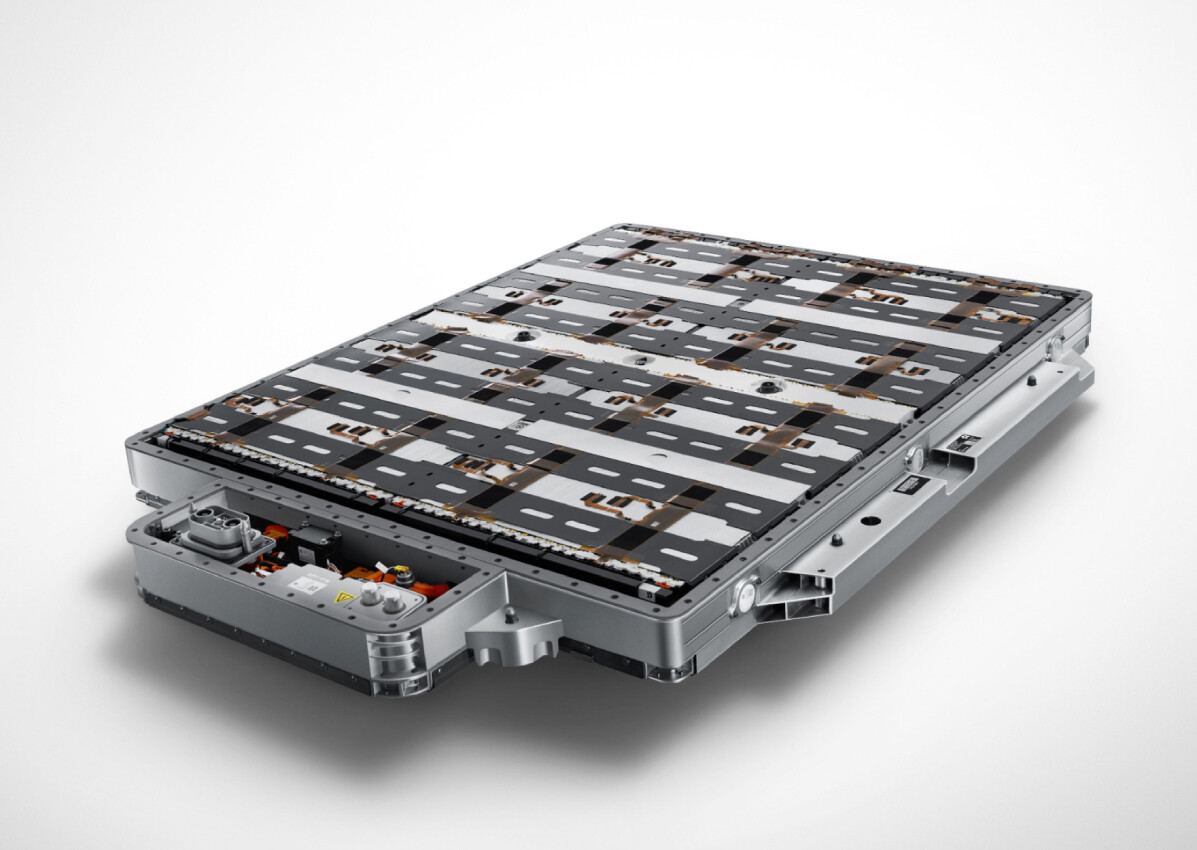
Svolt, which supplies batteries for the Nio ET7, is working on the mass production of solid-state batteries with sulphide electrolytes. Its joint research centre with the Chinese Academy of Sciences has filed 187 patent applications relating to this technology. (Photo: Nio)
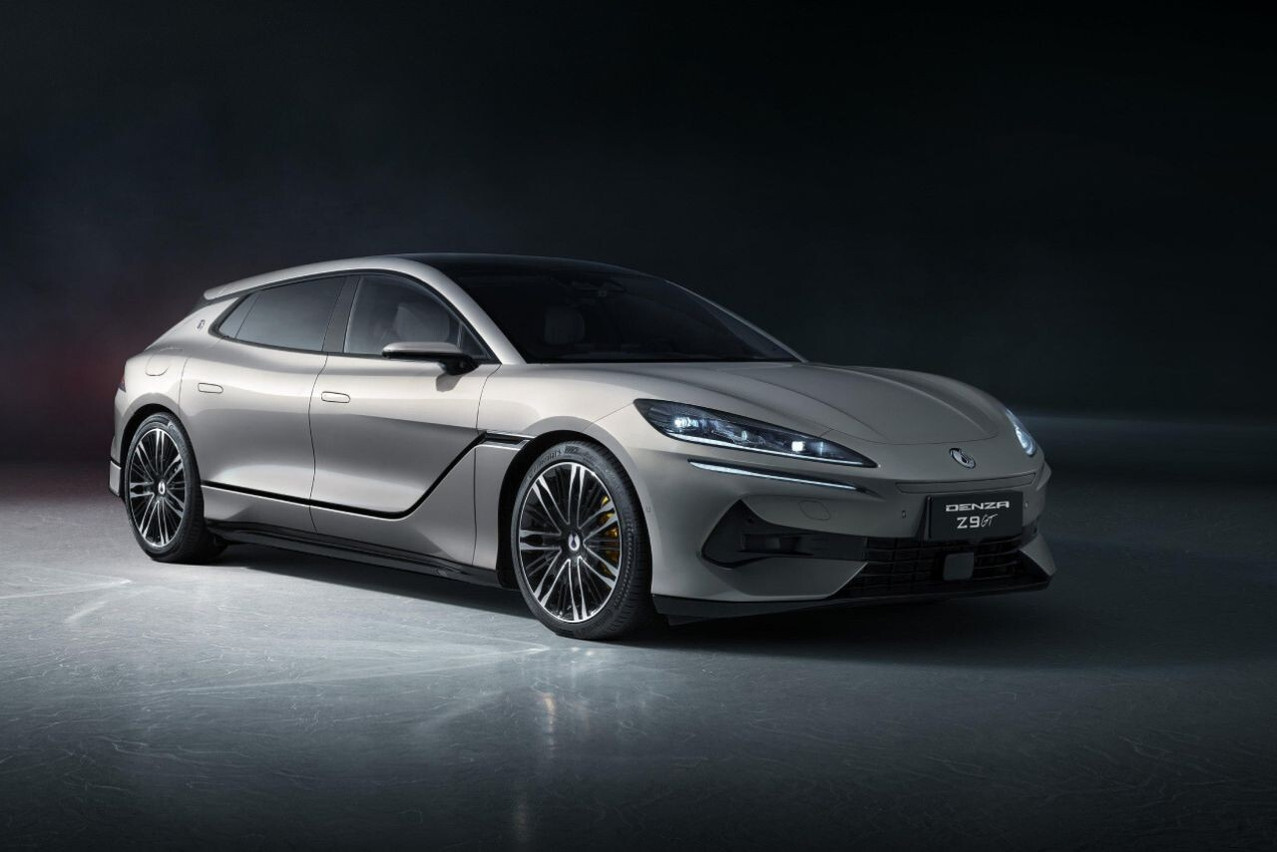
Surprisingly, the vehicle that comes closest to delivering on its promise to consumers does not yet use a solid-state battery. BYD claims that the European Denza Z9GT has a range of up to 800 kilometres, with charging times of five minutes from 10% to 70% and twelve minutes from 20% to 97%, even in very cold weather. Its new Blade Battery remains a conventional lithium-ion battery.
This performance highlights a less obvious limitation: the car can charge faster than the charging points. To achieve its five-minute charging time, the Denza requires a power output of up to 1,500kW. A so-called ‘ultra-fast’ public charging point in Europe generally delivers only a fraction of this power. The driver will therefore only be able to achieve the advertised charging time if they use a compatible charging point that is adequately powered by the grid and available along their route.
The move to the series – more complicated than it seems
Fast charging also raises the issue of degradation. Manufacturers are keen to publicise power records, but are less likely to disclose the number of full cycles after which 80 or 90% of capacity is retained, how the battery performs after several winters, or the cost of replacing the battery pack. Volkswagen has stated that a QuantumScape cell exceeded 1,000 cycles whilst retaining more than 95% of its capacity during a test, but this result at cell level has yet to be replicated in mass-produced automotive battery packs.
The transition to mass production is precisely the main obstacle. In a liquid-electrolyte battery, the electrolyte naturally adheres to the surface of the electrodes. In a solid-state battery, the various layers must remain in perfect contact despite their expansion and contraction. Certain designs require constant mechanical pressure. Cracks or microscopic defects can impair performance or encourage the formation of lithium dendrites, which can cause a short circuit.
The first models will therefore be expensive. Samsung SDI is aiming to produce all-solid-state batteries by 2027, but the initial applications are likely to be concentrated on high-end, sports or low-volume production cars. Family cars and affordable models will continue to be powered for several years by conventional LFP or NMC batteries, for which the cost, lifespan and supply chain are already well established.
A consumer who needs to replace their car in 2026 or 2027 therefore has no rational reason to put off their purchase simply to wait for the next model. They should compare the WLTP range of the available model, its real-world consumption, its charging profile, the battery warranty and the density of the charging network they will be using. A car advertised as having a range of 800 kilometres but which actually consumes more energy may cost more and lose some of its advantage on the motorway. On the other hand, anyone who can keep their vehicle until 2028 or 2029 will have access to more information: the first models identified, European type-approvals, prices, warranties and independent tests. Solid-state batteries will probably first appear as a high-end option, before trickling down to the mass market after 2030.
The next major breakthrough will not, after all, be the all-solid-state battery. It will be the combination – already underway – of improved conventional batteries, high-voltage architectures and more powerful charging points. The 1,000-kilometre electric car will arrive. For the average consumer, the key question will be less about whether its electrolyte is solid and more about checking how much it costs, how far it actually travels in winter and where it can actually be recharged in ten minutes.