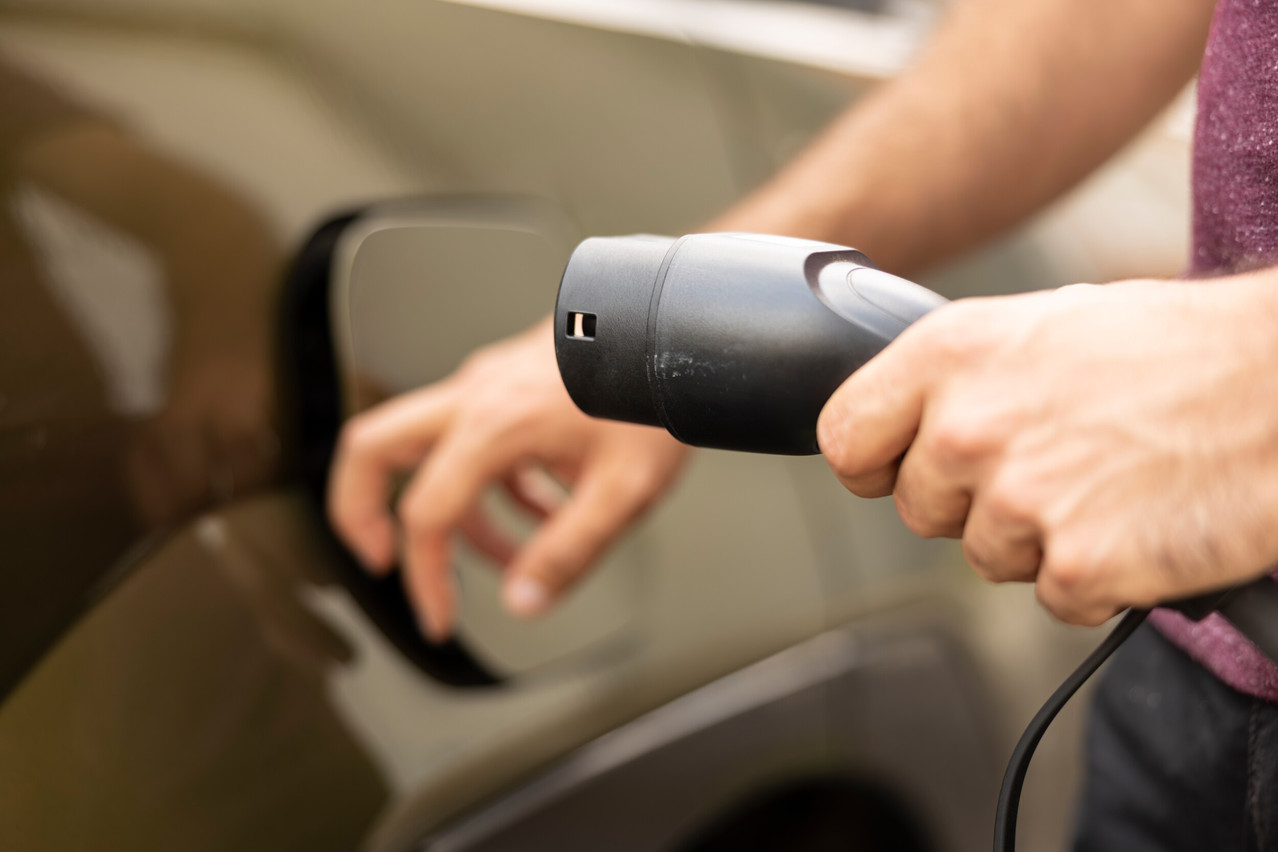
It’s a familiar story. Pop into G.A.N.G. for a bite to eat, plug in your hybrid, come back and pay €4.72 for 37 kilometres of range, compared to €5.39 for the equivalent of 95 octane petrol. You start to think it’s not such a clear-cut advantage after all. Wondering if the station wasn’t a bit overpriced, quite apart from the rather unpleasant experience. Admit it, anyone who can’t charge at home has wondered about the price at some point.
And ChargeCheck, which is promoted by the Klima-Agence, doesn’t really help to clarify matters. Behind the charging points installed in car parks, petrol stations, supermarkets and fast-charging hubs lies a maze of cards, apps, subscriptions and tariffs that makes it difficult for users to understand the actual cost.
“Price transparency is precisely why we developed this tool,” the agency acknowledges. “Pricing structures vary significantly depending on the cards and subscriptions. Some MSPs (Mobility Service Providers, i.e. charging card providers) offer rates based on charging duration, others on kWh consumed, and some apply a combination of both. Furthermore, depending on the vehicle model selected, the cost may also vary according to its specific charging capacity.”
“Given the wide variety of pricing structures across different providers, we find it difficult to offer a simpler comparison than the one currently available on the website, without risking the figures being misinterpreted or failing to take into account certain key calculation criteria used in the simulations. The aim of our tool is precisely to provide a realistic estimate of the cost per 100km by incorporating all these parameters,” the agency adds, noting that some providers have lowered their prices for fear of being “exposed”, meaning they would suffer from bad publicity.
Although the database belongs to ChargePrice, the service provider to whom the Klima-Agence has outsourced this tool, there is nothing to stop us from examining the prices and pricing structure… only to find that one of the suppliers is up to seven times more expensive than the cheapest ones. Our analysis covers around 890 charging points, and the data was extracted on 15 May. Creos’ Chargy network still dominates by a wide margin with 504 charging points, accounting for more than half of the network studied. Next come Sudstroum/Swio with 78 charging points, Petro-Center’s BestCharge with 70 charging points, Swio/Elysis/BlocX with 48 charging points, Cactus/AutoDis with 44 charging points and Diéter/public services with 43 charging points.
An average difference of 61%
The first difference is striking: with a suitable card or app, the median price drops to €0.31 per kWh. Without a card, when paying directly, it rises to €0.50 per kWh. For a 60kWh charge, this amounts to around €18 to €19 in the first case, compared with around €30 in the second. The average difference is 61%. In other words, in Luxembourg, two drivers can plug their cars into comparable charging points and pay very different amounts depending on their familiarity with the system. Trying to track down the rates, supplier by supplier, is a real headache that holds plenty of surprises.
With 504 charging points, Chargy forms the backbone of the country’s network. The rate for card payments is €0.31 per kWh, whilst direct payment without a card costs €0.50 per kWh. The difference is huge for a network that is supposed to set the standard. The enodrive badge costs €12 to purchase. For a regular user, it can therefore pay for itself in a single large charge compared to direct payment.
BestCharge, developed by Petro-Center, operates on a different model. According to the data analysed, the network comprises around 70 charging points, with power outputs of up to 400 kW. Prices when using the card range from €0.29 to €0.61 per kWh. The BestCharge Card costs €15 including VAT according to Petro-Center’s public-facing website, with no subscription required. However, the terms and conditions also mention a cost of €10 for an RFID card ordered via the app or by other means. This discrepancy between the commercial page and the contractual terms is typical of the grey area that makes it difficult for users to understand.
Swio is adding another tier. The Swio card has been announced at €5.80 including VAT, with no subscription fee and no minimum usage threshold. It can be topped up at public terminals in Luxembourg and across Europe. However, the retail price quoted is taken from a 2023 announcement. It remains useful for analysis, but should be treated with caution: consumers should check whether this rate still applies at the time of ordering.
Sudstroum also offers its own access scheme via the E-Mob-Kaart. The annual fee is €12 for energy customers and €24 for non-customers. A discount of €12 per year is available for those who set up direct debit and opt for electronic billing. For a Sudstroum customer who meets these conditions, the annual cost can therefore be virtually eliminated. For non-customers, the value of the scheme depends mainly on how often they use Sudstroum and Chargy charging points.
Q8 stands out for its simpler approach for private customers. The Q8 electric card is advertised as free of charge. It can be applied for via the Q8 app. According to available data, the price at Q8 charging points in Luxembourg is €0.64 per kWh, which places the operator at the higher end of the price range. Access is therefore easy, but not necessarily cheap. For business customers, the Q8 electric business card costs €2.48 per month excluding VAT.
Lidl Luxembourg falls somewhere between these two worlds. The network comprises 15 charging points, with prices for cardholders ranging from €0.32 to €0.46 per kWh. Without a card, the rate rises to between €0.50 and €0.63 per kWh. Here too, the message is clear: direct payment is available, but it costs more.
Cactus/AutoDis stands out as one of the most attractive networks for direct payment. The data lists 44 charging points. Rates with a card range from €0.35 to €0.40 per kWh, and rates without a card from €0.35 to €0.53 per kWh. This is one of the few cases where direct payment can remain relatively competitive. For an occasional user who does not want to accumulate multiple cards, this type of network is therefore more straightforward.
Optimile and Tesla are different for different reasons
At the other end of the scale, some networks present a real issue in terms of perception. Optimile, a Belgian operator with nine charging points in the data, shows prices of between €0.48 and €0.79 per kWh for card users and between €0.51 and €0.85 per kWh for non-card users. In some readings, the rates may even appear to be significantly higher than those of equivalent charging points. For users in Luxembourg, this is typically the kind of network where transparency needs to be checked before plugging in.
Shell Recharge, with just one charging point listed in the data, charges €0.67 per kWh. Circle K, with three charging points, charges €0.62 per kWh. Electra, with five charging points, charges €0.40 per kWh with a card and €0.59 per kWh without a card. Aral Pulse, with 16 charging points, is listed at €0.39 per kWh in the data, but its card and subscription offer is mainly documented on German websites, with an ‘Extra’ tariff of €2.99 per month in Germany. In Luxembourg, users can access the service via an app, RFID card, bank card or Plug & Charge, but the local commercial offer remains less clear.
Tesla remains an exception. Only one location is listed in the table, with a maximum power output of 250kW. There is no physical Tesla card. Everything is handled via the app and the Tesla account. For non-Tesla vehicles, the Supercharge subscription can reduce the price, but the exact amount and station-by-station rates are mainly visible in the app. Here again, the fixed retail price is hidden behind a digital interface.
The situation becomes even more confusing when comparing the costs of accessing the cards. Some are free, such as Q8 electric. Others are inexpensive, such as Swio, which costs €5.80 according to the latest publicly available information. Enodrive costs €12. BestCharge costs €15 including VAT, according to the consumer website. Sudstroum charges an annual fee of €12 to €24, with a possible discount. Q8 Business charges €2.48 per month excluding VAT. Elli, the service linked in particular to Volkswagen, offers a free card for private users, but some subscriptions, such as Ionity Boost, are advertised at €5.99 per month. Shell Recharge also offers subscription packages in certain markets, notably €5.99 per month in Germany for e-Deal, although the equivalent in Luxembourg is not always clearly documented.
For the user, this means that it is not enough simply to ask, ‘How much does the kiosk cost?’ You also need to ask: which card? Which app? With or without a subscription? Are there session charges? Are there inactivity charges? Is it charged at local rates or roaming rates?
Direct payment is accepted at two out of three stations
Perhaps the most worrying aspect of this jungle is the disappearance of a simple price. In the world of petrol and diesel, the price per litre is displayed on a sign visible from the road. In the world of electric vehicles, the actual price may depend on an app, a customer account, an RFID tag, a roaming agreement or a monthly plan.
Luxembourg is no exception to this trend. Of the 890 charging points analysed, around 574 accept direct payment without a card, representing 64% of the network. However, this apparent accessibility masks a higher cost. The median price for cardless payments is €0.50 per kWh, compared with €0.31 when using a card. Simple payment options do exist, but they are often charged as a premium service.
The price distribution confirms this. Prices without a loyalty card are mainly concentrated between €0.45 and €0.55 per kWh, particularly at Chargy and Lidl. Around 90 charging points are priced between €0.55 and €0.65, at operators such as Q8 and Electra. Another group of around 90 charging points exceeds €0.65, often at fast or ultra-fast charging stations. A small handful of charging points exceed €0.80 per kWh, with rates that appear abnormally high compared to the rest of the market.
Savvy users can therefore significantly reduce their bills. Those who charge regularly using the right cards pay a median of around €0.31 per kWh. Those who turn up unprepared, without a badge or the right app, pay around €0.50 per kWh. Over the course of a year, for a driver who relies heavily on the public charging network, the difference can be substantial.
A two-tier approach to electric mobility
This situation creates a two-tier electric mobility system. Those in the know make the most of it. Everyone else pays the price. The issue is all the more significant in Luxembourg given that the country is cross-border by nature. A driver might live in France, work in Luxembourg, charge their vehicle in Belgium and head to Germany at the weekend. At every border, they potentially have to switch networks, apps, tariffs and commercial terms.
This is where the comparison with telecoms really comes into its own. Roaming charges for mobile calls have been abolished within the European Union. They reappear in a different form in the context of electric vehicle charging. Energy flows freely, but the price depends on the intermediary providing access to the charging point.
For a user in Luxembourg, the practical conclusion is quite clear. A free card such as Q8 electric can be useful, even if the price per kWh isn’t the lowest. Enodrive becomes almost essential if you use Chargy frequently. BestCharge may be worth considering for Petro-Center stations, provided you are willing to pay the initial fee of €15. Swio remains an attractive option if its price of €5.80 is confirmed. Sudstroum is particularly worthwhile for local or regular customers. However, certain more expensive or less transparent networks should be checked in ChargeCheck before charging.
Luxembourg’s transition to electric vehicles has therefore passed a first milestone: the charging points are in place. But it is now entering a second, more delicate phase: that of genuine transparency. The number of charging points is no longer enough. We need to know who operates them, how much it costs to use them, which cards are required, which subscriptions offer discounts, and what grey areas remain. For in this new mobility economy, the real risk is not merely a shortage of charging points. It has a dense, modern and fast network, but one whose pricing becomes incomprehensible to those who use it. And even then, certain practices by providers will be the subject of a second instalment.
