The question was straightforward. “What concrete measures can you take to prevent Circuit Foil’s strategic capacity from disappearing, a victim of Chinese interests?” Wiltz is home to the last European factory capable of producing high value-added copper plates for all the industries of the future, be it defence, technology or telecommunications. Owned by South Korean investors, the company relies on supplies of recycled copper and exports nearly 90 per cent of its output outside the European Union, mainly to Nvidia and Samsung.
And it took the intervention of the Ministry of the Economy to prevent it from going under at the start of the year under the control of Jiujiang Defu Technology. The Chinese had set up a shell company in Luxembourg, Kwaxkaro Luxembourg, and had even already paid an advance of €17.4m – 10% of the purchase price they had agreed with the Koreans in September 2025.
To see this strategic factory relocated to China would have once again made a mockery of the European Union and all its policies on industry, expansion, sovereignty and resilience, regardless of the political spin surrounding the announcement. This highlights the limitations – which remain very much in place – of all the fine words heard at the press briefing organised by the ministry of the Economy in the early afternoon on Friday 25 September. Let’s skip the usual litany: European preference, the single market, regulatory simplification, energy costs, removal of barriers, bureaucracy… The minister for the Economy, 
There are certain sovereign powers that fall within the remit of the member states. It is not for the European Commission to decide on their behalf whether or not to block a transaction.

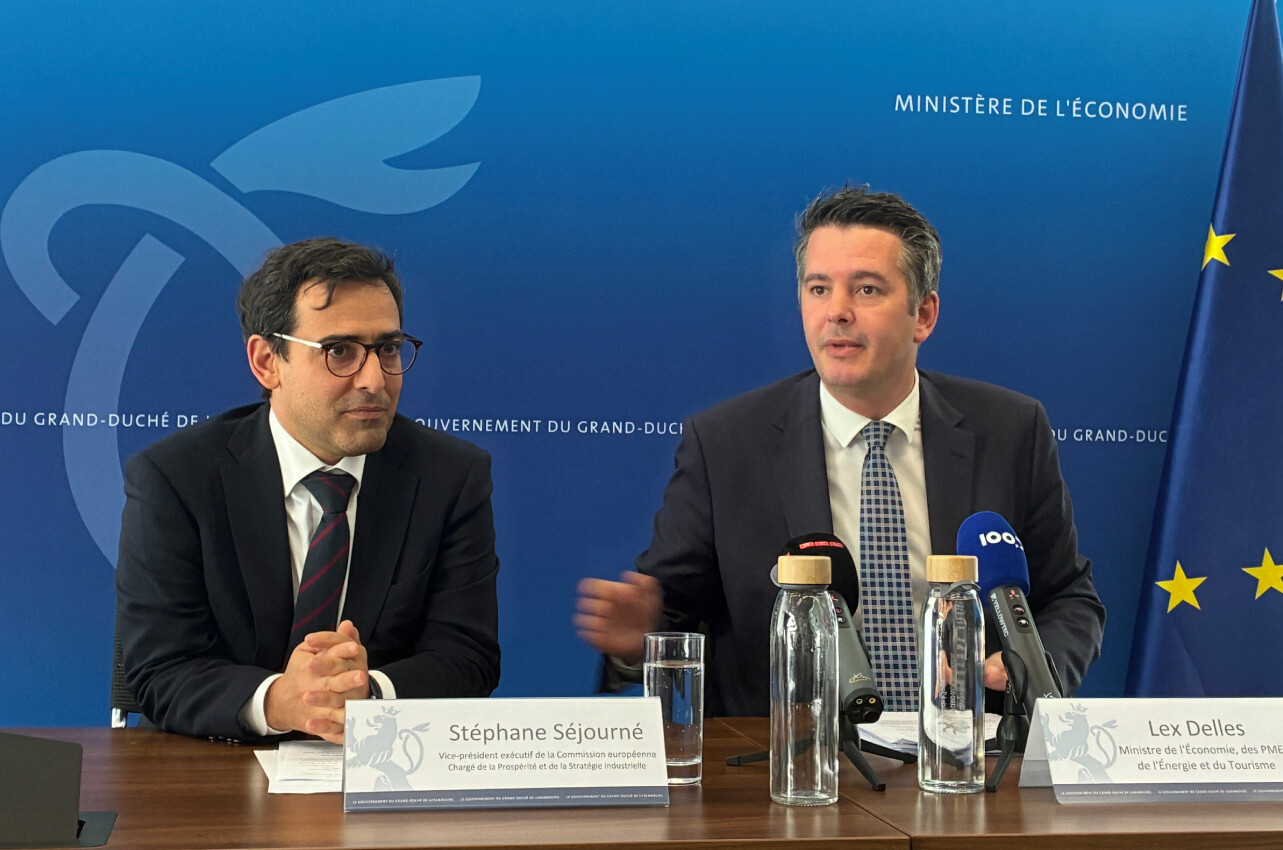
With the exquisite courtesy typically shown by ministers receiving a foreign guest, it was Lex Delles who came to his guest’s aid. “It was I who took the decision [to ban the sale of this strategic asset] and we were in constant contact with the European Commission and the commissioner, even though this decision was taken at the Luxembourg level,” said the minister, having only just returned from the Middle Kingdom and clearly not suffering too much from jet lag.
What measures should be put in place for factories such as Circuit Foil?
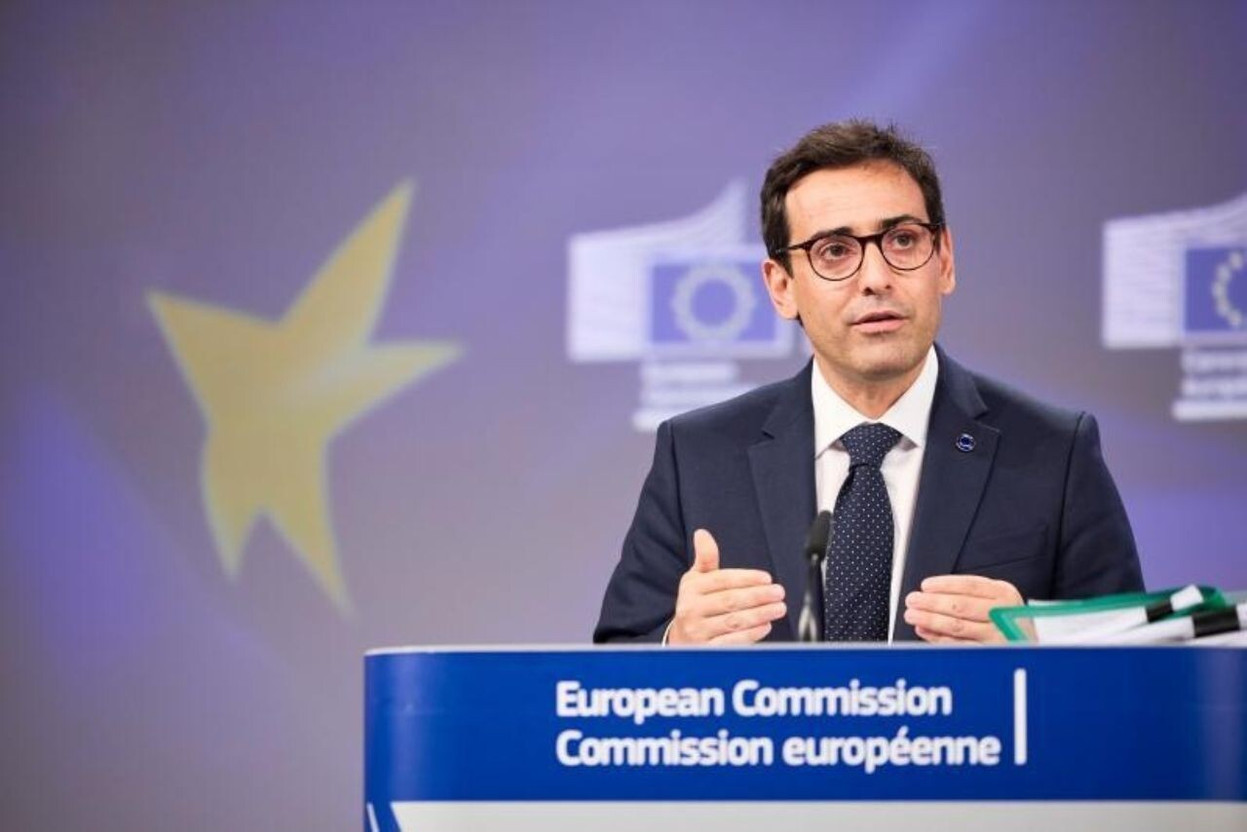
“There are sovereign powers that fall within the remit of the member states. It is not for the European Commission to decide on their behalf whether or not to block a transaction. However, we can support them,” the European commissioner ventured. “In particular, we have a framework for critical raw materials, the production of certain of which must be protected. We have drawn up the RESourceEU plan, which is now set to be implemented. European labels are being awarded to certain projects, and a European centre for critical raw materials is to be established. All these measures are intended to provide technical and logistical support to member states to safeguard, in the interests of sovereignty, certain European production sectors linked to these raw materials.”
“We are therefore pursuing several objectives: to diversify our sources of supply where possible, to maintain a share of production in Europe, and to reduce our dependencies. We have set ourselves the target that no single country outside the EU should supply more than 65% of our requirements for each of the strategic raw materials concerned, at any given stage of their processing,” explained the Commission vice-president.
A political decision […] could disrupt supplies and cause problems for an entire industrial sector.
“This applies in particular to copper, cobalt and nickel. Above this threshold, a political decision taken by the supplier country could disrupt supplies and cause difficulties for an entire industrial chain. It is against this risk that we must protect ourselves. We are therefore offering our support to member states and engaging in dialogue with their governments, particularly where a proposed takeover could exacerbate an existing dependency,” said Stéphane Séjourné.
This response forms part of a broader European policy on economic security. The EU is seeking to maintain industrial capacity within its territory, to diversify its supply sources and to prevent dependence on a single country from disrupting an entire production chain.
For copper, the main instrument already in place is the Critical Raw Materials Regulation. It classifies this metal as one of 17 strategic raw materials and sets European targets for its extraction, processing, recycling and the diversification of suppliers. The RESourceEU plan builds on this approach: in particular, it aims to improve the monitoring of supply chains, support strategic projects and coordinate the European response in the event of a supply disruption.
A new doctrine taking shape
The issue of a takeover falls under another aspect of this policy: the screening of foreign investments. The European Commission may highlight the risks that a transaction would pose to a supply chain, whilst the relevant member state takes the decision on the transaction. A further European proposal, the Industrial Accelerator Act, also sets out conditions for certain significant foreign investments in the extraction, processing or recycling of critical raw materials. However, at this stage, it does not constitute a legal basis for blocking an acquisition.
One crucial question remains in this case: does the production in question involve the processing of copper as a strategic raw material, or does it take place further down the chain, at the stage of manufacturing copper foil for the electronics industry? European instruments do not necessarily cover these two activities in the same way.
In the face of geopolitical crises, securing our critical materials is the cornerstone of our collective resilience.
This is precisely what the Luxembourg government wanted to discuss, away from prying eyes, both at the Hydro Aluminium plant in Clervaux – where Stéphane Séjourné was accompanied by the minister for Mobility and Public Works – 


“In the face of geopolitical crises, securing our critical materials is the cornerstone of our collective resilience. Luxembourg stands ready, alongside Europe, to turn these energy challenges into opportunities to build a deeply resilient, sovereign and sustainable future,” Ms Backes summed up very well after her part of the programme, according to the two-page press release.
“We are continuing, hand in hand with the member states, to develop a new European industrial policy based on sovereignty, reciprocity with our partners, decarbonisation, innovation and the integration of the internal market,” summarised Mr Séjourné. “We can count on Luxembourg to champion ambitious objectives for the texts currently under discussion at European level: the industrial accelerator, the reform of public procurement and our strategy for the internal market.”