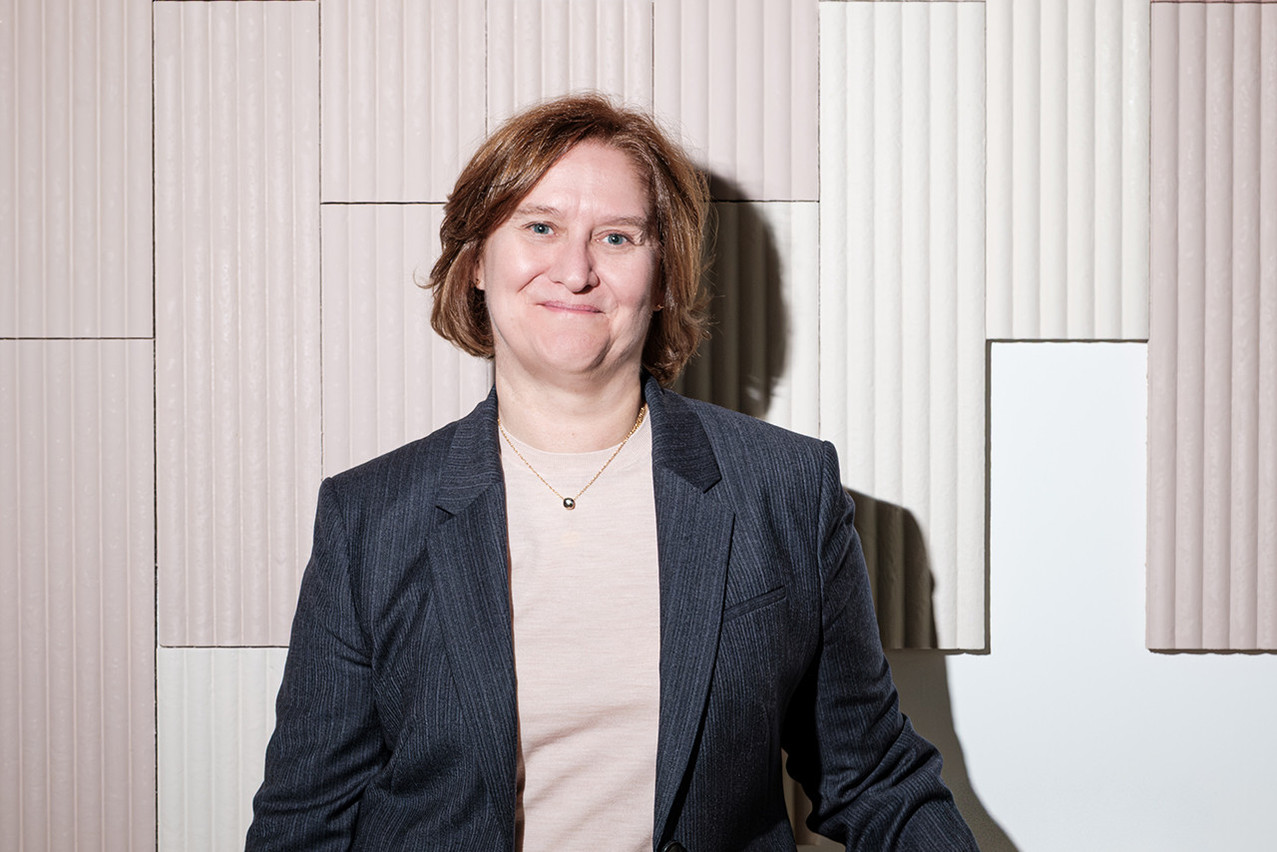
Reinsurance absorbs the biggest shocks in the insurance system. By transferring extreme or complex risks to global experts, primary insurers stabilise their results and preserve capital. The sector represents over €14bn in premiums in Luxembourg (2023) and is growing steadily. Through diversification across countries and sectors, reinsurers keep coverage affordable and economies resilient. Insights with Annick Felten, general manger of Swiss Re Europe.
How would you explain, in simple terms, what reinsurance actually does?

These risks include natural catastrophes such as hurricanes and floodings, as well as what we call ‘man-made’ events caused by human activity, such as industry fires, transportation accidents, bridge collapses, etc. Managing such large-scale exposures is the core of our business.
Are a reinsurer’s clients only insurance companies?
“Yes, and this is clearly defined in the Luxembourg law: a reinsurer must be specialised, meaning it exclusively provides reinsurance services and its clients are insurers or other reinsurers. A reinsurer has no direct relationship with private policyholders; our business is purely B-to-B. This explains why reinsurance regulation assumes that our clients are professionals capable of safeguarding their own interests.
The industry is also inherently diversified and international: to finance very large risks, a diversified, global portfolio is essential. Losses in one line of business or region can be offset by profits elsewhere and maintaining that global balance is the essence of reinsurance.
You have worked for many years in the Luxembourg insurance and reinsurance sector. What drew you to this field?
“I began my career at the Luxembourg supervisory authority, the Commissariat aux assurances (CAA), where I spent more than 20 years working across life, non-life and reinsurance. I was always fascinated by the real-life connection insurance and reinsurance has.
Why does Luxembourg play such an important role in reinsurance?
“Insurance and indirectly also reinsurance truly help to protect people’s belongings and support and finance business developments. Reinsurance in Luxembourg started some 40 years ago with the establishment of reinsurance captives, which are reinsurance companies who exclusively cover the risks of their industrial or commercial owner. Over time, the country has also built up comprehensive expertise in commercial reinsurance. Today, several commercial reinsurers, including Swiss Re Europe, have chosen Luxembourg as their base.
When Swiss Re Europe chose Luxembourg, one reason was the Luxembourg authorities’ understanding of our operating model, meaning a central hub in Luxembourg supported by branches abroad. The supervisory authority embraced this setup and specialised in supervising insurance teams and offices located all over the globe. It also cooperated with local supervisors, which made the structure a success. This adaptability became a kind of trademark of Luxembourg, and recently new players in the market adopted the same model.
The country’s stability is another key factor—both financial and political stability. Long-term relationships and a deep expertise on both ends ensure continuity and pragmatic dialogue between market participants and public authorities.
Luxembourg’s small size also plays a role. People know each other, they communicate openly and they listen to each other, which helps with finding workable solutions within the European framework.
The CAA’s figures show that the reinsurance market in Luxembourg is solid and growing. How do you see this development?
“It reflects the trends observed on the global reinsurance market. For years, we had what we call a ‘hard market’, meaning price increases year on year. Now competition is increasing and new players are entering certain markets and trying to gain market share, so the hard market has reached its peak. On the other hand, we see a structural increase of the risks, especially on natural hazards, and the major reinsurers are tightening their terms and conditions to remain within their risk appetite. This is a challenging environment for everyone, while at this period of the year we are entering the 1.1 renewal season in Europe.
Have increasing regulatory requirements changed the way the sector operates?
“Definitely. Increasing regulatory requirements have reshaped sector operations. Reporting obligations and key control functions like compliance, risk, internal audit and actuarial have all grown in importance. Firms allocate substantial resources to reporting obligations and recovery planning, adding complexity and increasing costs.
Regulations generally aim to drive stronger risk management and transparency. Companies that adapt through technology and proactive compliance strategies can turn the obligations into competitive advantages, balancing oversight with operational resilience.
As it’s less well known, is it difficult to attract new talent to reinsurance?
“Talent attraction and retainment is an industry-wide topic. Aca recently launched a visibility campaign for the non-life international community in Luxembourg. All the major players contribute articles and podcasts to explain what we do and showcase the diversity of roles. It is a good step, because everyone in the sector faces the same recruitment challenge.
Swiss Re looks for people who are fluently multi-lingual and who are comfortable in an international environment. Joining Swiss Re Europe does not mean staying 40 years in the same office. We offer mobility and exposure to many markets and subjects.
What drives Swiss Re Europe’s growth today?
“Groups like Swiss Re, Munich Re or Scor are globally diversified players. So the key to growth is not simply accessing new markets. To grow, we focus on our strengths, which lie in our expertise on emerging risks and in the huge databases we have built over the past 160 years to understand and assess how the risks we insure may behave. We work with top universities and think tanks to better understand extreme events and protection gaps.
We share our knowledge and data not only with our insurance clients but also sometimes with public institutions to help design sustainable coverage models. Across the industry, our missions are very similar: using that expertise to help societies cope with large-scale risks.
The group often speaks about resilience. What does this mean for you?
“For us, resilience means helping societies protect what they have so that they can grow in a sustainable way. As a reinsurer, we may not interact directly with individual policyholders, but we support insurers who do—by sharing our knowhow and taking part of their risk.
Through diversification, we can absorb risks from one region at a cost that remains manageable for local insurers, freeing their financial capacity to cover other risks. That capacity protects households and allows companies to invest, rebuild and innovate. In this way, reinsurance truly acts as the invisible engine behind insurance, and behind economic and societal resilience itself.
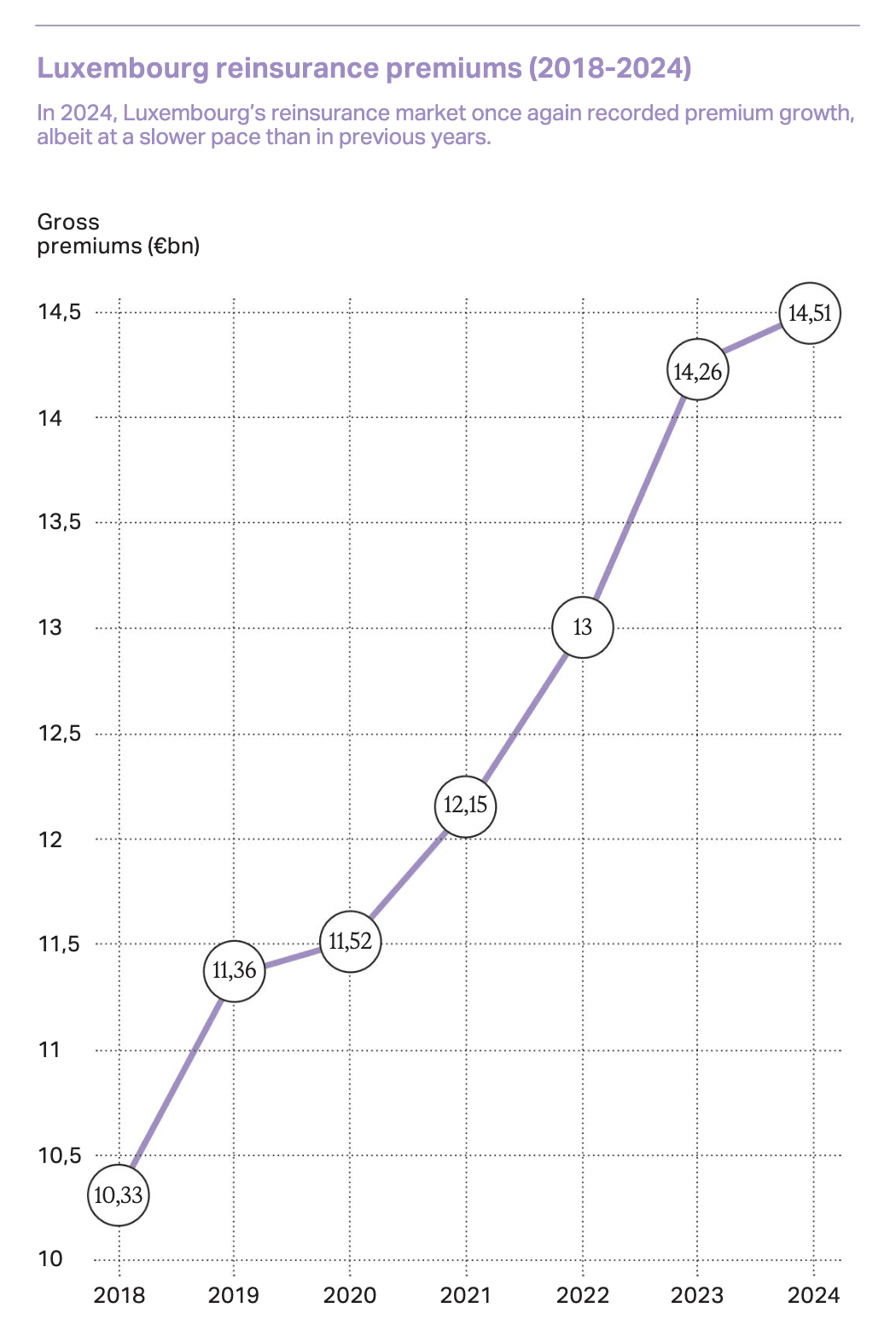
In 2024, Luxembourg’s reinsurance market once again recorded premium growth, albeit at a slower pace than in previous years. (Graphic: Paperjam; source: caa.lu)
Luxembourg’s reinsurance hub
Luxembourg has become a European centre for reinsurers and captives. Swiss Re Europe, Munich Re, Scor Luxembourg and Transre are among the key players operating from the grand duchy. The country’s stable supervisory framework, multilingual talent pool and EU passporting make it a preferred domicile for cross-border reinsurance activities serving both European and global clients.
This article was written for the January 2026 issue of Paperjam magazine, published on 10 December. The content is produced exclusively for the magazine. It is published on the site to contribute to the full Paperjam archive. Click this link to subscribe to the magazine.
Is your company a member of Paperjam Club? You can request a subscription in your name. Let us know via club@paperjam.lu.