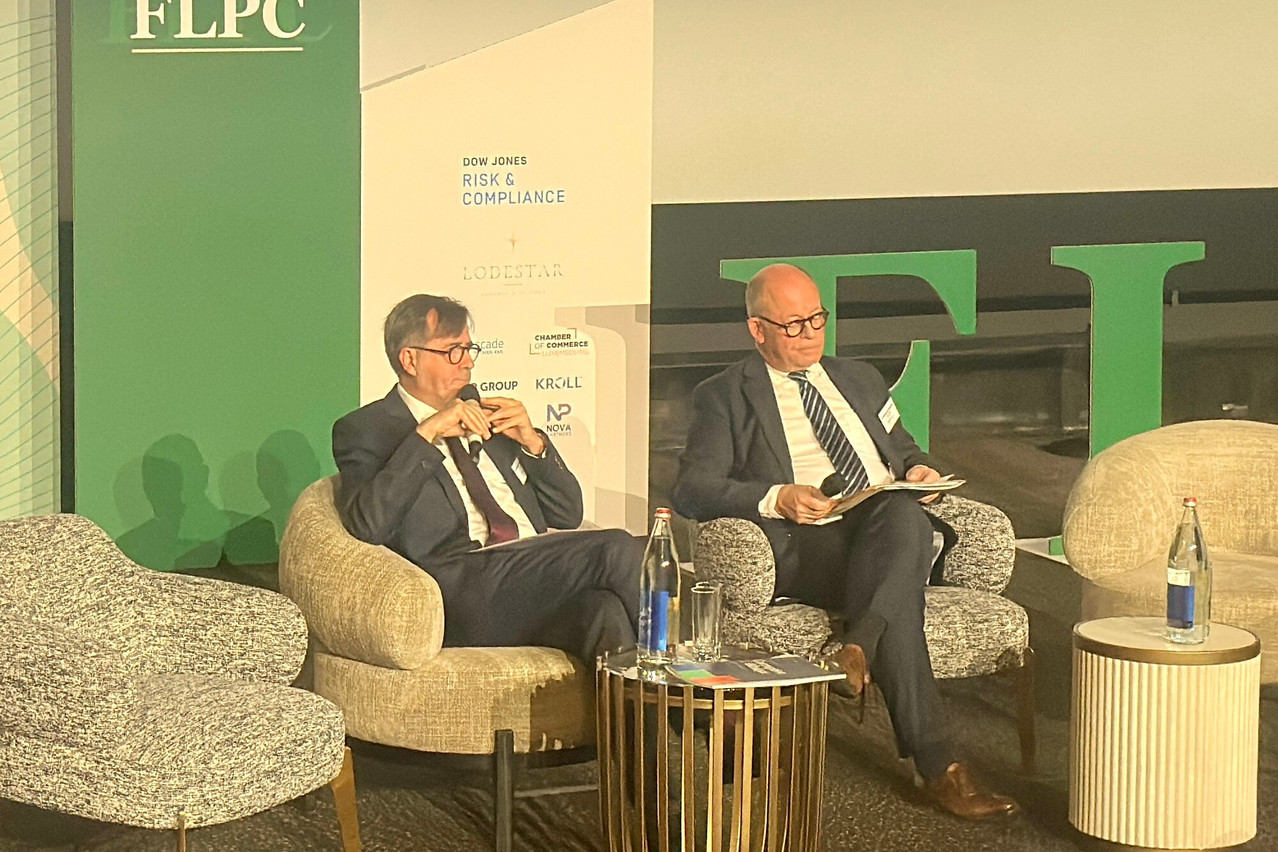
Financial institutions risk losing sight of suspicious activity when they turn away business rather than investigate it, Bruno Dalles, director of Monaco's financial security authority, warned at a conference organised by the Luxembourg Association for the Prevention of Corruption (LutCor) on Thursday.
“Every country faces this problem of de-risking, which has serious unintended consequences. Transactions may continue through more complicated structures, making them harder to trace,” he told the forum. The Autorité Monégasque de Sécurité Financière (AMSF) oversees anti-money-laundering measures in Monaco. De-risking means refusing customers or transactions rather than assessing whether their risks can be managed.
The difficulty of making those judgements was illustrated by Fatiha Mehraz, head of compliance at BNP Paribas Asset Management. “A commission of several million euros can be perfectly legitimate. A transfer of €5,000 can be a bribe,” she said.
What a payment can conceal
A company wins a major contract, then pays an intermediary established only recently and with no track record. In Mehraz's hypothetical example, the intermediary had been introduced through a relative of a public official and had produced little evidence of work performed. None of those details proved bribery, but together they warranted investigation.
“Is the service genuine? Does the price make sense? Where is the money going? Who is the intermediary?” Mehraz asked. Compliance officers, responsible for ensuring that financial institutions meet applicable rules, need to establish the circumstances behind such payments before deciding how to handle them.
Consultancy and advisory services can be especially difficult to verify because their results may leave little tangible evidence. Dalles identified another obstacle: “What makes corruption particularly difficult to detect is that there isn't one perpetrator and one victim. There are two perpetrators, and both have an interest in keeping it hidden.”
The pressure to refuse business
Luxembourg's financial-sector regulator, the Commission de Surveillance du Secteur Financier (CSSF), addressed a related problem on 16 June after receiving complaints from individuals and businesses struggling to open bank accounts. It clarified that banks should manage money-laundering and terrorist-financing risks rather than automatically exclude higher-risk customers. Someone seeking an account may need additional checks without necessarily having to be refused banking services.
Commercial considerations are separate. Banks may consider some customers unprofitable because of compliance costs, but the CSSF distinguished such decisions from exceptional cases in which it requires institutions to reduce their exposure after inadequate safeguards have left financial-crime risks unmanageable. Customers must also cooperate by providing information needed for verification, including the origins of their funds.
The CSSF's guidance concerned customer relationships, rather than decisions about individual payments. Both, however, involve judgements that may subsequently be examined by supervisors. Mehraz described Luxembourg's close contact with regulatory authorities as an advantage, although inspections could consume resources and carry financial and reputational consequences.
“If I'm inspected tomorrow, I must be able to explain to the regulators why I acted and why I didn't,” she said. Staff therefore need to document not only suspicious circumstances but also the evidence supporting their decisions.
Dalles raised a further concern about activity rejected by closely supervised institutions. Transactions could move to countries where corruption was more entrenched and cooperation with investigators more difficult, he warned. This was a possible consequence, not a documented finding about Luxembourg banks.
The responsibility borne by individual employees added another difficulty. Compliance officers may report suspicions without establishing that a crime occurred, yet still face scrutiny if business continues. “If we want to deal effectively with de-risking, compliance officers need legal protection,” Dalles argued. His remarks did not establish the protections available under Luxembourg law.
Rules that work in practice
Charles Duchaine, a French inspector-general of justice and former director of the French Anti-Corruption Agency, turned to the anti-corruption systems businesses devise for themselves.
“Some things cannot be outsourced. The company has to put them in place itself. Otherwise, it's just copying and pasting someone else's risk assessment, and that doesn't work,” he said. His criticism concerned the use of standardised assessments that fail to reflect a company's particular exposure to corruption.
Regulators also have responsibilities towards the businesses they supervise. “A regulator must be able to provide help, advice and support. But when people refuse to listen, it must also inspect them and, if they fail to do the work, impose sanctions,” Duchaine said, describing his experience in France.