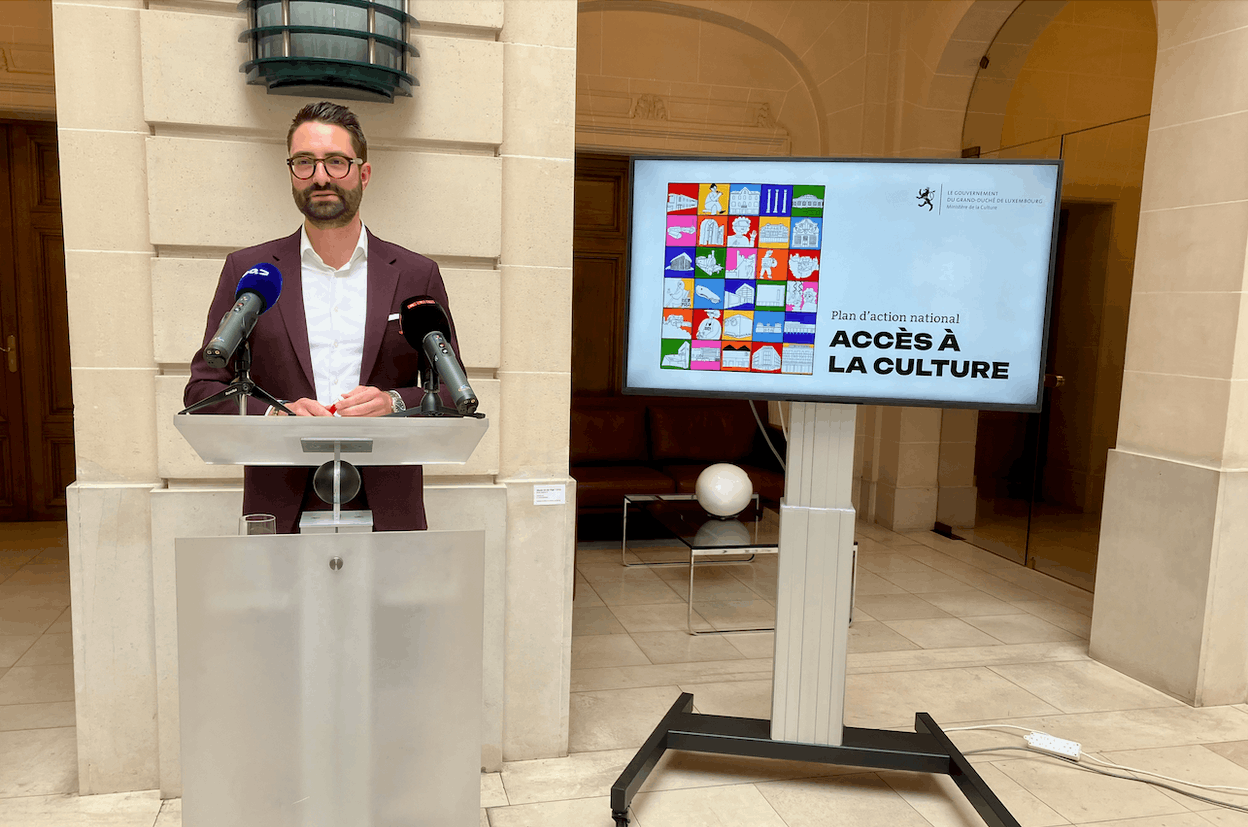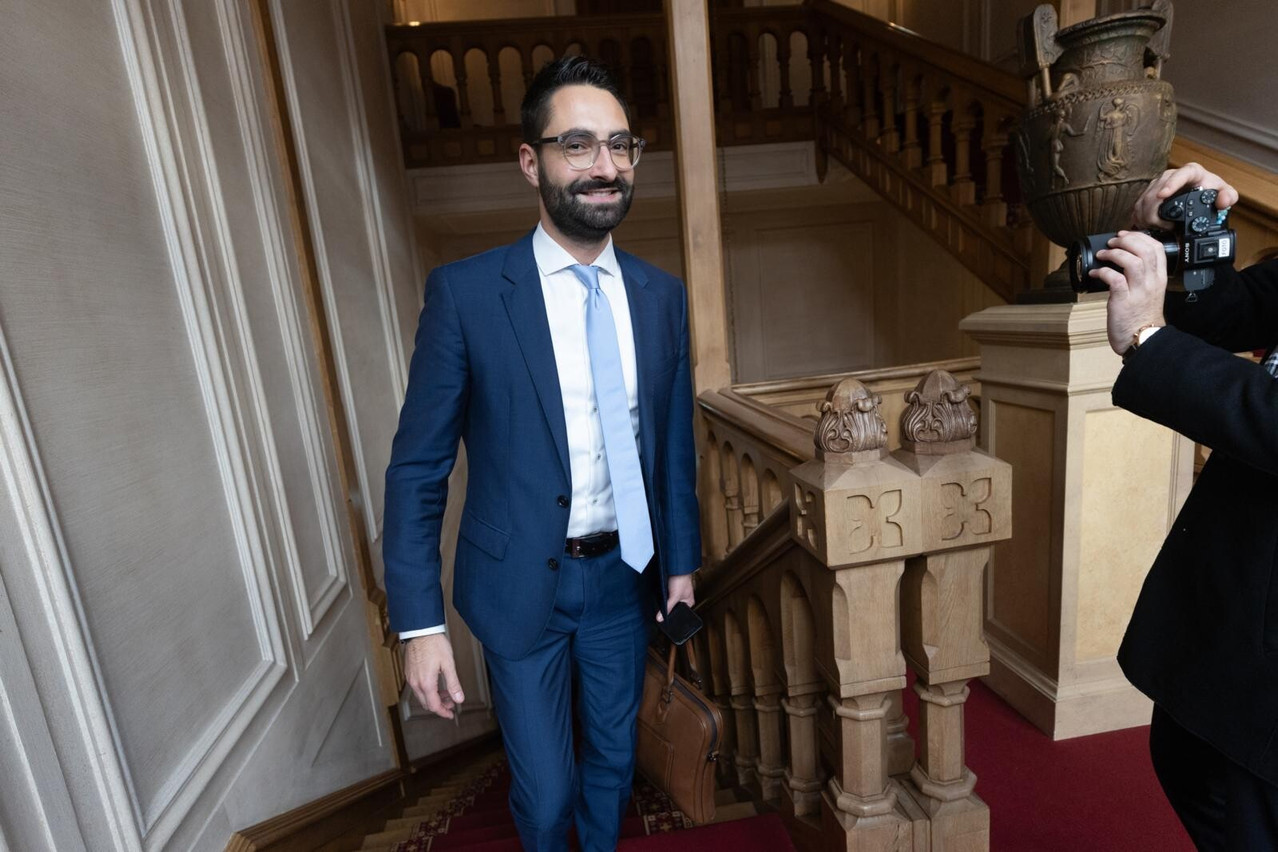
The minister for Culture, 
Indeed, the Act of 24 February 1984 on the language regime, which governs the use of the Luxembourgish, French and German languages, provided that “where an application is drafted in Luxembourgish, French or German, the administration must, as far as possible, use the language chosen by the applicant in its reply”.
Legal ambiguity
This qualification “as far as possible” therefore gave the administration considerable room for manoeuvre. It did not abuse this room for manoeuvre. However, this theoretical room for manoeuvre ran counter to the Constitution, as amended in 2023. Article 4 of the Basic Law states that “the language of the Grand Duchy of Luxembourg is Luxembourgish”… whilst referring to the aforementioned Act of 24 February 1984. This is a troublesome legal ambiguity that the draft bill seeks to rectify by removing the famous phrase “as far as possible”.
The explanatory memorandum to the bill – available in French and Luxembourgish, which is very rare – states that, over the last 40 years, the Luxembourgish language “has come into its own in written usage” and that it would be “strange if the European institutions were to respond systematically in Luxembourgish and yet a Grand Duchy administration could get away with invoking these five words”.
With this bill, the government aims not only to regulate the language used in public administration, but also to strengthen the institutional framework surrounding the Luxembourgish language. This will be the role of the Zenter fir d’Lëtzebuerger Sprooch (Centre for the Luxembourgish Language).
Simplified promotion of the Luxembourgish language
The draft bill also revises the Act of 20 July 2018 on the promotion of the Luxembourgish language by proposing amendments to clarify governance, avoid regulatory redundancies and adapt the remit of the Zenter fir d’Lëtzebuerger Sprooch (ZLS). In terms of its status, this institution will become a state cultural institute and will fall under the authority of the minister responsible for the promotion of the Luxembourgish language. At present, this is the ministry of Culture. This marks the end of the historic dual oversight by the ministries of National Education and Culture.
“Its administrative structure and staff are now aligned with the common framework applicable to other national institutes, which makes it possible to repeal several internal provisions and avoid regulatory duplication. The centralisation of ministerial oversight contributes to greater clarity in the conduct of public policy and facilitates the coordination of actions undertaken by the various institutional stakeholders,” the draft states.
Translation service removed
With regard to its linguistic remit, the centre is authorised to issue recommendations concerning all linguistic aspects of the Luxembourgish language. It is understood that Luxembourgish spelling will be the only linguistic area subject to rules with a normative scope. Other aspects of the language, including grammar, are dealt with from a descriptive perspective, accompanied by recommendations where appropriate.
The bill stipulates that the centre’s official document translation service is to be discontinued “in order to avoid any unfair competition with the private translation sector”.
Finally, the Act explicitly includes amongst the ZLS’s remit the design, organisation and coordination of a permanent exhibition, as well as temporary or travelling exhibitions, on language, multilingualism and the linguistic situation in Luxembourg and the Greater Region.