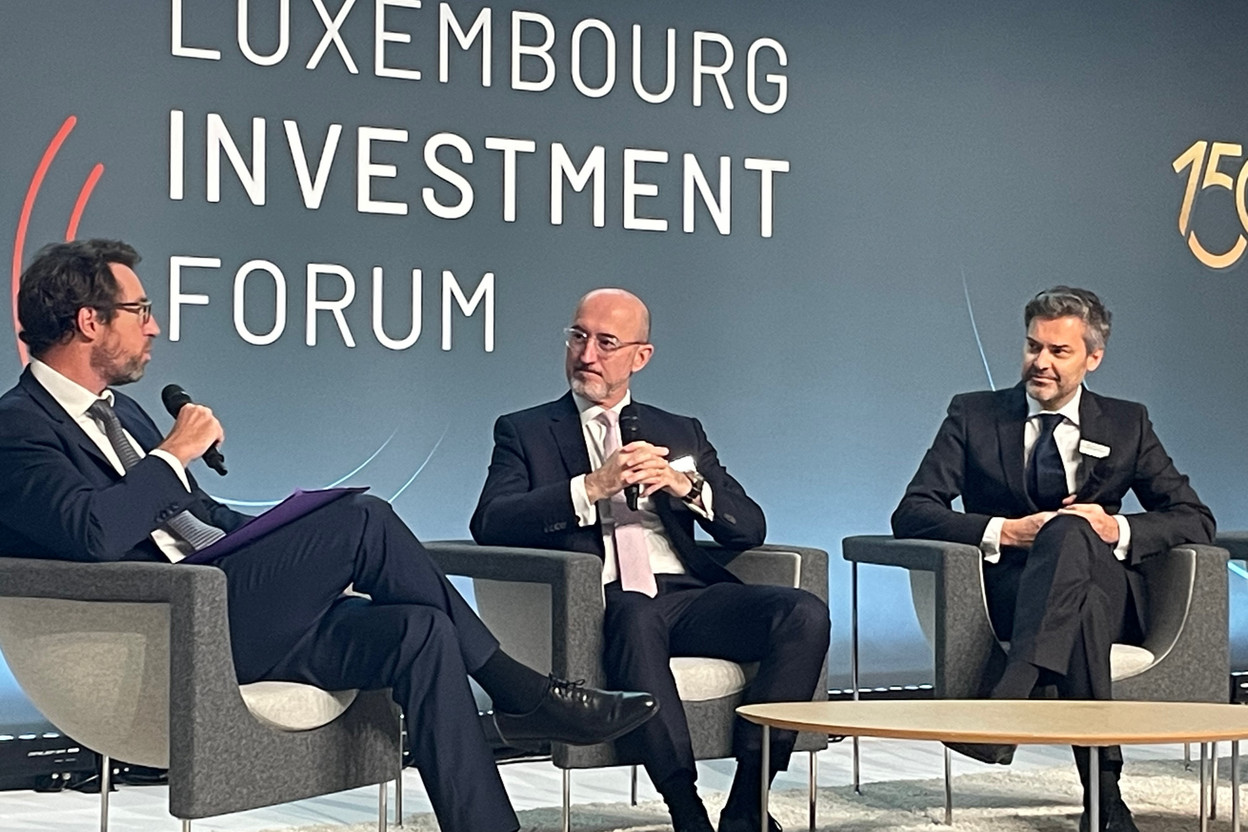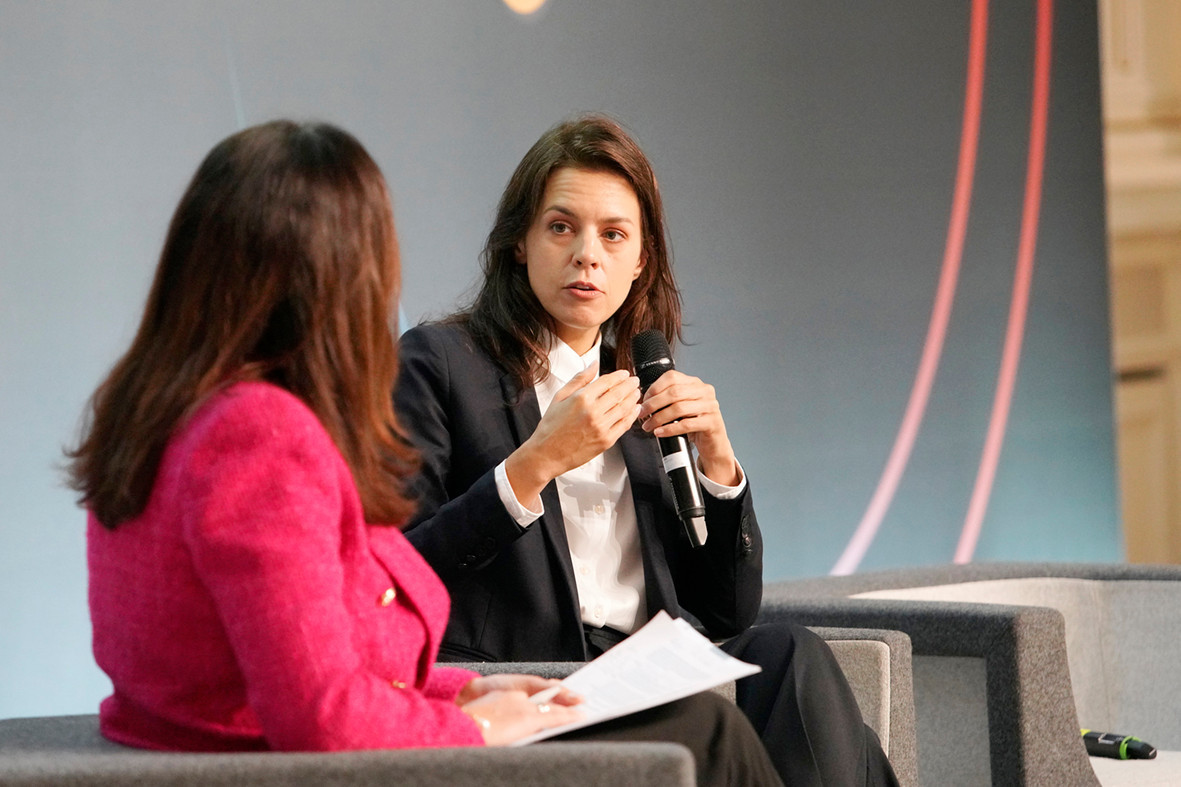
“The United States is actively working to dismantle its dependencies on China, particularly concerning debt and key technological supply chains,” said Amy Green, senior fellow at Institut Montaigne, during the Luxembourg Investment Forum organised by Indosuez on 13 October 2025. She thinks that there is an acknowledgement that the US has "completely lost mastery" over certain supply chains.
Consequently, Green noted that there are significant concerns in Washinton about China's near monopoly on rare earths, which are critical for numerous future technologies. China is also tightening restrictions on technology exploitation.
Shifting global power dynamics
Despite being an alliance with countries having more divergent objectives than within the G7, Green observed that BRICS nations are growing significantly, and they represent approximately 40% of the world's population, whereas their combined economic and demographic power largely surpasses that of the G7 countries.
BRICS members advocate for a stable, predictable, rules-based world order, notably excluding human rights and values from their discourse. After having built a capital of trust over 80 years around the world, she believes that the US is particularly anxious about China’s escalating role as an indispensable world player and its strengthening relationship with Russia.
[The US] bets on innovation, to go fast and we will see how it turns out before thinking about regulation
Within this strategic context, India plays an ambiguous role. While it was expected that India (under Modi) would serve as a crucial strategic counterweight to China for the US, current US actions may be inadvertently pushing India and China closer, despite existing border disputes and trade imbalances. Green argued that India operates in a state of strategic dependence, needing China while striving to avoid being "crushed" by the larger power. “I note that Modi does not appear on family photos with Xi Jinping.”
Erosion of US soft power
Green argued that the US administration's focus on short-term financial gains and protectionist policies risks diminishing America’s long-term power. By moving away from allies or demanding immediate payment for cooperation, the US risks weakening the "soft power" that historically underpinned its global influence.
“After WWII, the US understood that brute force was not sufficient,” said Green. She explained that "soft power" relies on stability, alliances, universities, and culture—not just military strength. When the US withdrew from global collective decision-making bodies or agreements (like the Paris Accords), she noted that China readily stepped in to assume the role of the responsible global actor. This retreat also applies to critical technology sectors like "cleantech," where China has gained a massive advantage. “It is causing bafflement given the massive need for renewable energy.”
The rise of new empires
Green highlighted the emergence of powerful, non-state technological empires (tech companies). These actors are difficult to regulate, as they operate outside state logic and possess immense financial and technological mastery. “[The US] bets on innovation, to go fast, and we will see how it turns out before thinking about regulation.”
Governments are increasingly delegating responsibilities, even in areas like defence, to these private sector entities. The unprecedented power held by individuals without electoral mandate is illustrated by the example of Elon Musk’s Starlink service, which was temporarily cut during a Ukrainian counteroffensive, showing how one man's decision can influence a battlefield.
Populism rises amid shared US suffering
Domestically, “the US is experiencing its most severe and acute period of political polarisation among multicultural democracies,” stated Green. She believes that this polarisation is deeply rooted in 50 years of growth and socio-economic inequalities, compounded by societal issues like gun violence and the opioid crisis.
Within the next 10 years (around 2030), the majority of the US population will be non-white
This shared suffering is ironically presented as the only true common denominator for many Americans, who feel disillusioned and neglected by a political system that fails to deliver concrete solutions. “There is massive distrust in political institutions and their representatives,” with less than half of Americans approving of the president's actions and only about 25% approving of the Democratic Party. This widespread sense of abandonment fuels populist responses like Trumpism. “We can imagine that the jobs that Trump brings back to American soil are not necessarily jobs that Americans want nor jobs of the future either.”
View of Europe
From the perspective of the current US administration, Europe is viewed with scepticism. Green reported Trump as saying that “the EU is there to rip off the US” while the international system—built by the US—benefits everyone else. It is seen as costly and is
largely considered a distraction from the US’s primary strategic focus on China and making deals. She thinks that the US tends to view challenges like the conflict in Ukraine primarily as a European problem that Europeans should handle.
“Within the next 10 years (around 2030), the majority of the US population will be non-white,” stated Green. Consequently, the younger, more diverse generation “feels less proximity” or “sentimentality” toward Europe, instead looking toward the South and East.
Yet again, it’s the economy, stupid!
In a follow-up interview with Paperjam, which concentrated, first, on the past failure of the Democrat Party to federate Black Americans and Latinos behind their programme despite a seemingly straightforward victory (2016). Green explained that the focus on addressing fragmented "communities" through identity politics failed because many Black and Latino voters felt “essentialised” whereas they prioritised the economy.
She thinks voters realised that having brown skin did not oblige them to vote Democratic, especially when remembering economic struggles under Obama/Biden versus positive recollections of the Trump era (e.g., two covid checks). “The economy is the central issue for almost all Americans, […] including young people facing high unemployment, housing crises, and student debt.”
Secondly, and looking beyond the US, Green commented that the demand for change mirrors Europe, notably France, where the failure of the traditional political class has made "rupture" the last remaining viable option. This allows parties that have not yet experienced power to say, “If you have tried everything, there is only one offer you haven't tried, and that is us.”