"The profile of the ideal employer in Luxembourg has remained stable over the past three years, with attractive pay and benefits at the top of the priority list," says the Randstad Employer Brand Research (REBR) 2025 report. For this edition, Randstad surveyed 1,511 employees in Luxembourg and neighbouring countries to find out more about their expectations of their ideal employer. The study highlights a notable shift in priorities: in 2025, work-life balance will now overtake job security to become the second most important criterion.
However, fewer than one in two employees feel that their employer responds positively to this criterion, compared with eight out of ten for job security and the company's financial strength.
Work-life balance tops the list of reasons for leaving the company.life balance at the top of the list of reasons for leaving
The intention to change jobs rose by 2%, while the number of actual departures remains stable. "The main reason why employees are considering leaving their jobs is to improve their work-life balance", the study points out. This criterion is now ahead of salary considerations, which are no longer among the main reasons for leaving. "This could indicate that current salary offers are sufficiently competitive to retain employees and that other factors are more influential in the decision to leave", the report goes on to say.
Lack of flexibility and a working atmosphere deemed unsatisfactory appear to be recurring sources of frustration: only 43% of employees say they are satisfied with the atmosphere in their workplace, and 48% with their work-life balance.
Converging expectations between generations

Employees who have changed jobs in the last six months. (Source: Randstad Employer Brand Research 2025)
All generations continue to place salary and benefits at the top of their priorities. However, "generation Z attaches less importance to the financial health of the company and places greater value on diversity and inclusion", the study points out. It is also characterised by higher mobility: 12% of young people from this generation have recently changed jobs, compared with 7% of millennials.
White-collar workers also have a more positive perception of their employer on issues of pay and job security than blue-collar workers, even though their priorities remain comparable. "White-collar workers may feel that their employer better meets their expectations," says the report.
The most attractive employers in 2025

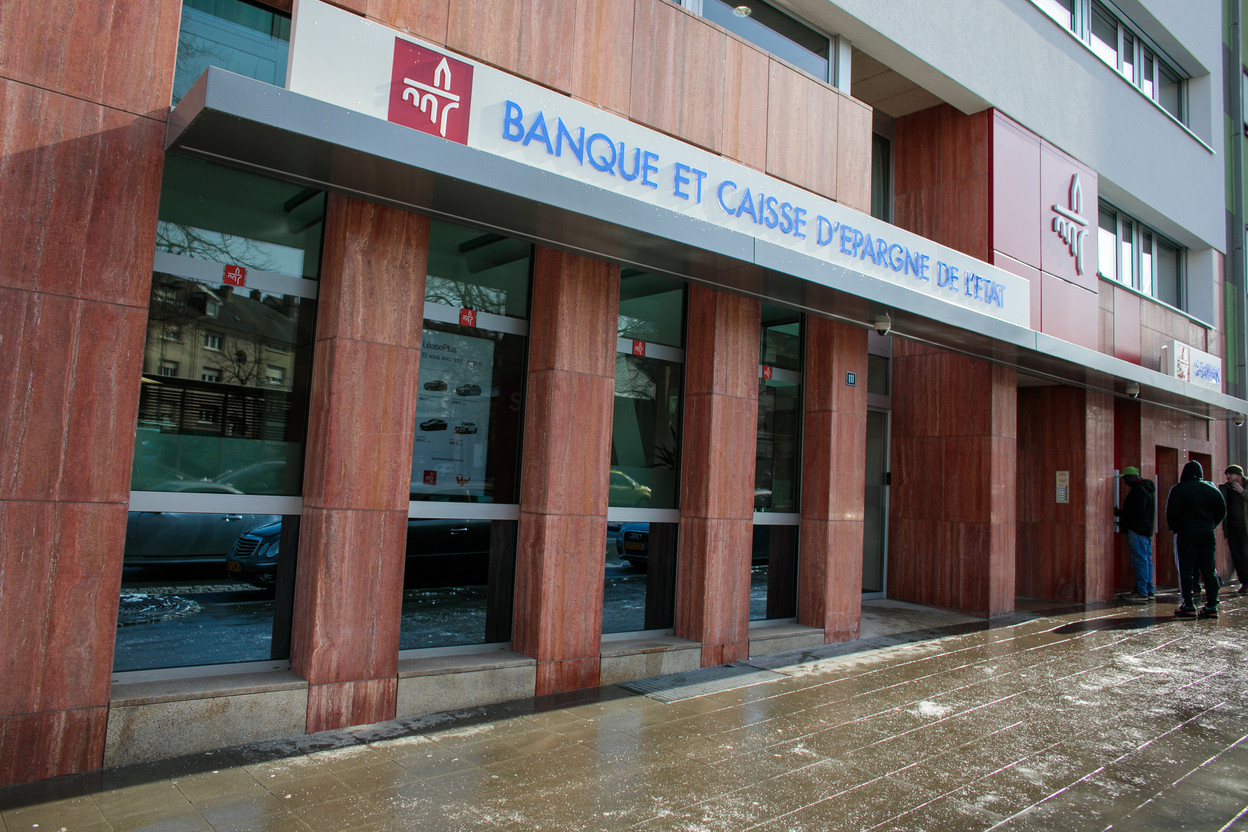
The University of Luxembourg tops the list of the most attractive employers in 2025, ahead of the Banque et Caisse d'Épargne de l'État and the CFL Group. (Photo: University of Luxembourg)
The report reveals the ranking of the most attractive companies. "Local companies come out on top", says Randstad. The University of Luxembourg comes first, followed by Banque et Caisse d'Épargne de l'État, CFL Group, Luxair and Post Luxembourg Group.
Fairness and transparency in question
Two-thirds of employees believe that their employer acts fairly overall. In contrast, only 43% of blue-collar workers and 58% of white-collar workers consider that they receive equal pay for equal work.
According to the study, "less than a third of employees consider senior management to be fair when it comes to recruitment, career development and the distribution of development opportunities". Minority employees continue to perceive more career barriers than others, although the proportion of those reporting difficulties related to their identity is down on last year.
AI is gradually taking hold
"The number of employees regularly using artificial intelligence in their work has increased by 7% this year," says the report. Two-thirds of employees now expect AI to have an impact on their jobs. The general feeling is changing for the better: fewer employees fear a negative effect on their job satisfaction (-5%), while more anticipate a positive impact (+6%).
Generation Z is the most familiar with these tools, with 31% of regular users, compared with 18% among millennials and 10% among generation X.
Knowledge and flexibility, drivers of engagement

"Employee engagement is up: two-thirds feel motivated, and 42% feel more engaged than last year." (Source: Randstad Employer Brand Research 2025)
"Two-thirds of employees say they are motivated and 42% feel more engaged than last year", the report points out. Recognition and quality of life at work appear to be key drivers of loyalty. According to Randstad, "the feeling of being valued, recognition and maintaining a good work-life balance are the main drivers of motivation".
In contrast, "the lack of recognition for work done" remains the number one source of demotivation.